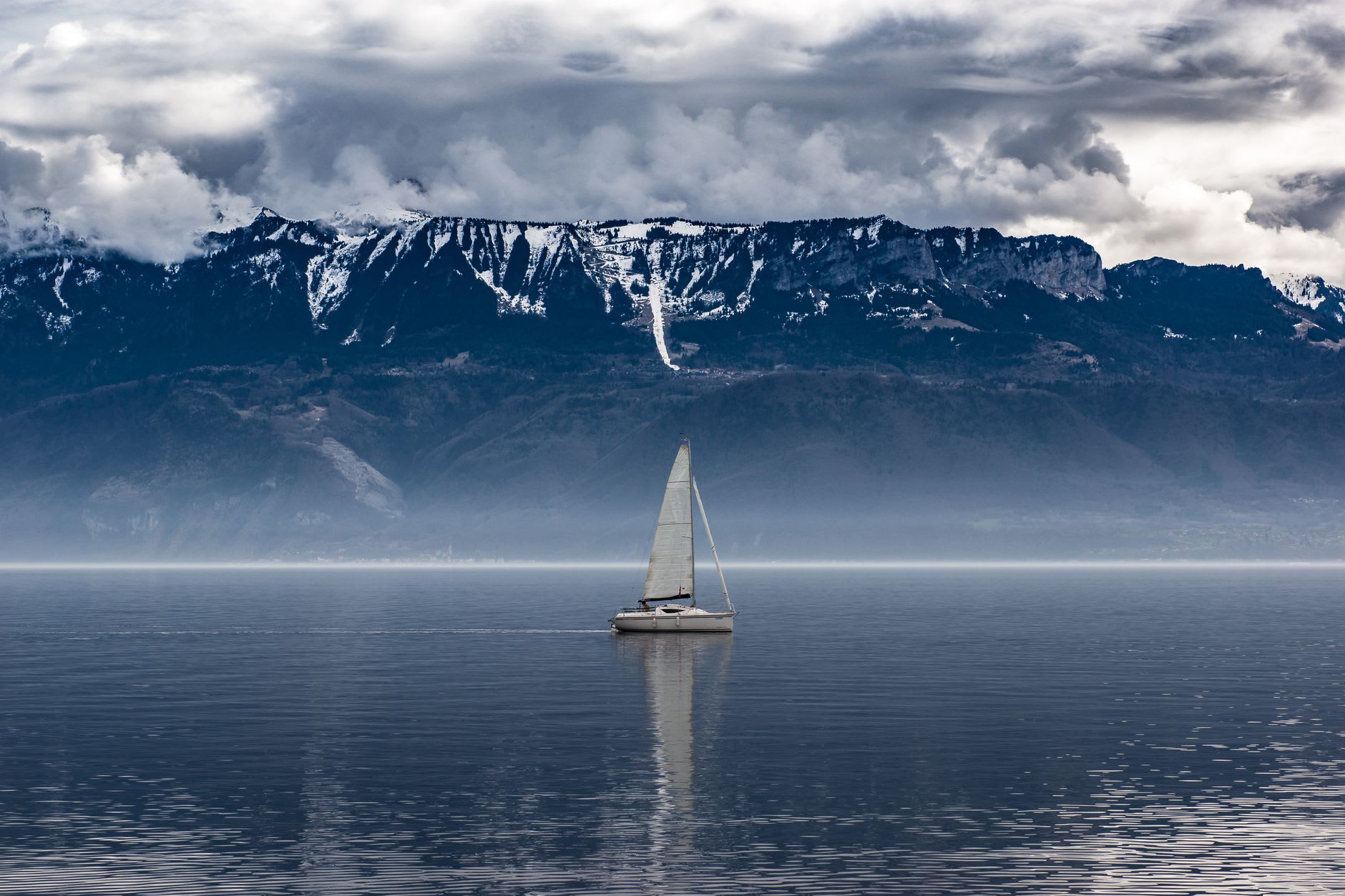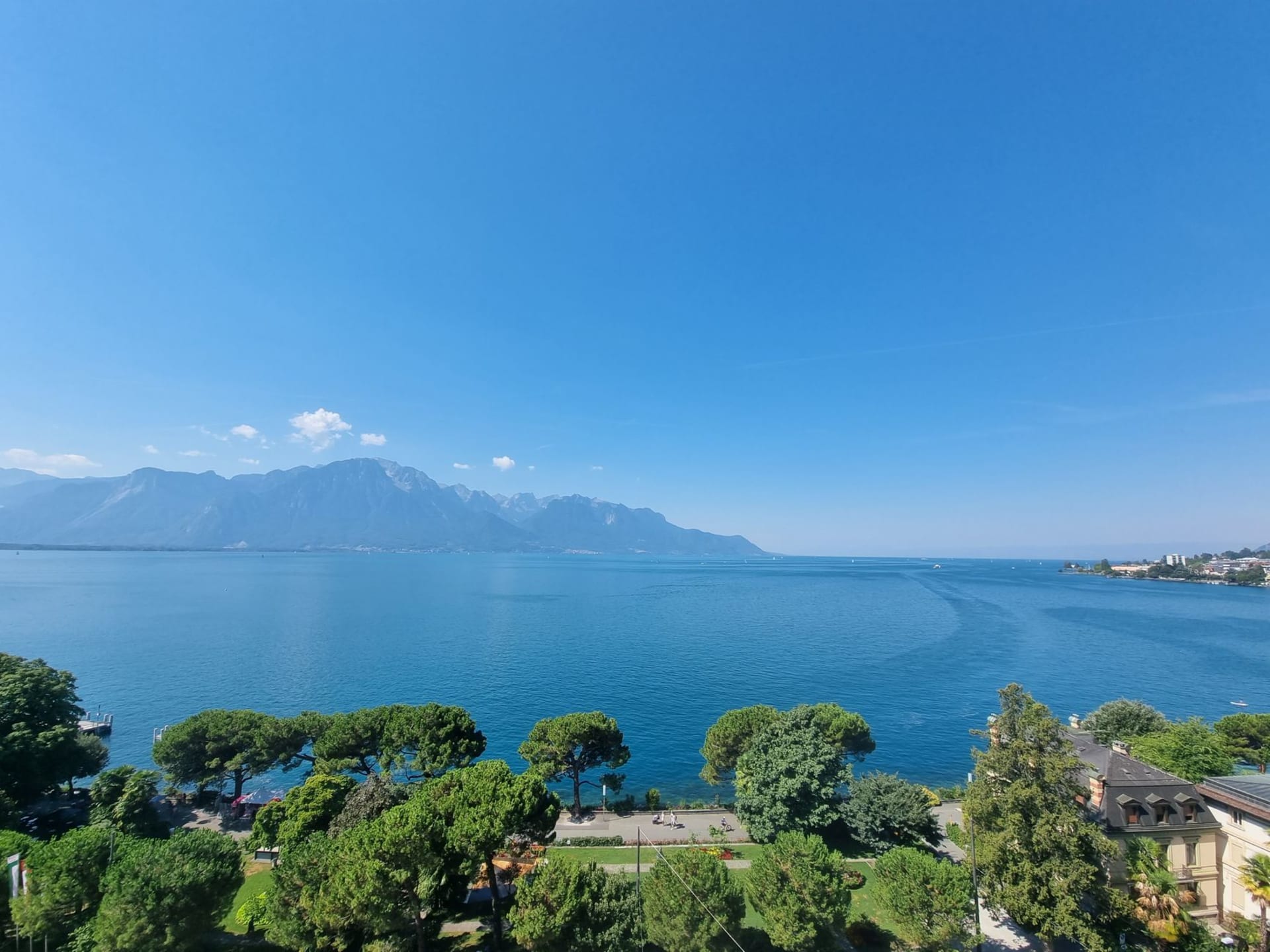
The first thing that confused me about Montreux was the palm trees. You spend a week in Switzerland conditioning yourself for cowbells and cold air, and then you step onto the lakefront here and find a subtropical promenade — palms, magnolias, beds of flowers, the wide blue plate of Lake Geneva spreading out toward the French Alps on the far shore. The town sits in a sheltered curve protected by mountains, and the microclimate is so mild that things grow here which have no business growing in the Alps at all. Lia, who had been bracing for another bracing day, immediately took off her jacket and declared we were staying an extra night.
The Lakeside and the Castle
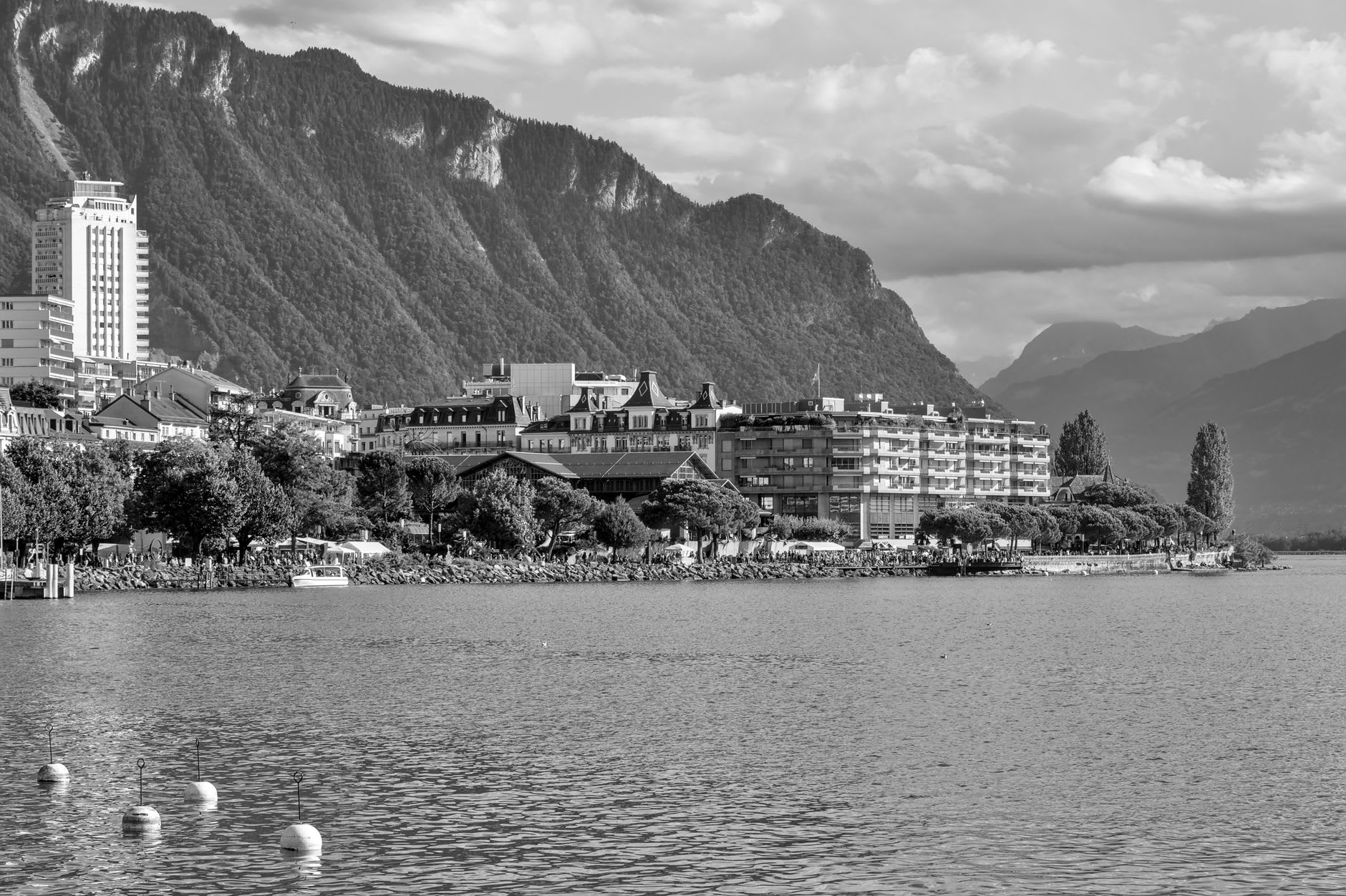
Montreux is built for walking slowly. A flower-lined promenade runs for kilometers along the water, dotted with sculptures — including a bronze Freddie Mercury striking his familiar pose, because Queen recorded here and Mercury loved the town enough that the statue feels earned rather than gimmicky. We strolled it in the late afternoon with ice cream, watching the old paddle steamers of the Belle Époque fleet churn back and forth across the lake, and I understood why this stretch of shore drew writers and consumptive aristocrats for a century and a half.
The walk delivers you, eventually, to the Château de Chillon, and this is the thing you actually came for whether you knew it or not. The castle sits on a little rocky island a few meters off the shore, a fairy-tale pile of towers and turrets reflected in the lake, and it is one of the most visited historic buildings in Switzerland for good reason. Inside, it is properly medieval — vaulted underground chambers where Lord Byron carved his name into a pillar after writing about the prisoner once chained here, great halls hung with banners, and window after window framing the lake like a series of paintings. We spent hours, far longer than I expected, and I came out genuinely moved, which is not something castles usually manage with me.
Jazz, Vineyards, and the Train Up
If you can time it, come for the Montreux Jazz Festival, the legendary July gathering founded in the 1960s that long ago stopped being only about jazz and now pulls every kind of music to the lakeside for a couple of glorious weeks. The whole town fills with sound, the lakefront becomes one long open-air party, and the energy is utterly unlike the polite Swiss reserve of the rest of the year. We missed the festival by a few weeks, which I am still slightly bitter about, but the town’s musical pride is visible everywhere, all year.
Above and behind Montreux climb the terraced vineyards of the Lavaux, a UNESCO-listed sweep of steep walled plots that have produced wine since the monks of the Middle Ages carved the slopes into steps. We took the little cog train up toward the Rochers-de-Naye for the view, but the better afternoon was spent wandering the vineyard paths just west of town, glass of crisp Chasselas in hand, the lake glittering below and the Alps doing their thing across the water. It is the rare Swiss combination of indulgent and effortless, and I have rarely felt so content doing so little.
Practical Notes
Montreux is an easy train ride from Geneva or Lausanne along the lake. Visit Chillon early to beat the crowds, and walk there along the promenade rather than driving — the approach is half the pleasure. Come in July for the jazz festival if you possibly can, but the town’s mild climate and lakeside ease make any season worthwhile. Leave time for the Lavaux vineyards. A glass of local white on a terrace above the water is the correct way to end a day here.