Arosa
"A valley that ends here is a valley that has to justify itself. Arosa manages this."
The Road That Stops
There is only one road into Arosa. It climbs 1,200 meters in eighteen kilometers from Chur through the Schanfigg valley — a series of tight switchbacks above forested gorges — and it ends in the village. You cannot go through Arosa to somewhere else. You have to mean to arrive here, and that simple fact changes the character of the place. The people in Arosa are there because they chose Arosa, not because they were passing through.
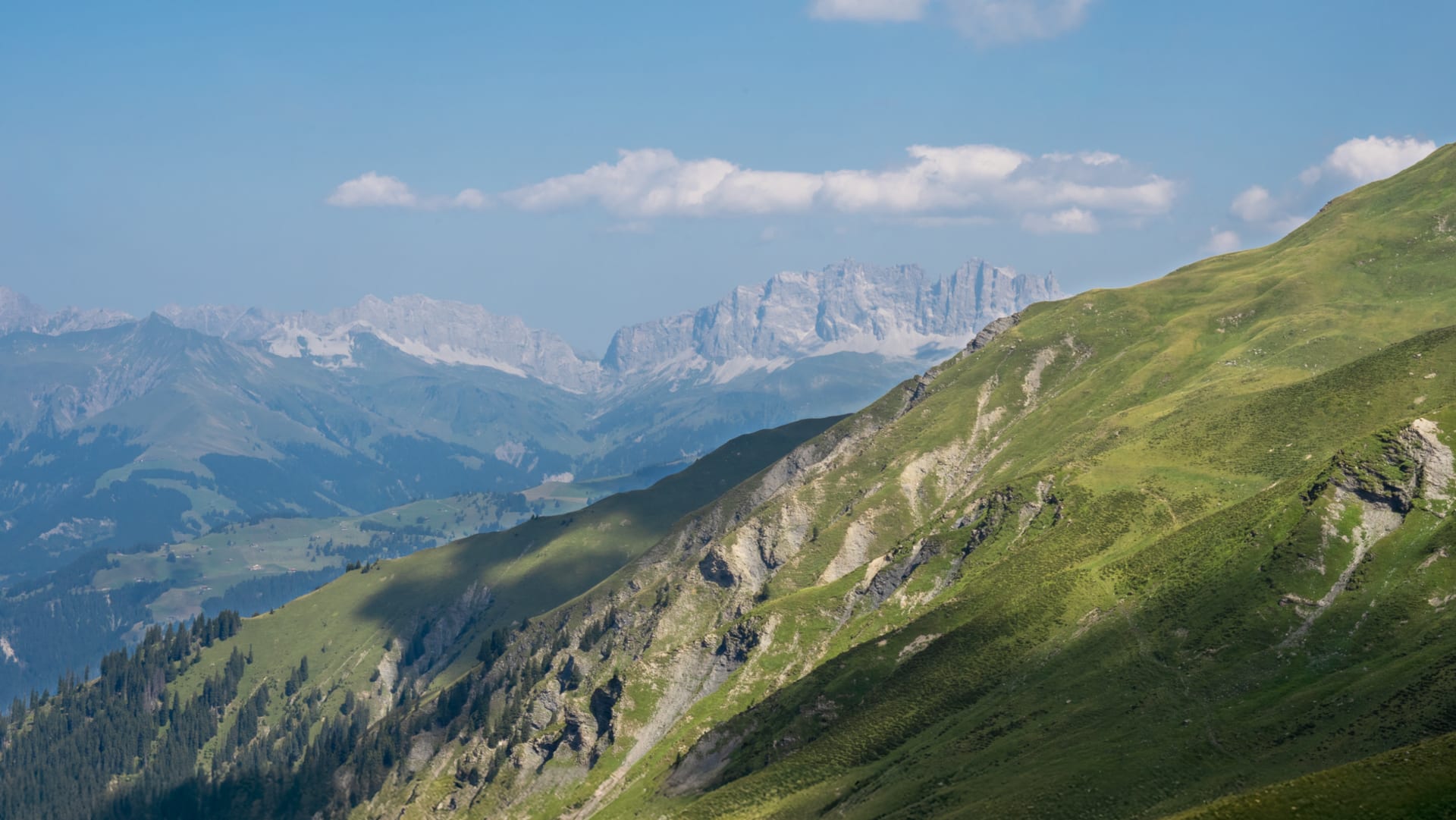
The village sits in a high basin at 1,800 meters, surrounded by rounded summits rather than sharp alpine peaks — the Weisshorn, the Hörnli, the Schafter Grat. It’s a softer landscape than Zermatt or Grindelwald, more rounded and forested, with two small lakes that freeze cleanly in winter and reflect the sky in summer. The Obersee in winter, perfectly flat white ice surrounded by snow-laden spruce trees, is among the most genuinely peaceful places I’ve sat in the Alps.
The Arosa Lenzerheide Connection
In 2013, Arosa connected by gondola with Lenzerheide — a resort in the next valley — creating a combined ski domain of 225 kilometers. The gondola crosses the ridge above Arosa and descends into a completely different valley, which is a useful reminder that valleys are arbitrary human things and mountains connect as much as they divide.
The skiing itself is well-suited for intermediate skiers: wide runs, varied terrain, good grooming, and the Weisshorn at 2,653 meters for altitude when conditions require it. I’m not the most technical skier and Arosa was one of the first places in Switzerland where I didn’t feel outclassed. The resort is quieter than the marquee names, which means shorter lift queues and a more relaxed atmosphere on the slopes.
Bears and Seriousness
Arosa has a bear sanctuary at the edge of the village, which is a real thing that exists. Brown bears rescued from inadequate conditions elsewhere in Europe live in a large natural enclosure above the lake. I visited on a summer afternoon and watched a bear do something very deliberate with a stone in a stream for about fifteen minutes. Whether it was using the stone as a tool or just moving it was unclear. Either way it was more interesting than most things I paid to watch that year.
The village takes its ecological commitments seriously. It became one of the first Swiss resorts to run its ski lifts entirely on renewable energy. The Arosa Bear Foundation that runs the sanctuary is active in conservation beyond the bears themselves. This gives the place a slightly earnest quality that I find reassuring, though I recognize not everyone will.
The Railway and What It Does
The Rhaetian Railway runs from Chur to Arosa on a narrow-gauge line that was built in 1914 and is, by several measures, an engineering achievement that deserved more attention than it got. The train climbs through the Schanfigg gorge on gradients steep enough to require rack sections, passes through forty-two tunnels, and arrives in Arosa at 1,739 meters. The journey takes about an hour from Chur. I rode it in early October with the valley larches at peak yellow and the light horizontal through the gorge windows, and I did not look at my phone once.
The train is the better way to arrive — not because the road is bad but because the train makes the arrival into the narrative it should be.
When to go: January through March for skiing, with the Weisshorn and north-facing slopes holding snow reliably. Late June through September for hiking — the trails are excellent and the bear sanctuary is at its most active in summer. October for the larches and the Rhaetian Railway journey at its most beautiful. The village is genuinely pleasant off-season in ways that busier resorts are not.