Höga Kusten
"Höga Kusten is still rising — the land is literally escaping the ice age, centimeter by centimeter."
The UNESCO-listed High Coast north of Stockholm: dramatic cliffs, deep fjord-like inlets, and a landscape still rising from the sea since the last Ice Age.
There is a particular vertigo in standing somewhere that is not finished yet. The cliffs of Höga Kusten — the High Coast — plunge from dense boreal forest into fjord-like inlets so dark and still they look painted. The rock beneath your boots is moving. Not metaphorically. The land here has been rising at roughly eight millimetres a year since the last Ice Age removed its weight of glaciers, and the process is still underway. Old fishing harbours find themselves stranded metres above the waterline. Islands that didn’t exist a thousand years ago break the surface of the Gulf of Bothnia. The geology is doing something, slowly, and the landscape carries that feeling of incompletion.
The Shape of the Water
Lia and I drove up from Härnösand along Road 1, the old coastal route, on a late August morning when the light was so flat and white it erased all shadow. The inlets — vikar in Swedish — cut deep into the land like the fjords further west in Norway, except here the water sits darker, more brackish, and the forest comes all the way to the shore. We stopped at Skuleskogen National Park and hiked the Skuleberget trail up to the summit at 295 metres. From the top, the archipelago opened below us: hundreds of small islands, the sea striped pale green and grey, a silence so complete I could hear my own pulse.
What surprised me was the sound in the forest — or rather, the texture of it. The path through Skuleskogen cuts between enormous boulders left by retreating glaciers, and the moss here is so thick and uninterrupted it swallows footsteps entirely. I have walked in forests across two continents and I have never heard my own movement disappear the way it did in that forest. Lia stopped and held up a hand and we stood in a silence I have no better word for than geological.
Villages Abandoned by the Sea
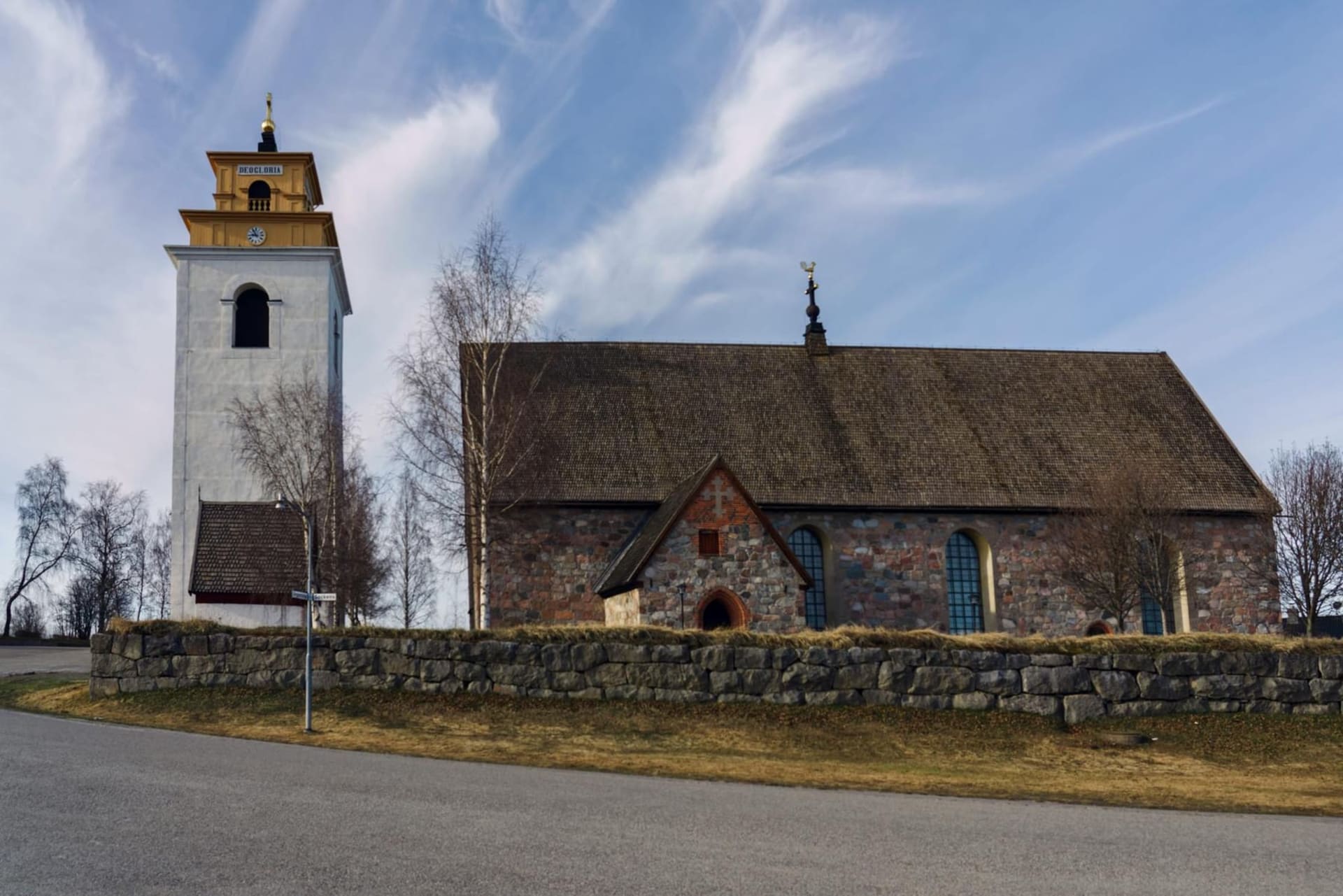
Further north along the coast, the village of Nordingrå sits on a peninsula where the land has risen so dramatically that the old fishing plots — called fiskelägen — now stand on dry ground that was once tidal. The village church at Nordingrå, dating from the twelfth century, was originally served by boats from the surrounding islands. Those same islands are now reachable on foot at low tide. History here is written in altitude.
For food, I stopped at a small red cottage near Barsta serving gravad lax with dill and a coarse mustard sauce so sharp it made my eyes water — the kind of lunch that needs nothing else. Afterwards, we drove out to Rotsidan, a nature reserve on the open sea coast, where the shoreline is pure polished gneiss, striated in grey and pink, worn flat by a sea that no longer reaches it. The old tideline is clearly visible as a dark stripe in the rock, a metre above where the waves now break.
When to go: July and August offer long light and warm enough temperatures to swim in the coastal inlets. Late August into September brings the first hint of autumn colour across the birch and rowan, which against the dark spruce is genuinely worth the journey. Avoid mid-July if crowds matter — the campsites along the Höga Kusten trail fill early.