Nungwi
"The boat builder was fitting a plank with a hand adze. When I took a photo he charged me two hundred shillings. Fair."
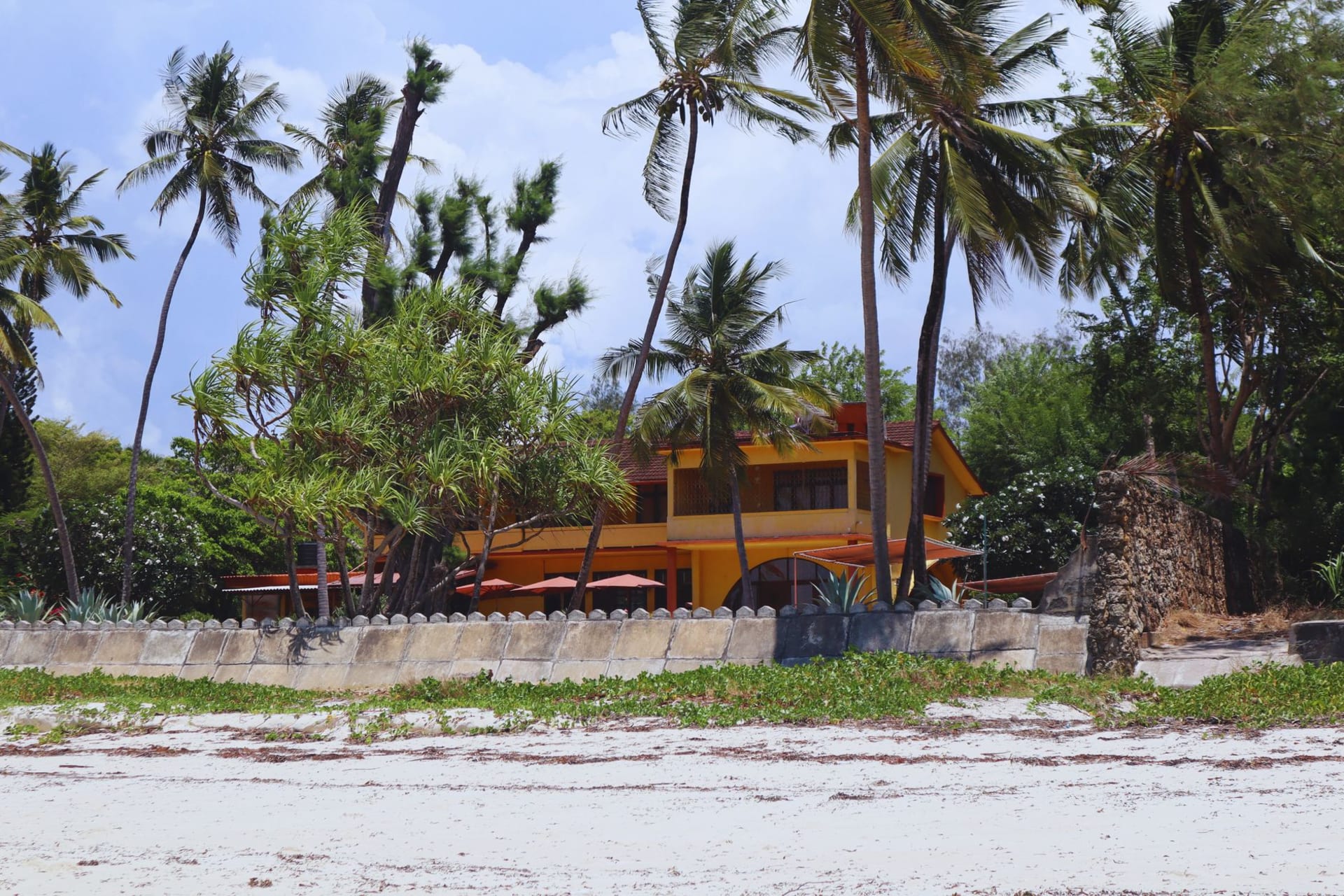
Nungwi occupies the northernmost point of Zanzibar island, where the west-coast calm water meets the east-coast wave exposure and produces a beach that works regardless of the wind direction. This is the operational reason it became what it is. The white sand beach curves around the headland in both directions. The water is warm and shallow on the lagoon side, deeper and cleaner on the ocean side. The reef is close enough to the shore that you can hear it at night.
I’ll be direct about the tourist situation: Nungwi has developed. There are hostels and beach bars and tour operators and a continuous soundtrack of reggae from somewhere. It’s not a secret, and it’s not the fishing village it was twenty years ago. But the dhow builders are still there — their workshops on the beach operate exactly as they have for generations — and the northern headland has a particular quality at sunset that cuts through whatever else is happening around it.
The Dhow Yard
Traditional dhow building on Zanzibar is a craft transmitted generationally, using methods that predate any written instructions on the subject. The boat builders at Nungwi shape the hulls by eye, fitting planks of mango and mvule wood without metal fasteners in the older construction, using techniques that produce a hull whose form derives from centuries of monsoon sailing rather than from any engineering calculation.
The yard on the western beach is informal — men working in the shade of coconut palms, the smell of wood shavings and caulking material, boats in various stages of construction from fresh keel to nearly-complete hull. I spent an afternoon watching without being asked to contribute, which surprised me. The head builder, a man named Hamisi who had been doing this for forty years, eventually invited me to run my hand along the planking of a half-finished vessel and explained through gestures that the hull shape was designed for the northeast monsoon — the angle of the stern for running before it, the beam width for stability in the channel chop.
His son, about sixteen, was doing the same work ten meters away. The continuity was not sentimental. It was just what was happening.
The Water
The east-facing beach at Nungwi has the better snorkeling — shallow reef gardens extending perhaps four hundred meters offshore with reasonable coral coverage and fish populations that benefit from being adjacent to a community that has some stake in keeping them there. Early morning, before the beach boys and the boat trips organize themselves, you can get in the water with a mask and have it mostly to yourself.
The lagoon on the western side is where the sunset swimmers go, and correctly so: the lagoon water is bath-warm and chest-deep for a long way out, and the western horizon is unobstructed. Lia swam out until she was a small shape against the orange light while I sat on the sand and ate a grilled corn cob from a vendor who’d appeared at exactly the right moment. The sunset at Nungwi is not subtle. It commits fully to what it’s doing.
Beyond the Beach
The village behind the tourist strip is worth walking into — the mosque, the fish market in the morning, the tea stalls where older men sit in plastic chairs through the heat of the day. Mnarani Aquarium, run by a local conservation organization, rehabilitates green turtles found injured on the coast and releases them when they’ve recovered. The turtles in the tanks are not an attraction so much as a waiting room, which is a useful distinction.
Day trips from Nungwi reach the sandbar at Nakupenda, the Mnemba Atoll for diving, and the spice farms in the island’s interior. All are worth it. The spice tour, in particular, is either cheesy or genuinely interesting depending entirely on your guide — ask for someone who can tell you which colonial power introduced which plant and why.
When to go: June through October is the reliable window — dry, warm, good visibility for snorkeling. December through February is also excellent. Avoid March to May when the long rains arrive and eastern beach access can become rough. Nungwi’s western beach works year-round, which is part of its persistent appeal.