Mombasa Old Town
"Fort Jesus doesn't whisper its history — it just lets the walls do the talking."
The thing about Mombasa that surprises people is how little attention it gets relative to what it contains. Most travelers breeze through on the way to beach resorts to the north and south, spending maybe half a day before the dhow safari operators find them. That’s unfortunate, because the Old Town — the original port city wedged between Fort Jesus and the harbor — is one of the most layered pieces of Swahili urban fabric on the entire coast, and it runs on a pace and a logic entirely its own.
I came in from the mainland by matatu, which is the only honest way to arrive anywhere in coastal Kenya, and worked my way down through the chaos of Digo Road into the narrowing streets of the Old Town as the morning traffic thinned. Within four blocks the noise dropped, the buildings leaned inward, and I was in a different century.
Fort Jesus
The Portuguese built Fort Jesus between 1593 and 1596 on a coral ridge overlooking the harbor entrance, and it changed hands nine times in the following century — between the Portuguese, the Omani Arabs, and various combinations of siege and counter-siege — before the British finally arrived and decided to use it as a prison. It’s a UNESCO site now, and the museum inside is one of the better colonial-era institutions I’ve visited in East Africa: honest about what happened here, well-documented on the Swahili trading culture that preceded the Portuguese, and genuinely moving on the subject of the Mazrui Arabs who died in the final siege of 1875.
The walls are what stay with you. Portuguese military architecture of this period has a particular quality — massive, angled bastions designed to absorb cannon fire, and a strange beauty in the mathematical precision of how each angle was calculated to eliminate defensive blind spots. I walked the ramparts for an hour in the early morning before other visitors arrived and watched the dhows move through the channel below.
The Old Town Streets
Between Fort Jesus and the Old Harbour, the Old Town’s residential streets contain some of the finest Swahili vernacular architecture on the Kenyan coast. The coral-stone buildings here have carved wooden balconies projecting over the street, Indo-Arabic in style, painted in fading pastels. Hardinge Street and Ndia Kuu Road have the best concentration. The Mandhry Mosque, dating to 1570, is one of the oldest mosques in East Africa still in use. The Old Law Courts building, now a cultural center, hosts occasional evenings of taarab music — the Zanzibar-origin style that fuses Arabic maqam with Swahili poetry and a rhythm section — and if you time your visit right, you can hear it spilling out onto the street.
Harbor Coffee and Fish Market
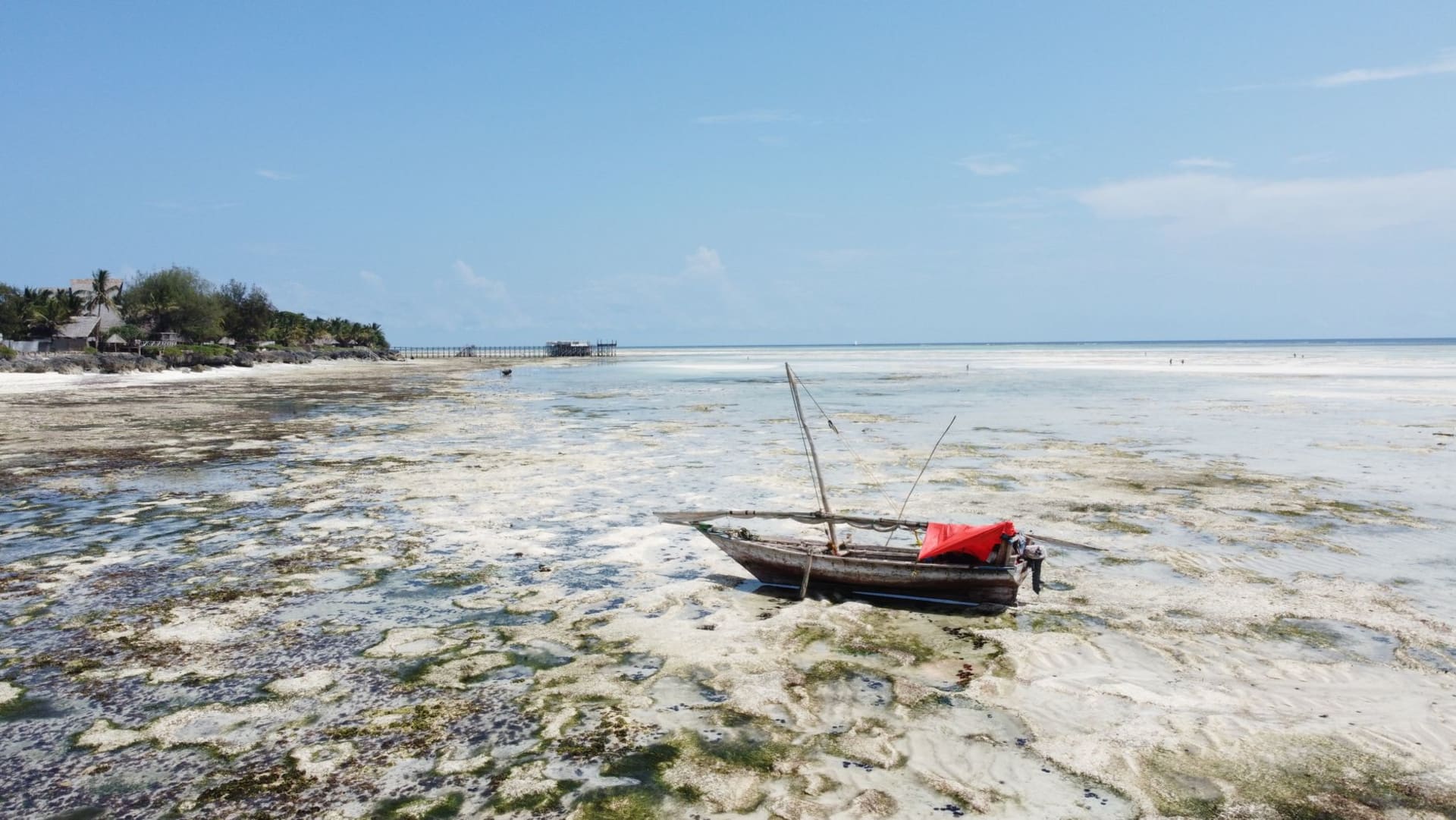
The Old Harbour fish market in the early morning is worth the alarm clock. The catch comes in off the nighttime dhows: rock cod, kingfish, red snapper, the occasional barracuda laid out in rows while buyers argue price in Swahili and Giriama. By seven the serious business is done, and the small tea stalls around the market open up serving chai and mandazi to men who have been working since three in the morning. I sat with a cup so sweet it made my teeth ache and watched the harbor light go from orange to white, and felt exactly like I’d accidentally ended up somewhere that wasn’t performing itself for anyone.
Getting Your Bearings
Mombasa island is connected to the mainland by a causeway to the north and a vehicle ferry to the south. The Old Town sits on the eastern edge of the island. It’s small enough to walk in a day, and doing it properly — Fort Jesus, the old streets, the harbor front, the mosques — takes about five focused hours. The rest of Mombasa, frankly, you can take or leave.
When to go: January through March offers the best combination of dry weather and calm seas for harbor dhow trips. The short rains in November are light enough to be manageable, and the Old Town looks spectacular washed clean. Avoid April through June when the long rains make the unpaved Old Town streets deeply unpleasant.