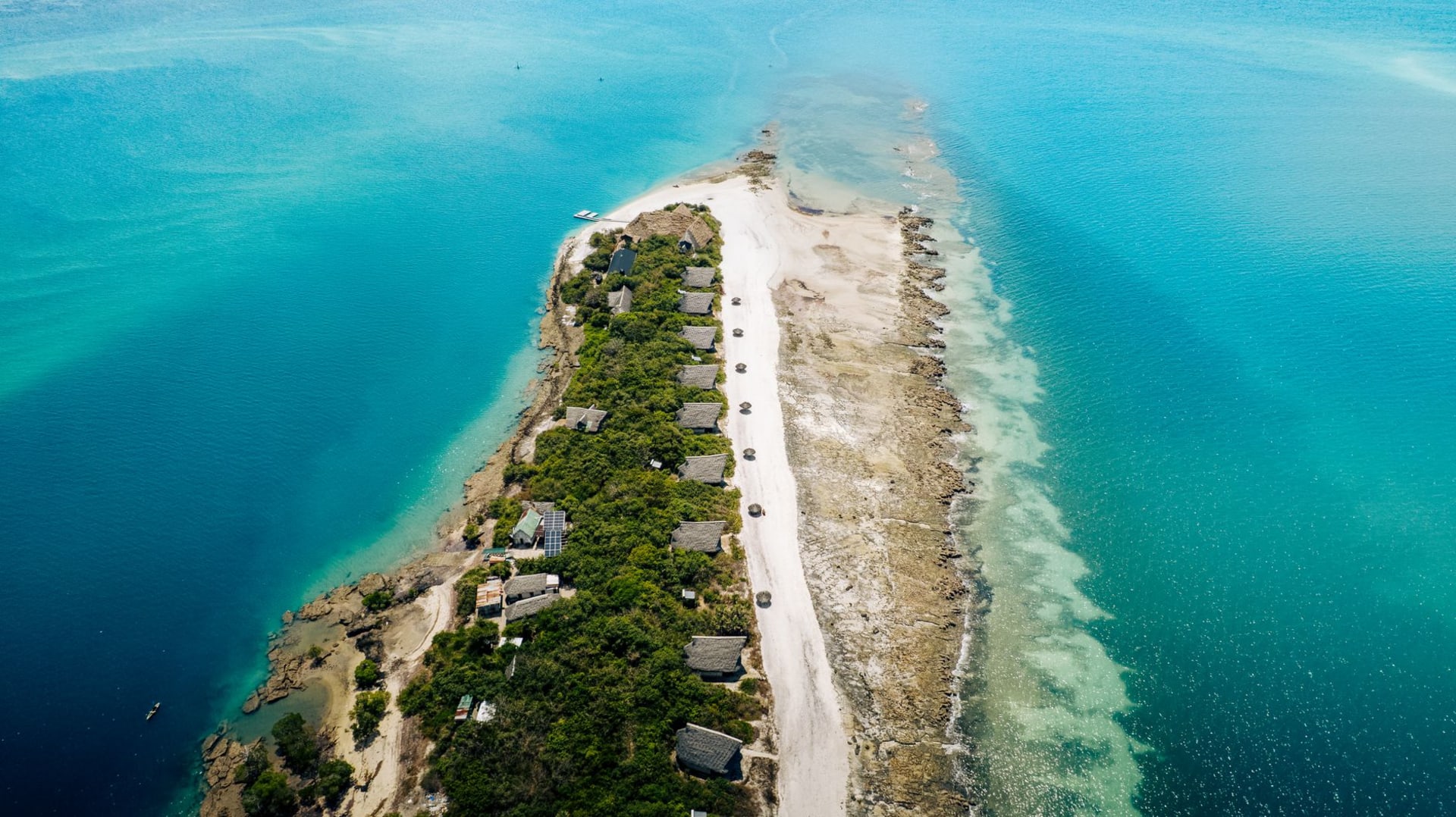
Mafia Island
"The whale shark was perhaps eight meters long and completely unbothered by my presence. The feeling was not mutual."
The name generates a predictable conversation at every guesthouse check-in. Yes, I know what it sounds like. No, there is no organized crime connection. Mafia Island takes its name from an Arabic word — possibly morphu, meaning “archipelago” or “healthy place,” depending on which etymologist you ask — and the island sits about one hundred and thirty kilometers south of Dar es Salaam in the Indian Ocean, small and flat and ringed by a marine park that protects one of the most intact reef systems left on the East African coast.
I flew in on a small propeller plane from Dar. The airstrip is a grass clearing. The pilot announced our arrival by banking left so we could see the reef from above — turquoise shading into deep blue in striations that showed exactly where the coral ended and the open ocean began. From four hundred meters the island looks like it belongs to a different century.
Whale Sharks
Between October and March, whale sharks congregate in the shallow waters around Mafia to feed on zooplankton blooms, and the Mafia Island Marine Park operates a carefully managed snorkel program to get people in the water with them. The rules are strict: no more than eight swimmers per shark, no touching, maintain distance, no flash photography. The sharks themselves enforce none of this — they continue filtering water at their own pace regardless of what the humans do.
I went out twice. The first encounter was a juvenile, perhaps four meters, moving through the shallows at a pace that required continuous effort to match. The second was much larger — eight meters at minimum, the guide estimated, moving through deeper water with the kind of authority that belongs to things that have been doing this without modification for sixty million years. I floated alongside it for perhaps two minutes before it descended out of visibility, and I surfaced with the specific elation that comes from contact with something that cannot be replicated in any other context.
The Reef
The whale sharks are the headline, but Mafia’s reef system is the underlying story. The Mafia Island Marine Park was established in 1995 and covers roughly eight hundred square kilometers of ocean, and the protection has held well enough that the coral gardens in the shallower sections of Chole Bay are in a state that I’d describe as genuinely thriving rather than the “recovering” that serves as diplomatic language elsewhere.
Snorkeling in Chole Bay at midday, when the light goes straight down and the coral colors are maximum, is one of the better things I’ve done in the Indian Ocean. Titan triggerfish, octopus in the coral rubble, a sea turtle that came up from below and passed through my field of vision close enough that I could see the scutes on its shell. Diving the outer reef walls adds dogtooth tuna and hammerhead sharks at cleaning stations in the right season.
Chole Island
A five-minute boat ride from the main island brings you to Chole, a smaller island in the bay with the romantic ruins of a nineteenth-century Arab trading settlement — collapsed warehouses, a customs house partially consumed by baobab roots, a graveyard with carved headstones in Arabic. A small community lives here in wooden houses under the baobabs, and several of the most appealing places to stay on the Mafia archipelago are on Chole rather than the main island, built into the ruins and the vegetation in a way that produces something genuinely lovely.
Getting There and Reality
The plane from Dar is the practical option — roughly forty-five minutes and it runs most days. The ferry exists but takes many hours and is infrequently scheduled. Infrastructure on the island is minimal by design: no ATMs, limited electricity, and a tourist population small enough that the reef has remained in the condition it’s in. Bring cash, bring a book, bring patience for variable wifi. The exchange rate is: solitude and undamaged marine life for mild inconvenience.
When to go: October through March for whale sharks — this is the primary draw and the timing is reliable. July and August bring strong southeast trade winds but excellent visibility for diving. Avoid April and May (long rains). The island has limited beds overall; book several months ahead for the October-March window.