Bagamoyo
"The name means 'lay down your heart.' The people who named it were not being poetic."
The name Bagamoyo translates from Swahili as “lay down your heart” or “here my heart rests,” and the interpretation depends entirely on who was speaking and why. For nineteenth-century Arab slave traders, it was the last port before the sea crossing to Zanzibar — a journey’s end. For the enslaved people who walked here from the interior, bound and dying after hundreds of kilometers from the great lakes, it was the last point of African soil they would ever stand on. The name accommodated both readings without resolving the contradiction. That seems about right for a place that contains this much.
I came by dalla-dalla from Dar es Salaam — about an hour north on the coast road — and arrived in the late morning when the heat was building and the streets were quiet. Bagamoyo is quiet in general. It was once the most important port on the Tanzanian coast, the mainland terminus of the slave and ivory trade, the first capital of German East Africa. Then the colonial administration moved to Dar es Salaam in 1891, the railway bypassed it, and it stopped. Not declined, exactly — stopped. The buildings stayed, the streets stayed, the town’s form stayed, and the people who live here now navigate an architecture that belongs to several different catastrophes.
The Old Town
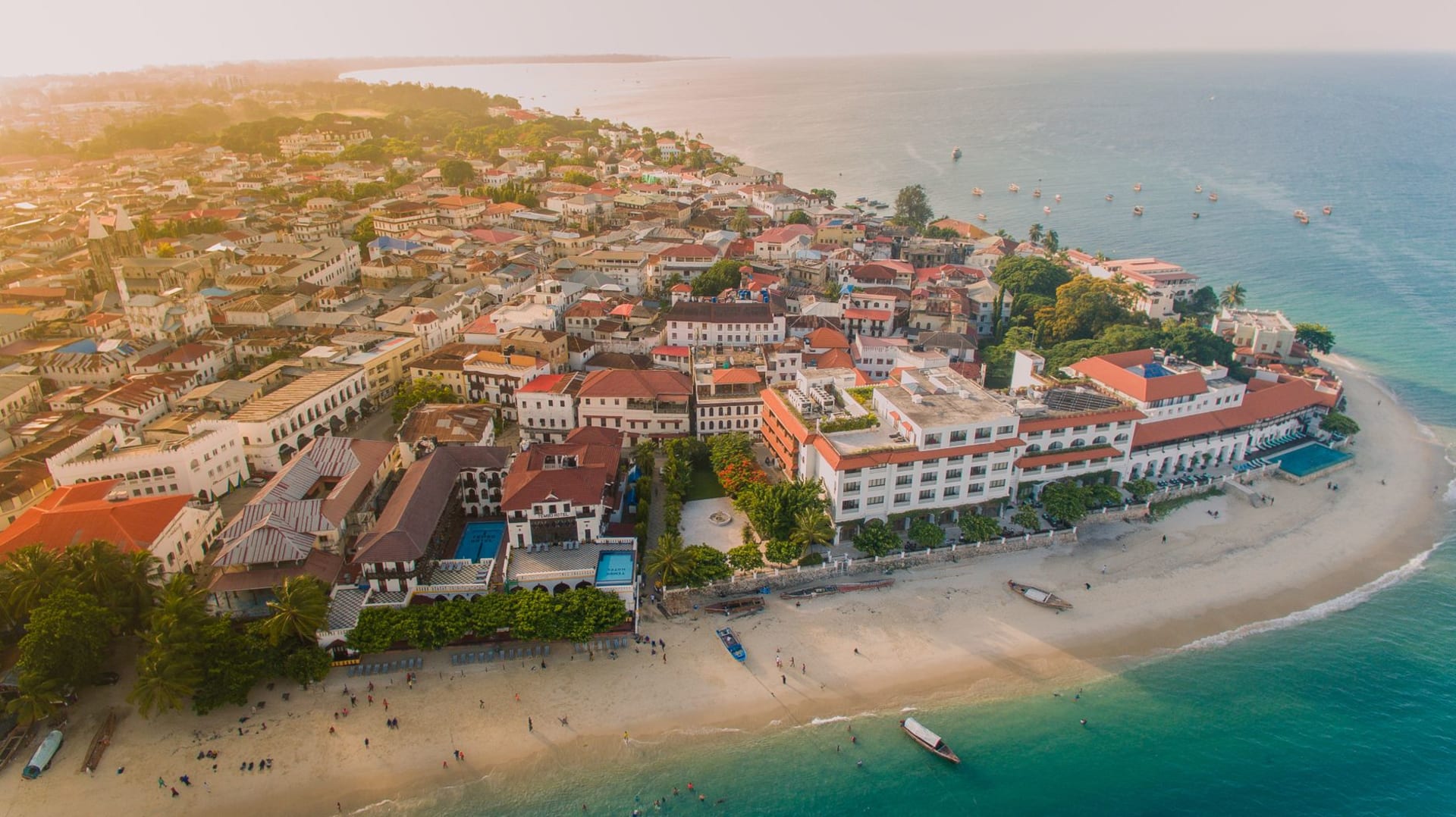
The core of Bagamoyo’s old town is a UNESCO tentative-list site with a concentration of late nineteenth-century buildings — German colonial administrative structures in a tropical baroque style, Omani Arab coral-stone merchants’ houses, and Indian trader facades with carved balconies — that together constitute something like an accidental museum of East African colonial-era commerce.
The German boma, the colonial administrative fort, is the visual centerpiece — whitewashed, arched, incongruous and solid. The Customs House on the waterfront dates to the same period. Neither is particularly well-maintained, which is either a failure of resources or an honest representation of the town’s condition, and in Bagamoyo the line between those two readings is thin.
The Slave History
The Kaole ruins, a few kilometers south of town, are the oldest known mosque ruins on the Tanzanian mainland, dating from the thirteenth century. The museum inside the Catholic Mission — built by French Holy Ghost missionaries in 1868 — contains documentation of the slave trade that is more direct than almost anything I’ve seen in any East African museum: photographs, inventories, ledgers. The mission itself was a way station for freed slaves. Livingstone’s body rested here in 1874 before being shipped to London. The weight of the place is not performed; it just accumulates as you walk through it.
In town, the last slave market site is marked by a plaque on an otherwise ordinary-looking building near the old Arab quarter. There is nothing theatrical about it. That feels correct.
The Beach and the Artists
Bagamoyo has a long beach, mostly empty except for fishing boats pulled up on the sand. At certain times of year, the College of Arts — Tanzania’s national performing arts institution, based here since the 1980s — runs open rehearsals and performances of ngoma drumming and traditional dance that are worth timing your visit around. The students practice in the afternoons, and the sound carries through the mango trees to the beach.
There is a small community of artists living in Bagamoyo — painters and sculptors drawn by the cheap studio space and the architecture — and their work appears in a few informal galleries near the center. The quality varies but the context is interesting: contemporary Tanzanian art being made in rooms where German colonial administrators once worked.
When to go: June through October is the reliable dry season — manageable heat, firm roads from Dar, and the beach is at its best. January and February are also good. Avoid April and May when the rains make the Kaole ruins and beach area difficult to reach on foot. The town itself rewards a full day rather than a rushed two-hour visit from Dar.