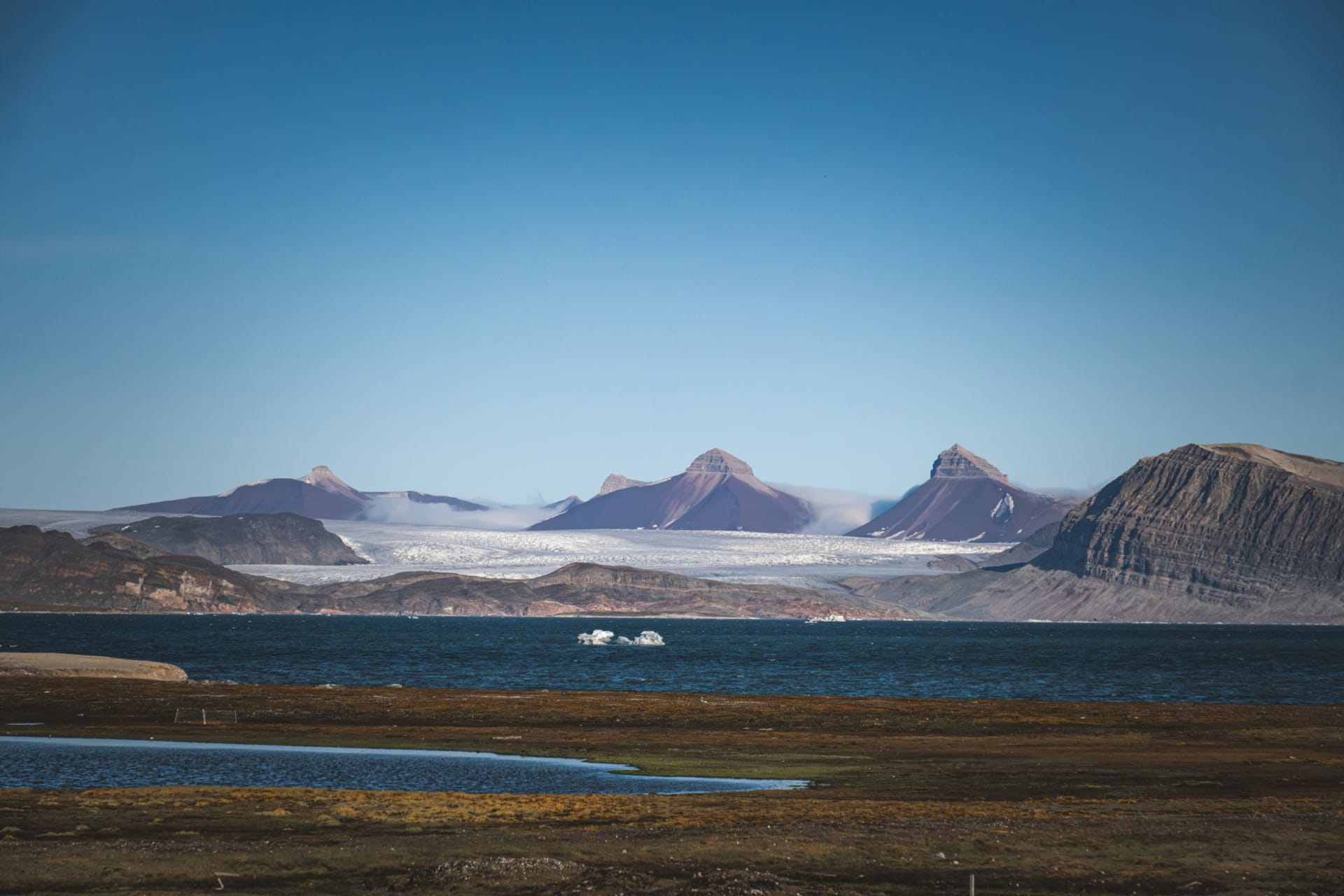
Svalbard Global Seed Vault
"One building in this condition, on this mountain, could theoretically save farming civilization. The architects went with polished steel. Good call."
The Logic of the Place
There’s a specific logic to putting the world’s agricultural backup at 78 degrees north in a mountain of permafrost, and it takes about ten seconds to follow it. If something catastrophic happens — war, disease, infrastructure collapse, climate events that eliminate regional crop varieties — you want your seed bank somewhere stable, politically neutral, geologically secure, and naturally refrigerated. Svalbard, under Norwegian sovereignty, geologically stable, cold enough to maintain seeds even if the active refrigeration systems fail, not near anything a rational person would bomb. The vault has been operating since 2008 and currently holds seeds from more than 6,000 crop species.
What I didn’t expect, arriving on the mountain road outside Longyearbyen in early afternoon, was how much the entrance would affect me physically. The installation — designed by Peter W. Søderman and Kristin Jarmund — is a concrete wedge driven into the mountainside at an angle, with a steel portal that glows at night from embedded fiber-optic artwork by artist Dyveke Sanne. In full winter darkness, it looks like a crack in the world that’s leaking light from inside.
What You Can and Cannot See
The vault is not open for general public access. The seeds are held in three sealed chambers further inside the mountain, maintained at minus 18 degrees Celsius, behind multiple security doors. Depositing countries keep ownership of their samples; they can withdraw them but cannot access the vault uninvited. This is a library for civilizational catastrophe, and it’s not organized around tourism.
What you can do is visit the entrance portal, walk the access road, and read the interpretive panels on site. Tours to the exterior are operated from Longyearbyen and some Svalbard cruise itineraries include a stop. The experience is not what you’d call immersive in the usual travel sense — you’re looking at a door, essentially — but the door is extraordinary and the idea behind it is one of the most serious things humanity has organized in the last century.
The walk up the gravel road to the portal, with the fjord visible below and the mountain rising above, is about fifteen minutes. I did it alone on a July morning and found a French geology student already there, sitting on the embankment reading documentation on her phone. We talked for a while about the Aral Sea and whether the samples from Central Asian melon varieties were in there. They are.
The Flooding Incident and the Climate Paradox
In 2017, water entered the outer tunnel of the vault when permafrost melt and heavy rain combined to produce an inflow that the drainage system wasn’t designed to handle. No seeds were damaged — the water refroze before reaching the storage chambers — but the incident prompted a significant infrastructure upgrade, including improved drainage and the extension of refrigeration into the outer tunnel. The paradox is specific and uncomfortable: the vault was partly designed to be passively cooled by permafrost, but warming Arctic temperatures are undermining the permafrost it was built into.
The Norwegian government funded the upgrades without hesitation, which is worth noting. There are things that money should be spent on, and this is clearly one of them.
The Bigger Thought
Standing in front of the vault entrance, I kept thinking about what a seed actually is — the compressed potential of an entire plant, the result of millennia of agricultural selection, adapted to specific soils and climates and human culinary preferences. The vault holds varieties of rice that exist nowhere else, potato strains developed by Andean communities over hundreds of generations, grain varieties lost from active cultivation but preserved here.
It’s an archive. It’s also a confession that we know we might need it.
When to go: The vault exterior can be visited year-round, weather permitting. Special open days are occasionally announced — the most recent was for the vault’s 15th anniversary in 2023. Check with Visit Svalbard for current access arrangements. In winter, the illuminated portal is especially striking during polar night.