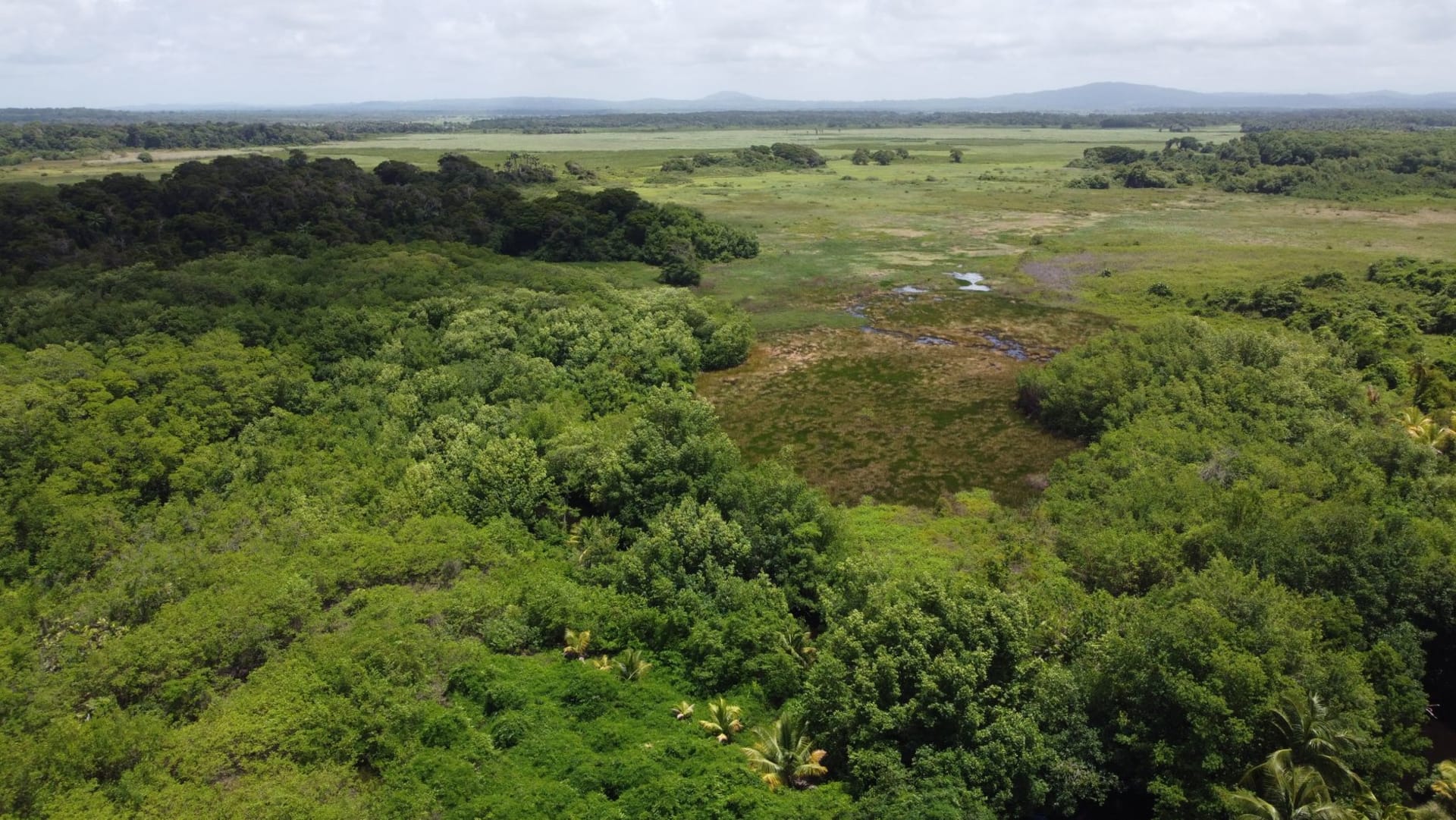
Galibi Nature Reserve
"Nothing prepares you for the size of a leatherback until one appears out of the sea in front of you."
Getting to Galibi requires a particular kind of commitment. You travel by boat up the Marowijne River from Albina, past the border with French Guiana, past mangrove banks where herons stand motionless in the shallows, until the river meets the Atlantic and the water goes the color of strong tea — tannin-stained from the jungle interior. The beach at Galibi is dark sand, almost black in places, and the Atlantic here is rough and warm and nothing like the Caribbean postcards.
I went in late April, which is peak leatherback season, and the experience of seeing these animals nest is one of the few things I’ve encountered in years of travel that genuinely left me struggling for a neutral description.
The Turtles
Leatherback sea turtles are not what you expect. They’re enormous — females can reach two meters in length and weigh close to 600 kilograms. When one comes out of the surf at night, moving with the slow, effortful heave of something built entirely for water now forced to operate on land, the experience is more akin to witnessing geology than watching an animal. They don’t seem to notice you if you stay still and keep lights off. The guides from the local Carib village are careful about this — no white lights, keep your distance, follow the protocol.
The nesting itself takes about an hour. The turtle digs a deep chamber with her rear flippers, lays somewhere between 80 and 100 eggs, covers them methodically, and then drags herself back to the water. The whole time she cries — a secretion that clears sand from her eyes, but which looks, inescapably, like weeping. I know it’s not. It still made the moment strange.
The Village and the Reserve
Galibi village is small — a few hundred Carib Amerindian residents who have lived at the river mouth for centuries. The community-run tourism operation here is one of the more genuinely local-led setups I’ve encountered: the guides are from the village, the lodging is in the village, and the income stays there. The reserve itself is managed in coordination with the community, and they take the turtle protection seriously. Poaching has dropped significantly since the community became the primary stewards.
The village also operates kayak tours through the mangroves behind the beach — narrow, tangled channels where the light comes through in flat slabs and the birds are thick. I found a scarlet ibis colony, which still registers as slightly improbable — that color, that specific intense red, in that specific green tangle.
The Broader Coast
Beyond turtle season, Galibi is a destination for anyone interested in coastal Suriname’s less-visited edge. The birdlife along the river is exceptional throughout the year. The fishing boats go out before dawn and return with catches that end up in the evening meal. The pace is slow in a way that feels structural, not performed.
The logistical effort required to reach Galibi means the crowds never materialize. On the beach at night, watching a leatherback disappear back into the Atlantic, there were six of us total. The sound was the surf and nothing else.
When to go: Leatherback nesting peaks from March through June; olive ridley season runs roughly July through September. Book well in advance for peak turtle months — village lodging is limited. The boat from Albina runs daily but is weather-dependent.