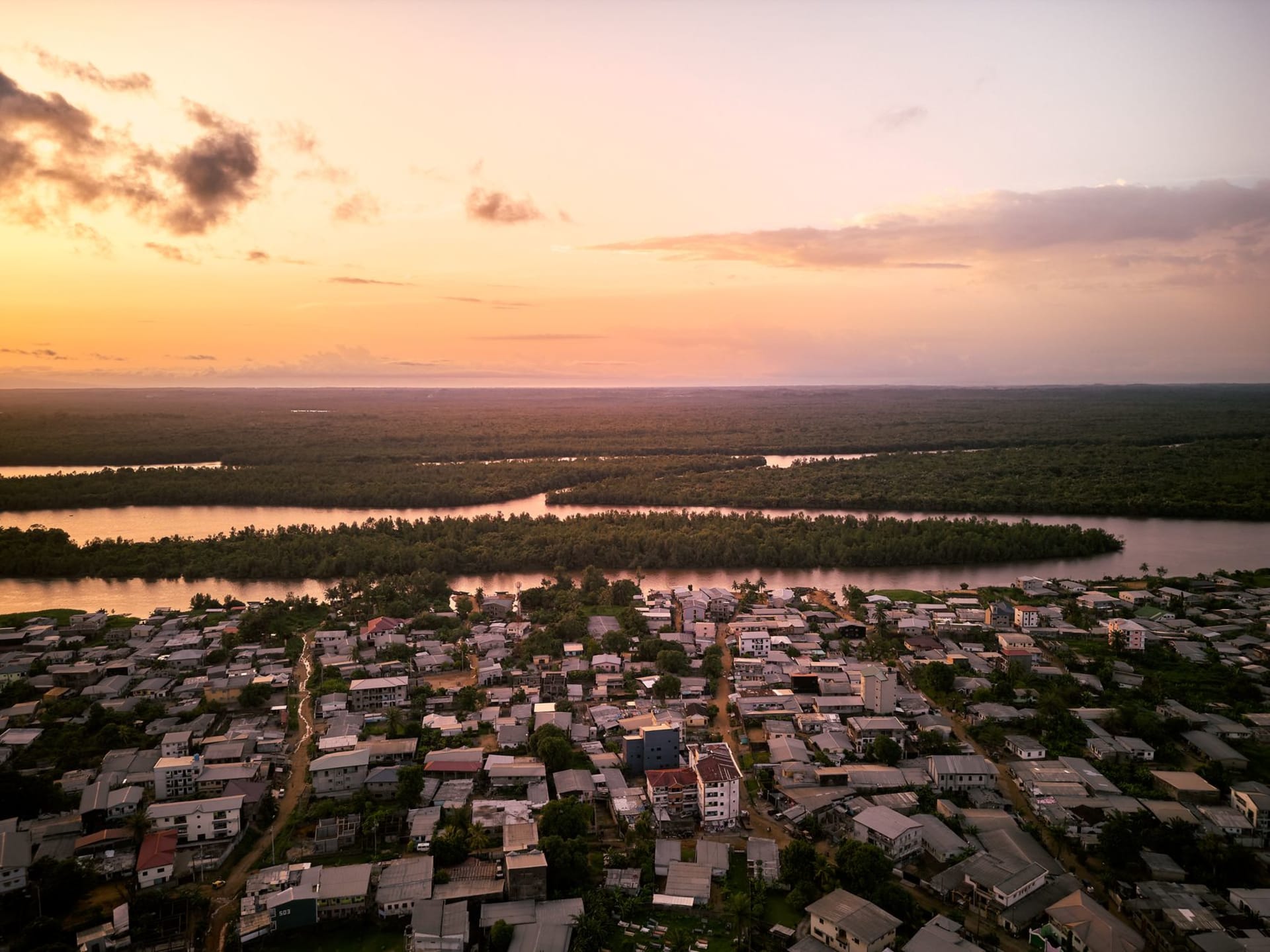
Commewijne District
"The most pleasant afternoon I've spent on a bicycle in the Americas."
The ferry from Paramaribo across the Suriname River to Commewijne takes about twenty minutes and costs almost nothing. On the other side, the road straightens out and runs alongside the Commewijne River through a landscape that shifts between open plantation land, dense cane, and stretches of tall royal palms that were originally planted to line the estate driveways of colonial sugar plantations. Those estates are mostly ruins now. The palms remain, perfectly spaced, enormous, casting long shadows across the tarmac.
I rented a bicycle in Paramaribo and brought it over on the ferry — the standard way to do this — and spent a full day working my way along the river road toward the old plantation Fort Nieuw Amsterdam and back.
The River Road
The road itself is the experience. It runs within a few meters of the riverbank for most of its length, and the Commewijne River is so flat and still that the trees on the far bank reflect back in perfect detail. Egrets work the shallows. Occasionally a small wooden boat crosses. There’s almost no traffic.
Along the way you pass old plantation estates in various states of decay — some with only a chimney still standing, the brick slowly being reclaimed by roots and vines; others with the great house still intact, converted to something else or simply inhabited. The history here is brutal — this land was worked entirely by enslaved people, and the plantation economy is what built Suriname’s colonial wealth. The ruins don’t let you forget it.
Fort Nieuw Amsterdam
At the confluence of the Commewijne and Suriname Rivers stands the old colonial fort, now an open-air museum village. A collection of wooden buildings — a hospital, barracks, officers’ quarters — has been preserved inside the star-shaped earthwork fortifications. It’s low-key to the point of being almost deserted on most days, which means you wander through it at your own pace, reading the interpretation panels without anyone in the way.
The view from the fort walls over the river junction is the kind of thing that stops you mid-sentence. Two rivers meeting, the water the color of strong tea, a few cargo vessels in the distance, nothing else.
Plantation Frederiksdorp
A little further along the river, Frederiksdorp operates as a heritage lodge and small museum inside a restored plantation estate. Even if you’re not staying here, you can visit to see what a working plantation house looked like — the proportions designed for colonial management, the kitchen buildings set apart from the main house, the whole architecture of authority made visible in wood and brick.
The lodge does afternoon tea on the veranda. I sat there longer than I meant to, watching the river and eating something with coconut that I couldn’t fully identify but would eat again immediately.
The Spice Farms
Closer to the ferry landing, a handful of working spice farms produce peppers, citrus, and the bitter orange used in Surinamese cooking. One family farm offered a short tour that ended in a tasting session in the kitchen — bottles of homemade pepper sauce, candied citrus peel, something very orange and very sweet pressed on me with the specific insistence of people who make food they’re proud of.
When to go: The dry seasons (February–April and August–November) make for the most comfortable cycling. The road is paved and manageable year-round, but the wet season heat-plus-humidity combination makes a full day in the saddle punishing. Start early regardless of when you go.