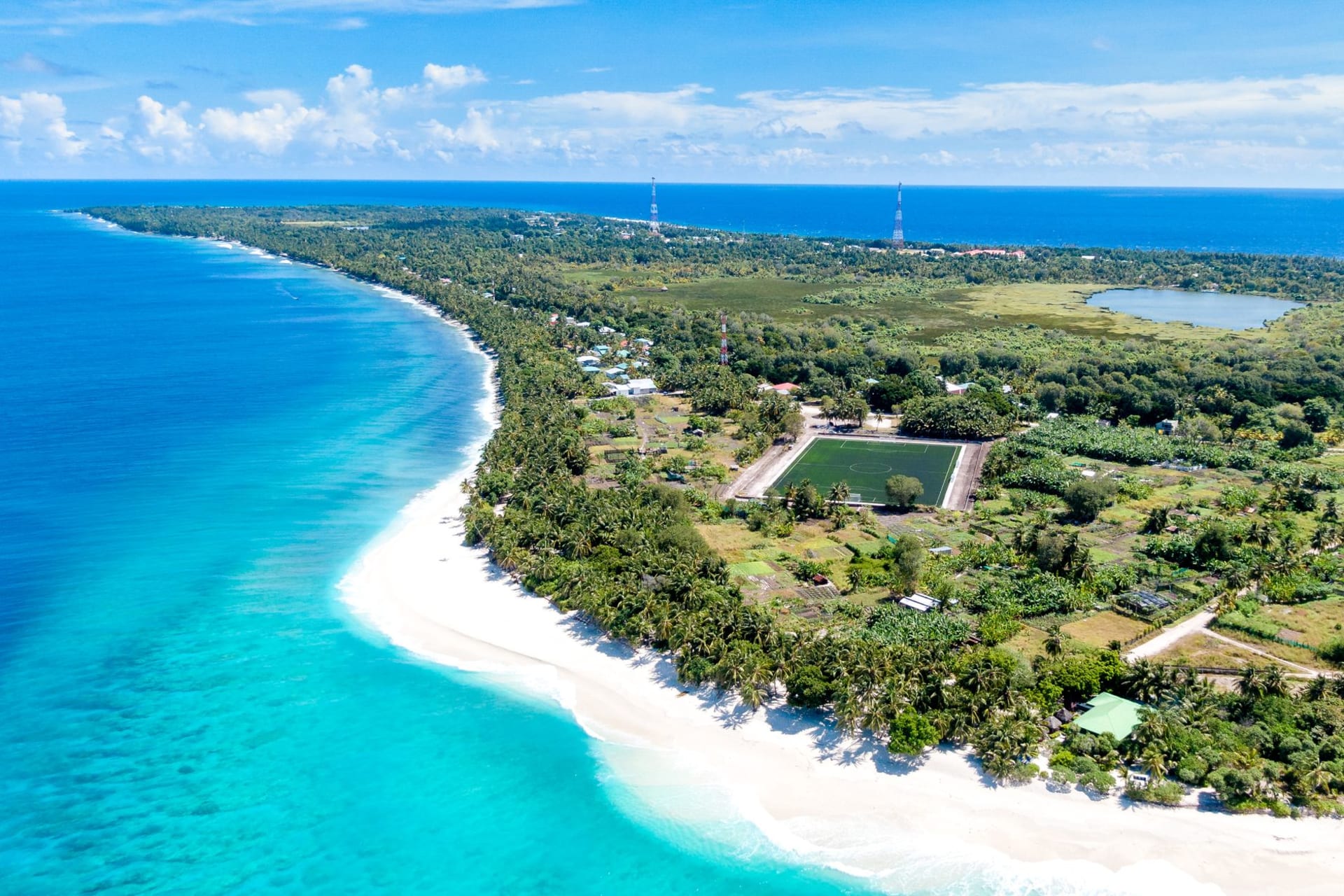
Wakatobi
"The house reef started at my feet and descended through more coral architecture than I could cover in a week."
A Name Made of Islands
Wakatobi is an acronym—Wangi-Wangi, Kaledupa, Tomia, Binongko—the four main islands of an archipelago in Southeast Sulawesi that has operated as a national marine park since 1996. The name is also a useful reminder that what looks like a single destination on a map is actually a chain of distinct characters. Wangi-Wangi is the gateway: it has the airport, the market, the arriving and departing noise. Tomia, two islands deeper into the chain, is quieter and has what most divers agree are the better house reefs. Getting between them by local ferry involves a patience threshold that varies by traveler but rewards the crossing.
The House Reef at Five in the Morning
I started diving the house reef in front of my guesthouse on Tomia before breakfast, which required convincing exactly no one and walking approximately forty meters. The reef begins at the surface and descends through successive bands of coral architecture—branching staghorns giving way to massive table corals, then sea fans wider than I am tall, then sloping rubble and pale sand at depth. At five in the morning with the light still angling in from the east, the color rendering underwater was extraordinary—everything in higher contrast than it would be at noon, the coral lit from one direction with a precision that photography cannot quite reproduce. I went every morning for four days and it was different each time.
The Bajo Sea Nomads
The Bajo people—sea nomads who historically lived entire lives on boats—have been settling in stilt villages across the Wakatobi for generations, and visiting these communities on Kaledupa carries a weight that purely dive-focused itineraries tend to miss. The stilt houses stretch over shallow reef areas, connected by wooden walkways, and the boats tied underneath are still functional fishing craft rather than decorative artifacts. Children learn to swim before they learn to walk, a fact that manifests visually in the way the youngest treat the water under their homes as an extension of the floor rather than something to be cautious about. The community is not a museum, and the distinction matters when you walk through it.
What the Price Is For
Wakatobi has a reputation as an expensive dive destination, anchored partly by the presence of a well-known live-aboard operation and an all-inclusive resort that serves a specific kind of traveler. But independent travel here is genuinely viable, with guesthouses on Tomia and Wangi-Wangi that run dive operations at prices that feel fair rather than extractive. The coral doesn’t have a tiered access fee. What you pay for in Wakatobi is logistics—boat fuel, ferry crossings, the small infrastructure that makes the isolation accessible—and in a park where enforcement has kept the reefs in the condition they’re in, that cost makes a certain sense.
When to go: April through November gives the calmest conditions and the best visibility. October and November are particularly productive for encounters with larger pelagic species moving through the park. Wakatobi’s airport on Wangi-Wangi is served by flights from Bali and Makassar. Travel from Makassar by sea is possible but takes considerably longer—plan accordingly and build in a day on either end.