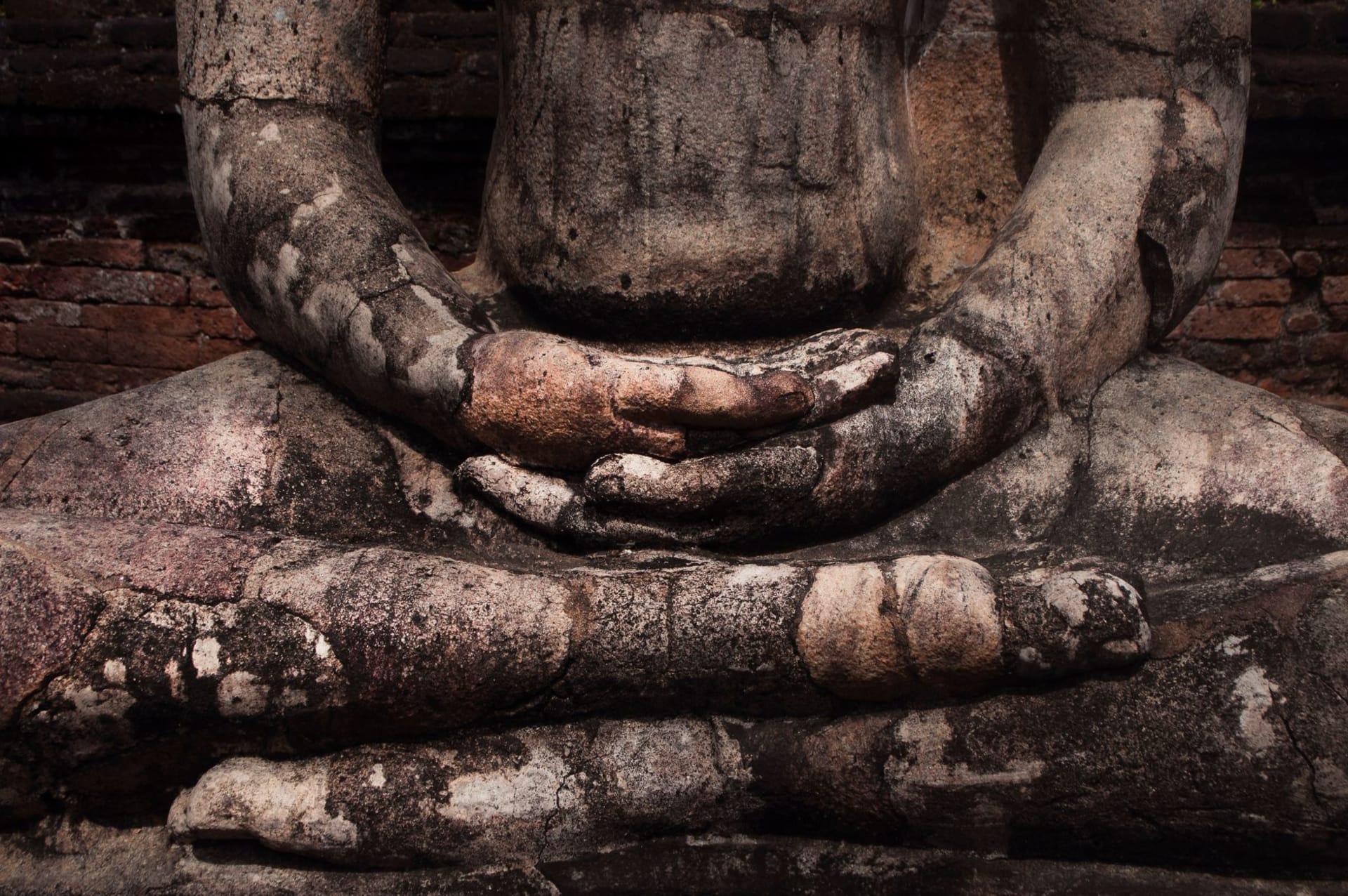
Polonnaruwa
"Anuradhapura gets the fame, but Polonnaruwa is the one I keep seeing when I close my eyes — those four Buddhas cut from a single wall of stone."
A City You Pedal Through
Sri Lanka’s ancient capitals tend to blur together for first-time visitors, and I will admit I arrived at Polonnaruwa with a certain ruin fatigue, having already worked through Anuradhapura and Sigiriya. That fatigue lasted about twenty minutes. Polonnaruwa is more compact than Anuradhapura, more concentrated, and — crucially — best seen from a bicycle, which turns a dutiful archaeological slog into something close to a pleasure.
We rented two bikes from our guesthouse for the price of a coffee back home, and set off into the ruins along shaded lanes where the heat of the dry-zone plain pooled in the open and the flame trees dropped scarlet petals on the path. Polonnaruwa was the island’s capital for around two centuries from the 11th, after Anuradhapura fell, and its kings — Parakramabahu the Great chief among them — built with confidence and ambition. The Royal Palace, now a roofless brick shell, is said to have risen seven storeys; standing in it, you can almost believe it.
The Quadrangle and the Reservoir
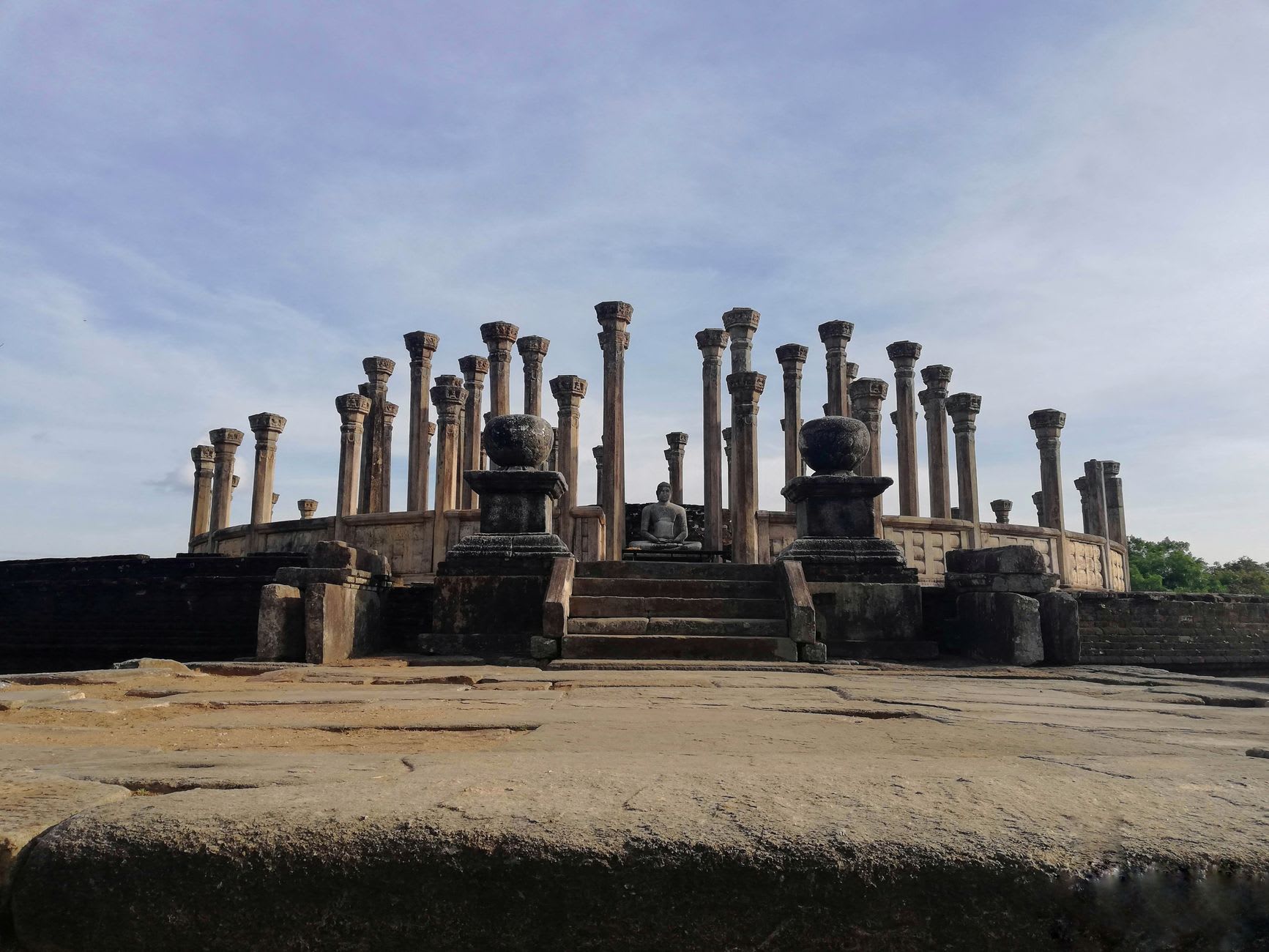
The dense heart of the site is the Quadrangle, a raised terrace packed with the best of the city’s religious architecture. The Vatadage — a circular relic house with concentric stone rings and a Buddha facing each of the cardinal directions — is the kind of structure that makes you slow down and walk it carefully, climbing the moonstone steps the way pilgrims have for nine centuries. Lia, who has more patience for stone carving than I do, spent a long time photographing the guardstones; I sat in the shade of a doorway and let the place settle.
Holding the whole city together, physically and historically, is the Parakrama Samudra — the Sea of Parakrama — a vast artificial reservoir built by that same ambitious king, who famously decreed that not a drop of rain should reach the sea without first serving humankind. At the end of a hot day I cycled out to its bund and watched the light go flat and gold over the water while egrets stalked the shallows. A thousand years on, it still irrigates the paddies. Few monuments anywhere are still doing the job they were built for.
Gal Vihara, Which Earns the Trip
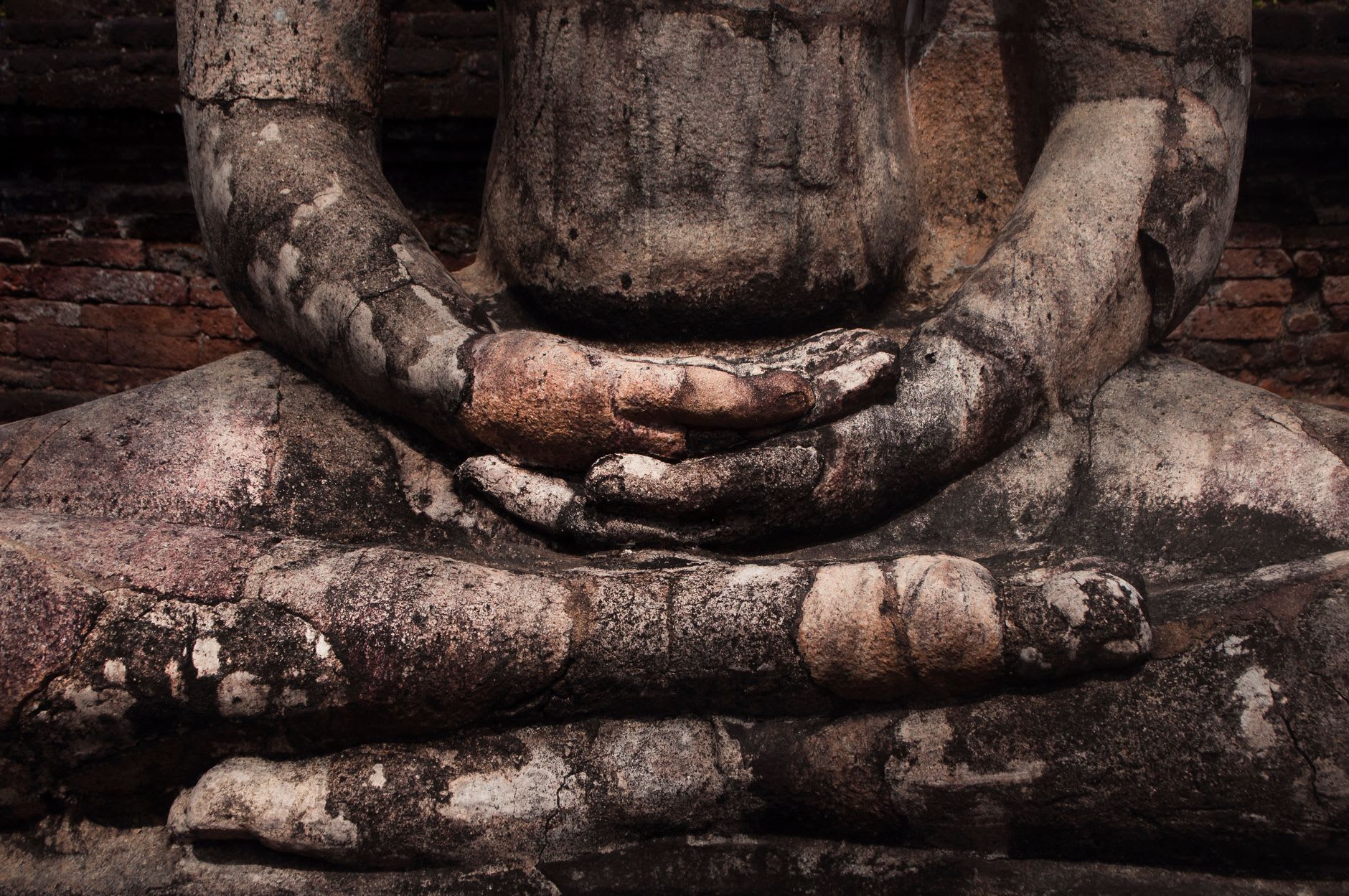
If you see one thing in Polonnaruwa, see Gal Vihara. It is a single long wall of granite from which four colossal Buddha images have been carved — a seated meditating figure, a smaller one in a cave-like niche, a standing figure with an expression of extraordinary gentleness, and a reclining Buddha some fourteen metres long depicting the moment of passing into nirvana. The grain of the rock runs through all of them, faint bands of grey and amber, so the figures seem to grow out of the cliff rather than to have been imposed on it.
I had seen photographs and assumed I was prepared. I was not. There is a stillness to the reclining figure — the slight downturn of the soles of the feet, said by guides to distinguish sleep from death — that stopped both of us cold. Some carvings you analyze; this one you just sit with.
Practical Pilgrimage
Polonnaruwa pairs naturally with Sigiriya and Dambulla in the Cultural Triangle, and many people do it as a rushed day trip. Do not. Stay a night nearby, start at dawn before the heat and the tour buses, and save Gal Vihara for the softer light of late afternoon.
When to go: The dry season from May to September is most reliable in this part of the island, though the dry zone can be brutally hot midday year-round — start early, carry far more water than you think you need, and rest through the worst of the afternoon. Buy the Cultural Triangle round ticket if you are visiting several sites. Dress modestly for the religious areas: shoulders and knees covered, shoes off at the sacred enclosures.