Toledo
"Toledo asks which culture you think built it; the only honest answer is all of them."
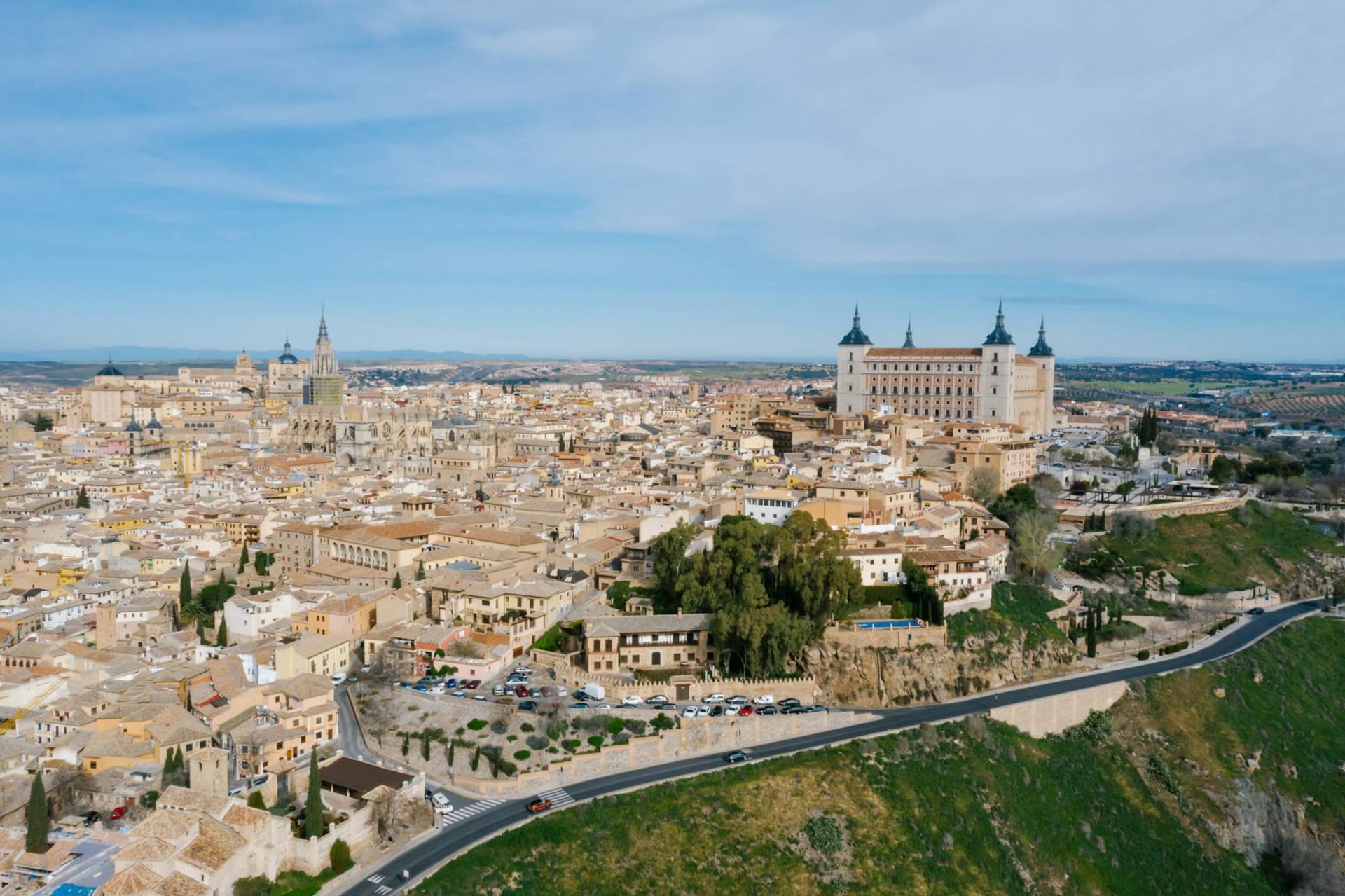
The 'City of Three Cultures' rises on a Tagus river bend where Jewish, Moorish, and Christian civilizations built their masterworks side by side.
The taxi from the train station climbs a road that curves around the gorge, and for a few seconds the whole city hangs above you like something a child stacked from grey and ochre blocks. The Tagus bends below, slow and green. Then you’re inside the walls and the illusion of order dissolves into a maze of alleys so narrow that the buildings lean across them, trading shadow.
Three Faiths, One Stone
Toledo was the seat of Visigothic kings before the Moors arrived, a jewel of Al-Andalus before the Reconquista, and home to one of the most important Jewish communities in medieval Europe — all within the same few square kilometres. You feel that layering the moment you start walking. The Calle de los Reyes Católicos leads you past the Sinagoga del Tránsito, its interior still carrying the Hebrew inscriptions and Mudéjar plasterwork that the Jewish community commissioned before the expulsion of 1492. A hundred metres away, the mosque-turned-church Cristo de la Luz stands in a small garden, its horseshoe arches intact, a minaret base supporting a Christian apse added on top. Nobody bothered to erase anything. That, I keep thinking, is either Toledo’s great tolerance or its great indifference — and I’m still not sure which.
The Cathedral at Noon
The cathedral took more than two and a half centuries to build, which perhaps explains why its interior feels like several different arguments about God conducted simultaneously. I arrived just before noon on a Tuesday and the light through the Transparente — the baroque skylight Narciso Tomé carved into the ambulatory ceiling — was landing precisely where it was designed to, turning the altar into something theatrical and slightly hallucinatory. Lia stood under it with her head tilted back for a long time, not saying anything. That seemed like the right response.
What I hadn’t expected: the sacristy holds a room of El Greco portraits so dense and dark that your eyes need a full minute to adjust. The painter lived his entire adult life in this city, and seeing a dozen of his elongated saints collected in one shadowy room felt like meeting someone’s obsession face to face.
Mazapán and the Walk Back Down
Toledo’s other claim on the world is mazapán — marzipan shaped into elaborate forms and sold from convent windows and pastry shops along the Calle Santo Tomé. I bought a small tray near the Plaza de Zocodover and ate it on the Mirador del Valle as the afternoon light went flat and orange across the rooftops. It is sweeter than I expected, almost aggressively so, and the city below matched it somehow — excessive, ornate, unapologetic.
When to go: April through June offers mild temperatures and long evenings before the summer crowds arrive. October is quieter still, with low golden light that makes the stone walls glow well into the afternoon.