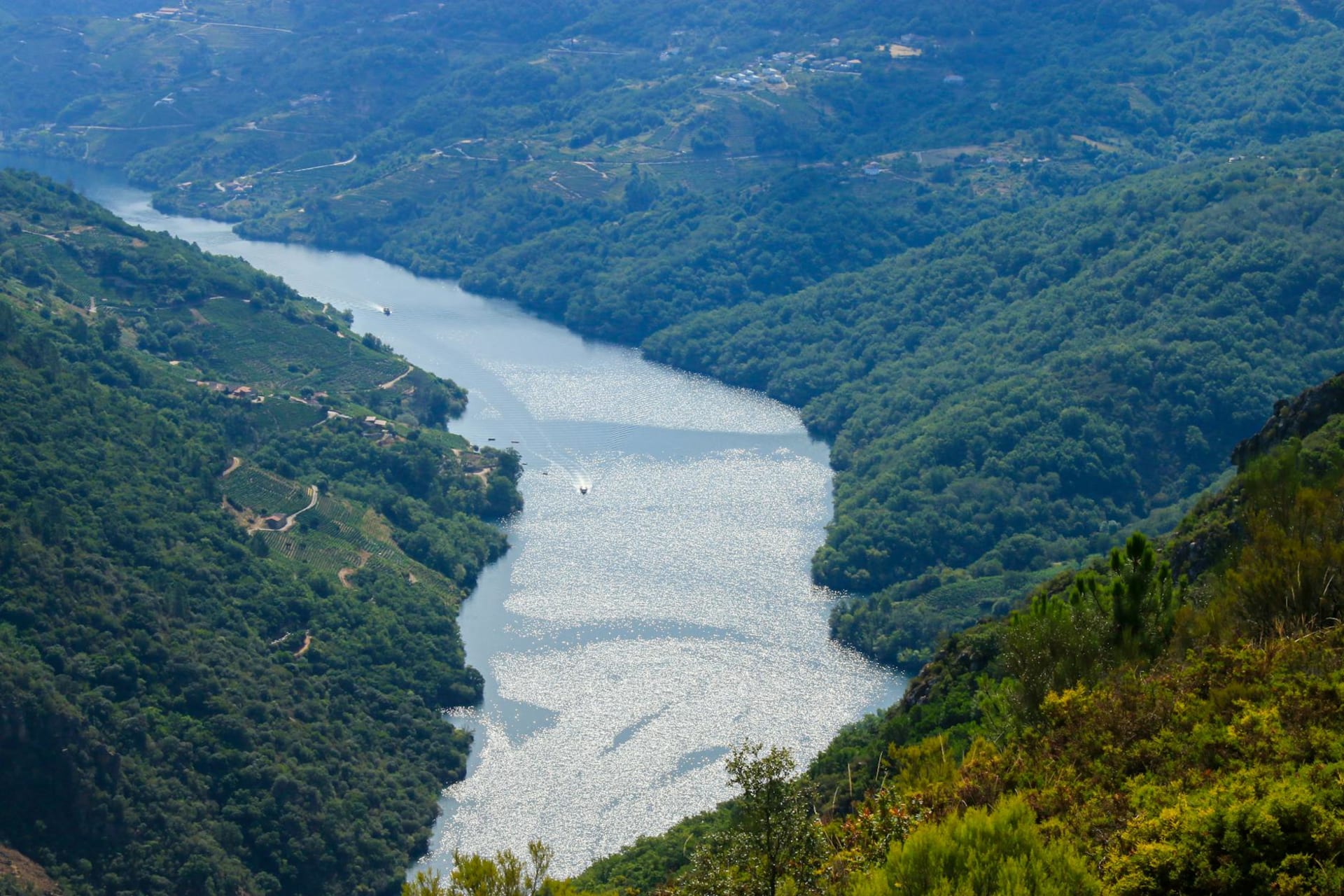
Heroic viticulture on near-vertical slate terraces above the Sil and Miño river gorges in inland Galicia.
I came to Ribeira Sacra convinced I already understood dramatic wine country. I had been wrong before, but not quite like this.
The canyon announces itself slowly. Driving in from Monforte de Lemos on the C-546, the road narrows and the hills begin leaning. Then the Sil gorge opens below you — not gently, not gradually — and suddenly the concept of a vineyard has to be entirely renegotiated. These are not fields. They are walls. Slate walls, assembled over centuries by people who had apparently decided that growing grapes at a forty-five-degree pitch above a six-hundred-foot drop was a reasonable way to spend a life.
The Terraces
Lia stood at the mirador above the Cañón do Sil and said nothing for a long time, which is not something she does. The terraces stack in narrow ribbons from the waterline almost to the ridge, too steep for any machine, too narrow for anything but human hands and — during harvest in October — actual ropes. The pickers clip in to descend the rows. The bunches are hauled back up in baskets. The wine costs what it costs, and once you have seen how it is made, you stop questioning the price.
The dominant grape is Mencía, grown here on decomposed slate that drains fast and retains heat, giving the wines a mineral sharpness that feels like the landscape in the glass — dark fruit, something flinty underneath, a long finish that keeps pulling you back. I drank a bottle of Guímaro’s Finca Meixeman over grilled lamprey at a stone-floored restaurant in Castro Caldelas and understood, finally, what people mean when they say a wine has a sense of place.
Along the Miño
The second gorge, the Miño, is quieter and draws fewer visitors. I preferred it. The village of Belesar sits where the river widens into a reservoir, its church submerged somewhere below the surface since the dam was built in 1963 — in very dry years the tower allegedly reappears, though I did not see it. What I did not expect was the Roman road visible in sections along the riverbank near Chantada, the original stone worn smooth and still leading somewhere.
The unexpected thing happened here: a woman spreading octopus on wooden racks outside her house offered us a glass of something she had made herself, unlabeled, from vines she pointed at on the slope directly above us. It tasted like none of the appellation wines. It tasted like her hillside specifically.
When to go: September through early November for harvest season, when the slopes are active and the new vintage is just arriving in the bodega tanks. Spring — April and May — brings lower prices, fewer tourists, and the Sil gorge at its greenest.