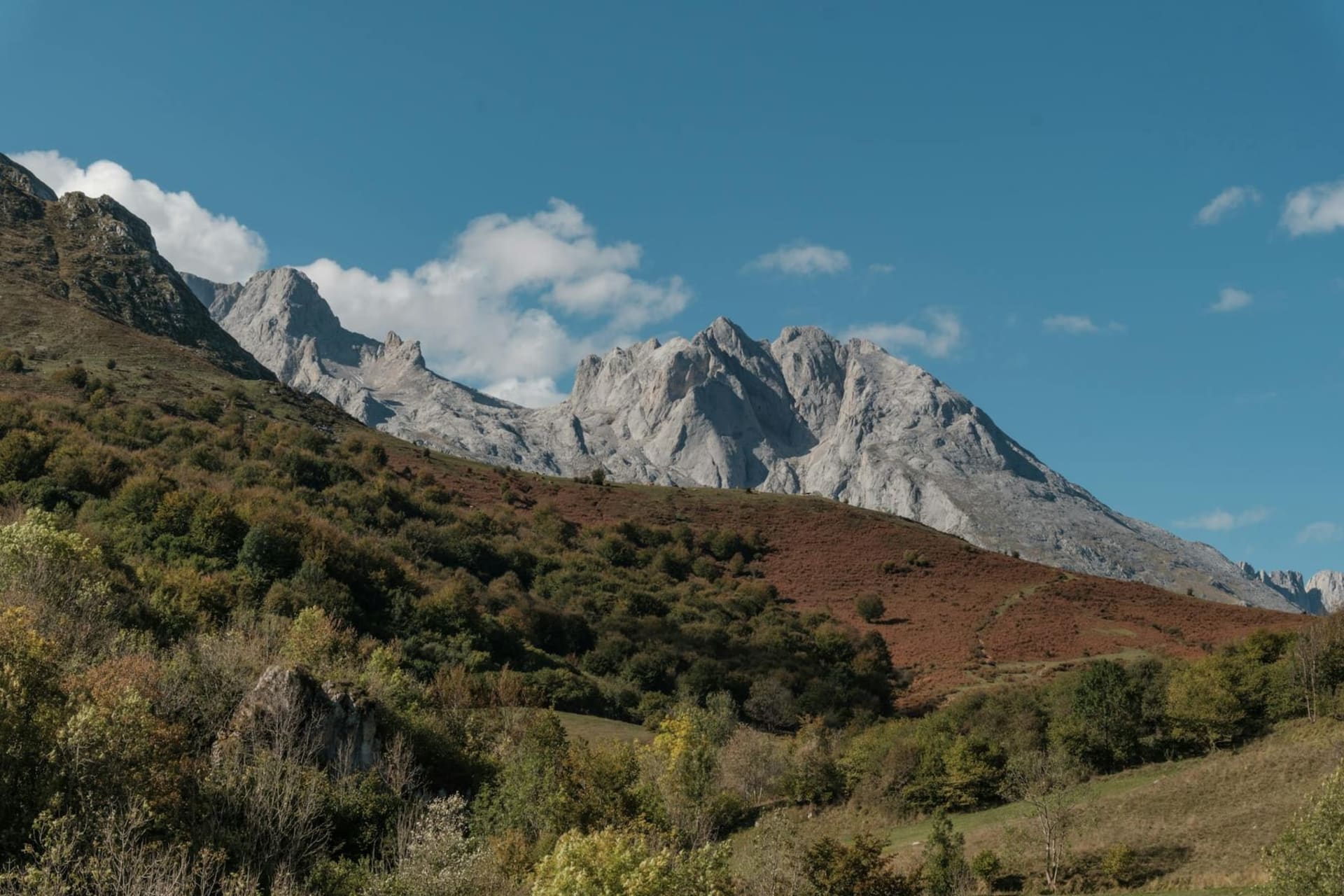
A medieval market village at the confluence of four rivers beneath the limestone towers of the Picos de Europa in Cantabria.
I had not planned to stay in Potes. The itinerary said Santander, then the coast west to Llanes — a reasonable circuit of Cantabria’s beaches and cliffside roads. But driving south from Unquera through the Desfiladero de La Hermida gorge, the cliffs so close on both sides that the car felt swallowed, I came out the other end into a valley floored with green and ringed with limestone towers and I understood immediately that the itinerary was wrong.
Potes sits at the confluence of four rivers — the Deva, the Quiviesa, the Nevandi, and the Bullón — and the mountains begin so abruptly at the village edge that there is no transition between civilization and wilderness, no gradual foothills warning you of what’s coming. The Picos de Europa simply rise. The Torre del Infantado, a 15th-century defensive tower that now houses the municipal archive, stands in the Plaza Mayor like punctuation at the end of the gorge.
The Market and the Smell of Orujo
Tuesdays bring the market to the square below the Torre, and it is the kind of market that still smells like a market: raw cheese from the mountain farms, air-dried cecina, bunches of dried herbs I could not name. The local specialty is quesu picón — also sold as Pido or Bejes-Tresviso — a blue cheese cave-aged in the limestone karst above the village, veined green and wrapped in plane leaves, sharper than anything France has ever tried to sell me. I bought half a wheel without asking the price.
The other thing Potes produces in quantity is orujo, a grape marc spirit that the Cantabrian mountains have been distilling since before records existed. The Destilerías Picos de Europa, just off the Calle del Sol, offers it in every permutation: straight, infused with coffee, with honey, with herbs. Lia tried the honey version and immediately revised her entire position on spirits.
Above the Village
The road west to Fuente Dé climbs 25 kilometers through progressively wilder terrain, the valley narrowing and the air cooling as the pastures give way to bare karst. A cable car — one of the longest in Europe — lifts visitors 753 meters in four minutes to a plateau at 1,800 meters where the peaks crowd in from every side and the valley floor disappears entirely. On the day we went, low cloud moved through the towers in slow horizontal bands, revealing and concealing in turns. The Mirador del Cable, at the cable car’s upper station, looked out over nothing for twenty minutes, then briefly over everything.
What I had not expected — the genuine surprise — was the silence up there. Not the absence of sound exactly, but an acoustic quality I associate with cathedrals: presence, weight, a sense that the space itself is listening. We stood on the platform for a long time without speaking.
Coming Back Down
The drive back to Potes at dusk, the Deva river catching the last light in the gorge below, felt like returning from somewhere genuinely remote. The village’s one main street, the Calle del Sol, was quiet — a few people coming out of the Bodega El Pilón with wine, someone walking a dog across the medieval bridge. We ate at a table by the window: cocido montañes, a slow-cooked stew of white beans, collard greens, and chorizo that arrives in separate courses and carries the exact weight of a mountain day.
When to go: Late June through September for the high mountain trails and reliable weather at altitude. September is ideal — summer crowds have thinned, the mountain light turns amber in the afternoons, and the cheese-and-orujo sellers at the Tuesday market are in no hurry.