Chinchilla de Monte-Aragón
"Chinchilla keeps its best rooms underground, which tells you something about how this town survives its own summers."
A hilltop town of caves, saffron, and a castle that once briefly held Cervantes prisoner — and where half the houses still keep their cellars underground.
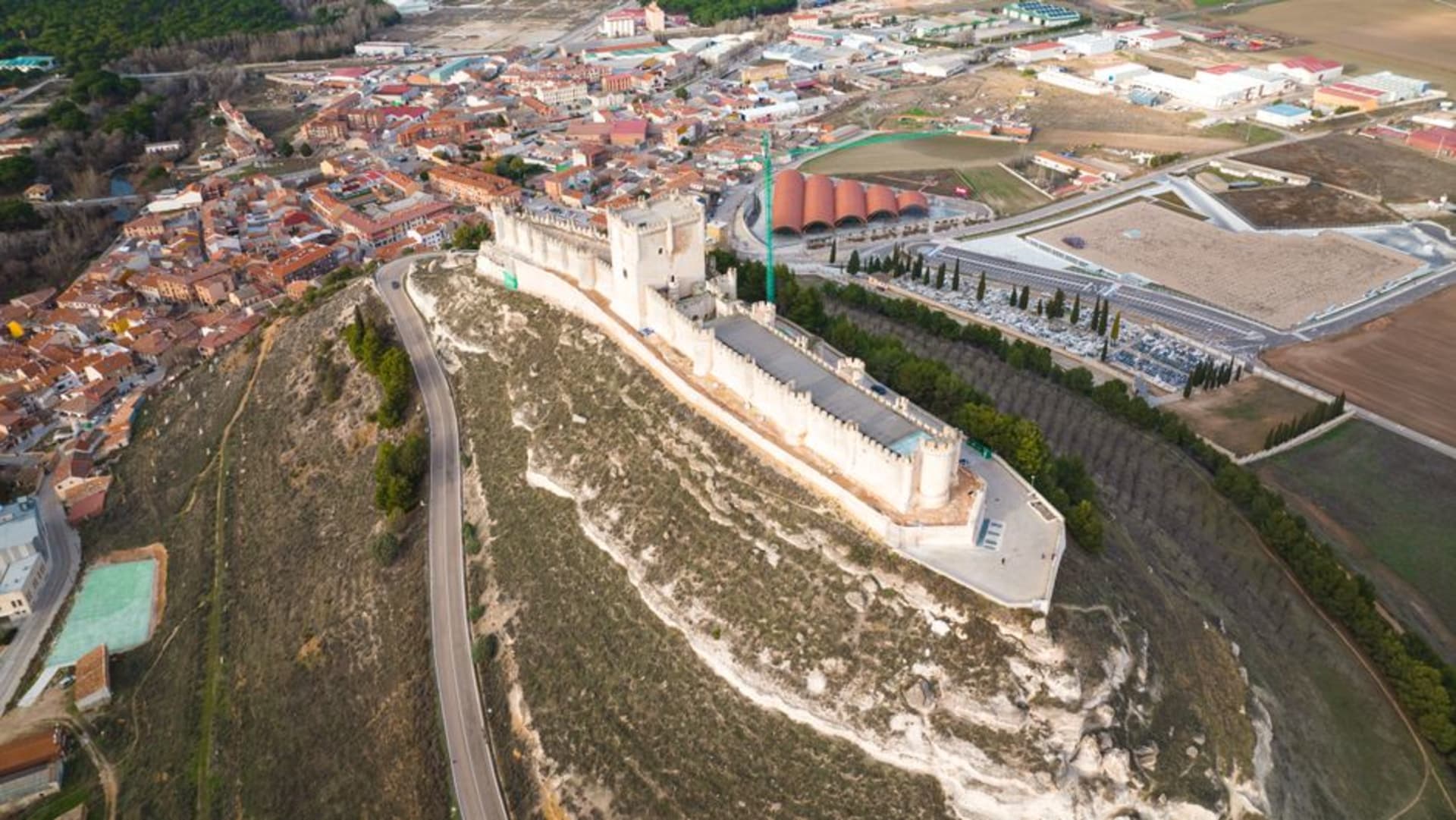
The bus from Albacete takes maybe twenty minutes, climbing gently out of the flat agricultural plain of La Mancha until the road bends and there it is — Chinchilla de Monte-Aragón stacked on its hill like a town that got tired of being level with everything else. The castle at the top, Castillo de Chinchilla, has watched this stretch of plain since Moorish times, rebuilt and refortified across centuries by Castilian and Aragonese hands fighting over a strategic crossroads. It’s a squat, thick-walled thing, more practical than pretty, and it held political prisoners more than once — Miguel de Cervantes is said to have spent time here, jailed briefly over a financial dispute long before Don Quixote existed even as an idea.
A Town Built Over Its Own Cellars
What struck me more than the castle, honestly, was what’s underneath the streets. Chinchilla sits on soft, easily carved rock, and generations of families dug bodegas — cool underground cellars — beneath their houses to store wine, cheese, and grain against the brutal meseta summers, when temperatures here climb well past what the whitewashed façades above ever let on. Some of these cellars connect into small networks you can still visit, cut straight into the hillside, cool and dim and smelling faintly of earth and old wine barrels. Standing in one, I understood something about this region that the sunbaked plaza outside hadn’t told me: this is a town built in two layers, one for living and one for surviving.

Saffron Country
This part of Castile-La Mancha — along with neighboring towns toward Toledo and Cuenca — is saffron country, and Chinchilla sits close enough to the crocus fields that the local economy has long leaned on la rosa del azafrán, the harvest ritual where entire families gather at dawn each October to hand-pick the delicate purple flowers before the sun wilts them. The stigmas are separated by hand that same day, a painstaking process that explains why saffron remains one of the most expensive spices in the world gram for gram. I didn’t catch harvest season, but a woman running a small shop off the main plaza let me smell a jar of it anyway, and the smell — hay and honey and something faintly metallic — stayed with me longer than most souvenirs do.
The old town itself is compact: a Gothic-Renaissance church, Santa María del Salvador, anchors a plaza mayor ringed by wooden-balconied houses in a style you see across this part of Castile, and the streets narrow and climb toward the castle in a way that makes wandering aimless but never boring. I sat for a while on a low wall near the top, looking out over the plain toward Albacete, the earth the color of the saffron threads I’d just been shown, and thought about how little pressure this town puts on you to be anywhere or see anything specific. It just asks you to notice it.

When to go: Visit in October if you can time it with the saffron rose harvest, when the surrounding fields turn violet at dawn; otherwise, April and May offer the mildest temperatures for climbing up to the castle.