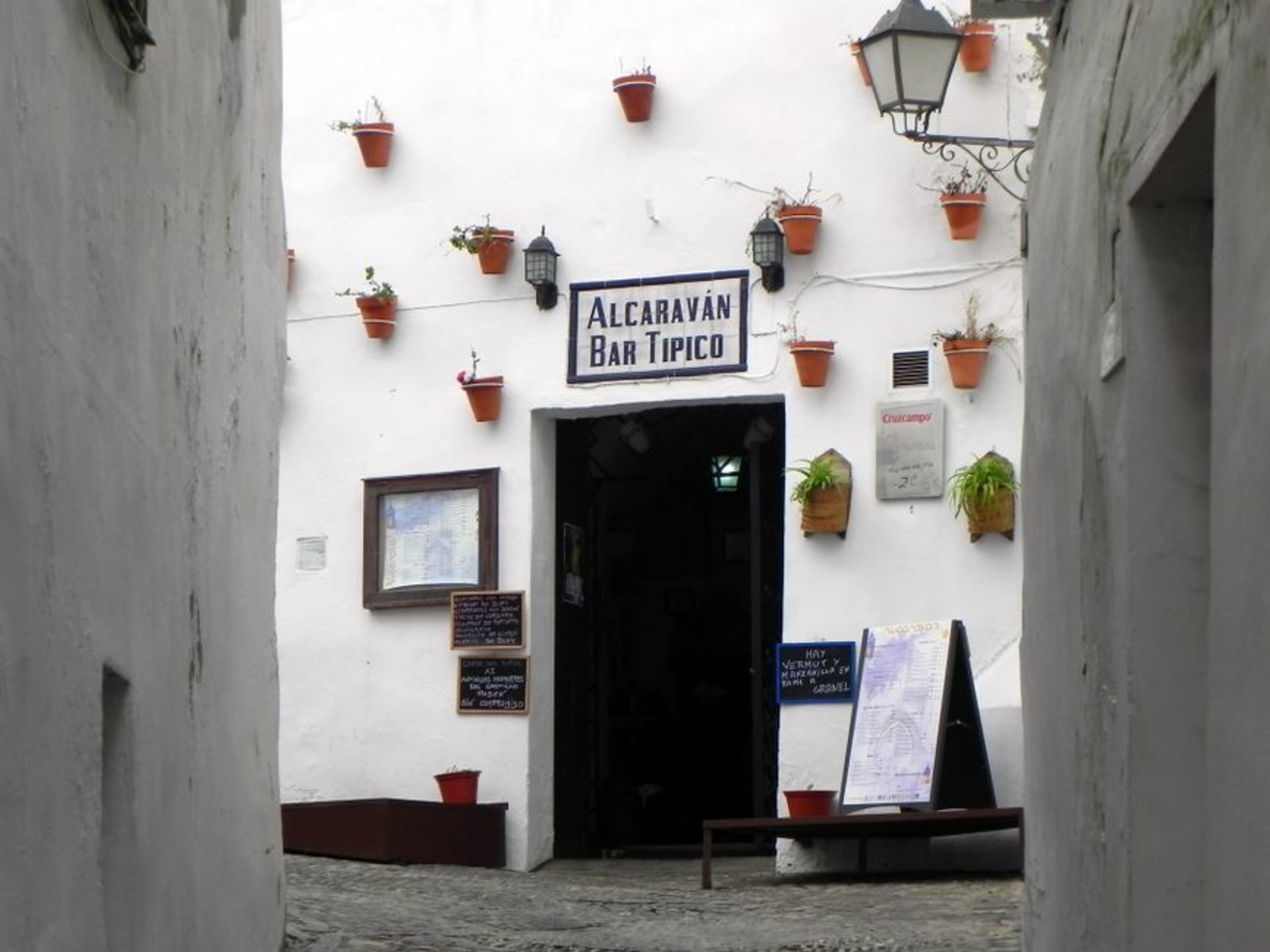
The queen of Cádiz's pueblos blancos balances on a limestone cliff above the Guadalete river, close enough to the edge to make your stomach drop.
There’s a mirador at the end of the Calle Escribanos, right behind the Basílica de Santa María de la Asunción, where the ground just stops. No railing worth mentioning, no gradual slope — the whitewashed houses simply run out and beneath your feet there’s a hundred-metre drop to the Guadalete river below. I got there at sunset on my first evening and had to sit down for a second, not out of vertigo exactly, more out of the sheer improbability of the town balancing above me. Arcos de la Frontera is the westernmost and, most locals will tell you, the finest of the pueblos blancos, and it earns that reputation by doing something genuinely reckless with its geography.
A Frontier Town That Never Forgot It
The “de la Frontera” in the name isn’t decoration. Arcos sat on the medieval border between Christian Castile and the Nasrid kingdom of Granada for nearly two centuries after the Reconquista pushed south, and the town’s entire layout still reads as defensive. Streets narrow deliberately, alleys dead-end into private courtyards, and the whole upper town wraps around the Castillo de los Duques, a fortress still owned by the same ducal family and closed to casual visitors — you can only really see it from outside its walls, brooding over the main square. Before the Christians, this was a Moorish stronghold, and before that a Roman settlement; the layered history is the same story you find across this part of Andalusia, but Arcos wears it with a particular defiance, thanks to that cliff doing half the defensive work for free.
I spent a morning just getting lost in the old quarter, which is basically the point — cars can barely fit down some of these streets, and more than once I flattened myself against a wall to let a Fiat inch past with centimetres to spare on either side. The Plaza del Cabildo, the main square, sits right at the cliff edge too, flanked by the basilica and the castle, and it’s where I ended up drinking a coffee and watching swifts wheel in and out of the gorge below like they owned it.

Sherry Country, Close By
Arcos anchors the eastern edge of the Ruta del Vino y del Toro, the sherry and bull-breeding region that stretches toward Jerez de la Frontera, and the countryside around town is all rolling wheat fields and bull pastures rather than the beaches most people associate with Cádiz province. I drove out one afternoon along back roads that gave me the same view again and again — the town’s white silhouette floating above the plain, looking less like architecture and more like something that had grown out of the rock. It’s a view worth chasing from a few different angles; every curve in the road reframes it slightly.
By evening, the town empties of day-trippers and the local rhythm reasserts itself — tapas bars filling with families, kids playing football in the smaller plazas, the church bells doing their thing on schedule. It’s a town built for defense that has, centuries later, become one built for lingering.

When to go: Aim for late spring, when the surrounding wheat fields are still green and gold and the heat hasn’t turned punishing yet — May is close to ideal.