Puerto Natales
"Every restaurant here knows what time the bus to Torres del Paine leaves. That tells you something."
Arrival at the Edge
The bus from Punta Arenas takes about three hours, skirting the Last Hope Sound through a landscape that looks like someone removed all the trees and forgot to put them back. When you arrive in Puerto Natales, the wind is already telling you that you’re somewhere different. The town sits at the end of a fjord with no pretension about what it is: a staging post, a supply point, a place to eat a proper meal before heading into the park and after coming out of it.
I arrived in early November, before the season fully kicked in, and found a town still half-asleep. The main street had gear rental shops stacked between restaurants and hostels, all with handwritten signs about bus times and trekking permits. The corrugated iron buildings painted in faded greens and yellows and reds give the place an improvised quality that I found genuinely charming. This is a town built for function by people who needed a town here, not a destination designed for anyone’s aesthetic pleasure.
The Waterfront and What It Tells You
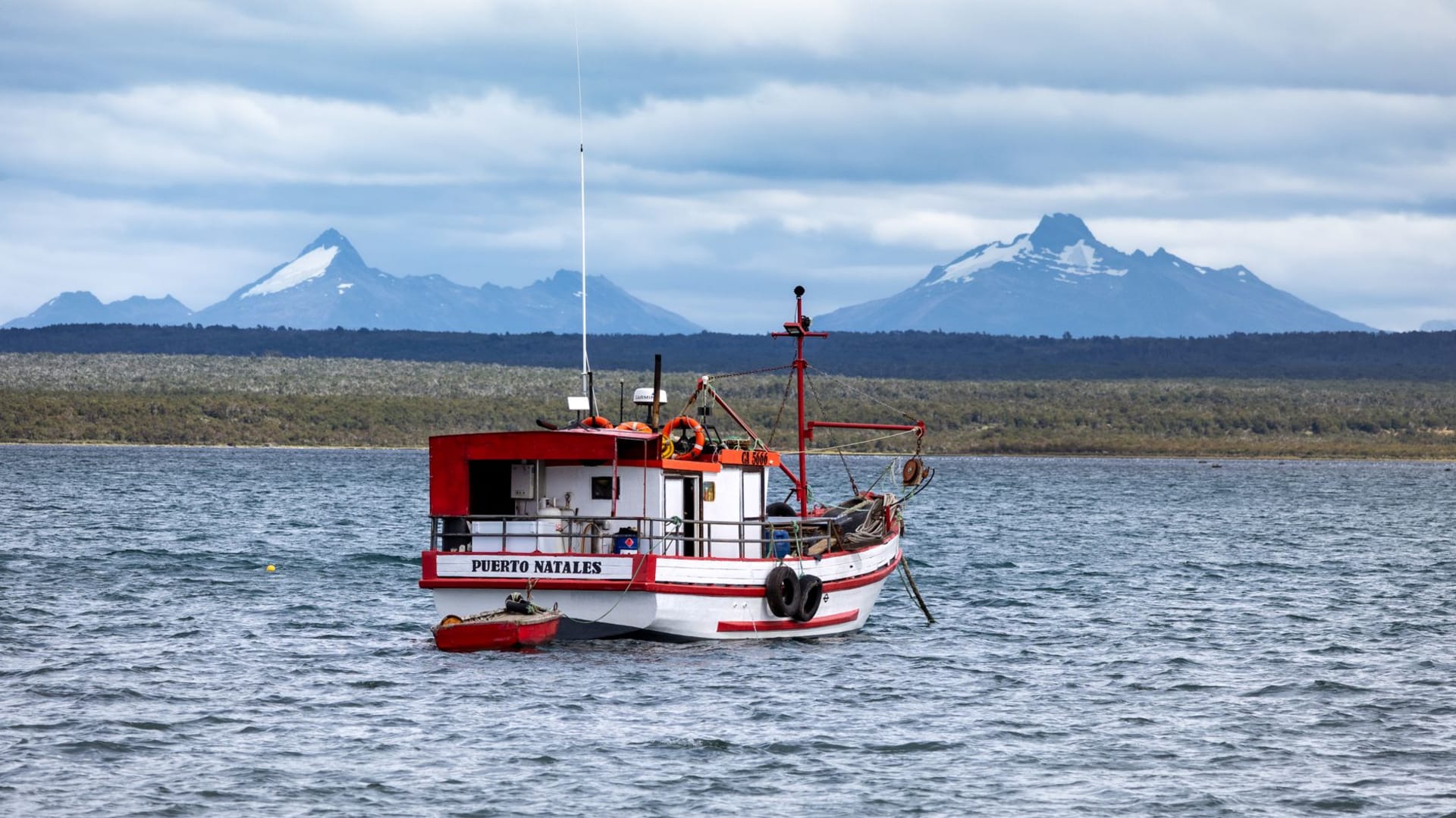
The waterfront walk along the Last Hope Sound is one of those urban strolls that rewards slowness. In the afternoon light the water turns silver-grey, and the mountains across the sound catch cloud in ways that change every ten minutes. I walked it twice — once in the morning when a few fishing boats were heading out, and once at dusk when the temperature dropped sharply and I was the only person on the path. There’s a small wooden dock where locals fish without apparent urgency. The sound stretches far enough that it feels oceanic, which technically it is — you’re looking at a finger of the Pacific.
The municipal museum is small and worth an hour, particularly for the section on the Kawésqar people, the canoe nomads who inhabited these channels for thousands of years before European contact. Their adaptation to this climate — paddling in open boats in conditions that make most modern hikers retreat to their sleeping bags — is difficult to fully process standing in a heated room. But the museum tries.
Eating and Resting
After four days on the W Trek, I ate everything. Puerto Natales takes its role as recovery station seriously. The centolla — king crab — is the thing to order if you can afford it, cooked simply and served in its shell. Lamb is ubiquitous and good, slow-roasted in the Patagonian style. There are several places doing proper espresso and fresh bread by 7am, which matters more than it sounds when you’ve been eating instant porridge in a refugio.
The hostel I stayed at had a drying room for gear — a detail that matters enormously after days of Patagonian rain. Wet boots that become dry boots overnight are a significant quality-of-life upgrade. If you’re planning the Torres del Paine circuit, spend two nights in Puerto Natales: one before to sort permits and gear, one after to recover before the bus south.
Getting Your Bearings
The town is small enough to orient in an afternoon. The bus terminal connects to Punta Arenas, Torres del Paine, and — seasonally — across the border to Puerto Madryn in Argentina via the Río Turbio crossing. The ferry to Puerto Montt, the Navimag, departs from here through the fjords: a four-day journey that’s an experience entirely its own.
When to go: October through April for viable trekking conditions. The town itself operates year-round, but winters are dark, cold, and most services scale back. January and February see the heaviest tourist traffic; November and March offer quieter streets and lower prices without major trade-offs in weather.