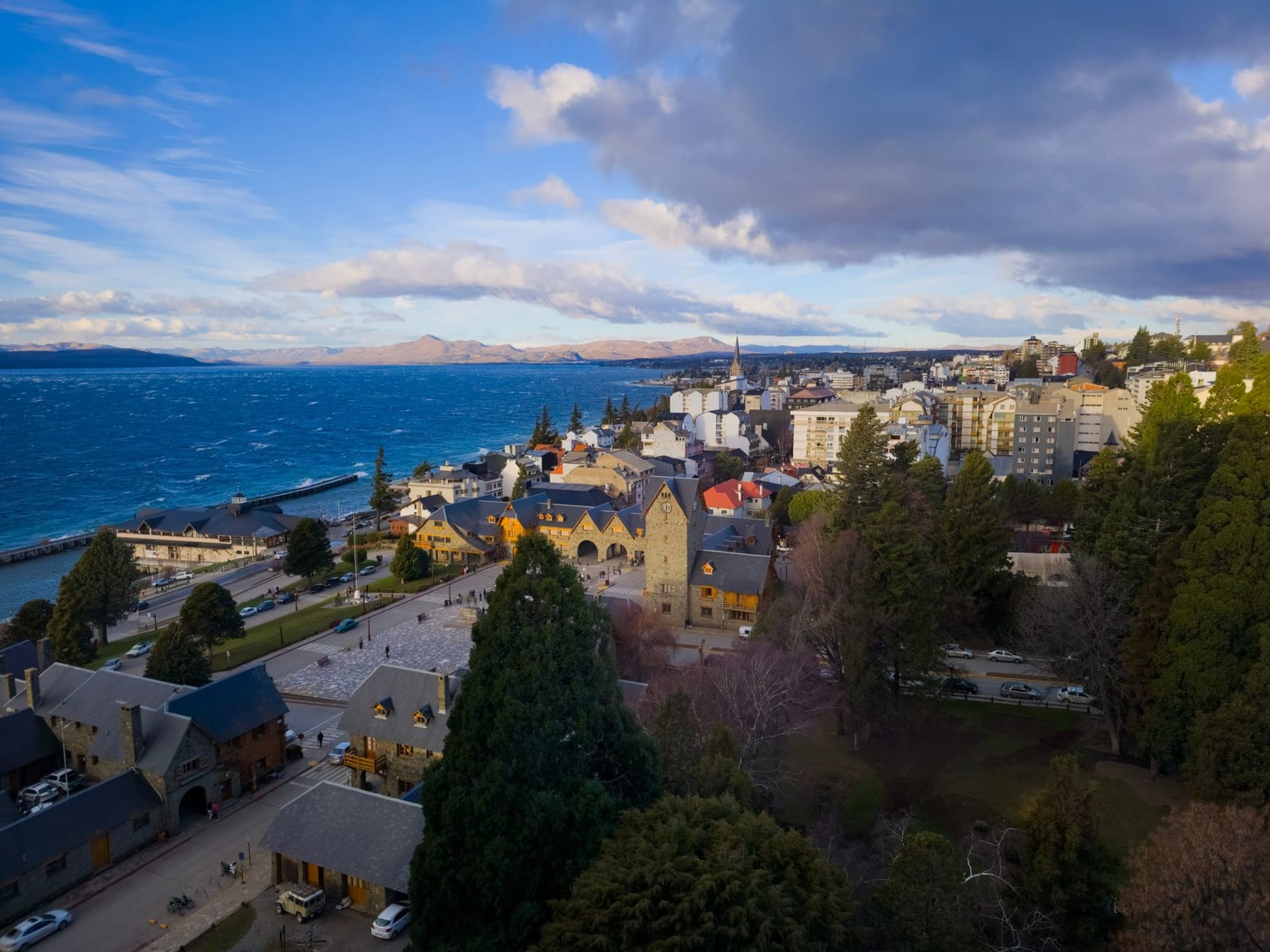
Coyhaique
"The most remote capital city I've been to. Remote from what, exactly, is a good question."
A City That Shouldn’t Exist Here
Coyhaique was founded in 1929 as a headquarters for a sheep farming company, and the settlement pattern of Aysén — one large administrative city surrounded by enormous distances of difficult terrain — still reflects that origin. Today about 60,000 people live here, which makes it simultaneously the urban center of a region larger than many European countries and a city where you can walk across the main shopping district in fifteen minutes.
The first thing I noticed arriving from the Carretera Austral was that the roads were paved. After several days of gravel this felt almost implausibly smooth, like driving on a different continent. The second thing was the pentagonal Plaza de Armas — designed as a pentagon, unusually, apparently for administrative reasons involving the original street grid — which functions as the civic heart of the city in the conventional Chilean way, with a church, a monument, and elderly men feeding pigeons on benches. The third thing was a proper espresso, which I appreciated with disproportionate emotion.
What Coyhaique Is Actually For
As a visitor, Coyhaique is primarily functional: it’s where you stock up on supplies, get vehicle repairs, arrange permits for the national reserves, recharge your electronics, and eat something that isn’t camp food. But spending two or three nights here rather than one reveals a city with a particular pride in its remoteness and a cultural life that feels earned rather than transplanted. There’s a decent regional museum covering Aysén’s settlement history — the story of Chilean and foreign colonists who arrived in the early 20th century to farm virtually impenetrable terrain is extraordinary, and the museum handles it with appropriate combination of admiration and critical distance about what was displaced in the process.
The craft market near the plaza has the usual range of wool goods, but Aysén’s wool products have a quality to them that reflects the actual sheep of the actual region rather than the generic production-line Patagonia branding you find elsewhere. I bought a pair of knitted socks from a woman who told me she’d raised the sheep herself. I’m still not certain whether to believe her, but they’re excellent socks.
Day Trips from the City
The Reserva Nacional Coyhaique is literally five kilometers from the city center, a fact that continues to surprise me when I think about it. You can hike from the edge of town into lenga beech forest with views over the Simpson River valley in about twenty minutes. The reserve has trails ranging from short loop walks to a full-day ascent of Cerro Cinchao, which on clear days provides sight lines across an extraordinary area of Aysén. The river itself — the Simpson — runs fast and clear through a canyon system below the city that you can reach via a riverside trail.
The Reserva Nacional Río Simpson, thirty kilometers west on the Carretera Austral toward Puerto Aysén, has a small waterfall and pools that would be famous if they were anywhere more accessible. On a Tuesday in November I had the trailhead to myself.
The Food Situation
Coyhaique has the best restaurant options in the Aysén region by a significant margin, which is a low bar set with appropriate expectations. There are several places doing proper Patagonian lamb in various preparations, one surprisingly good sushi restaurant (the fish here is exceptional — the cold Pacific coastal waters produce salmon and sea bass of a quality that justifies the restaurant’s existence), and a craft brewery that opened recently and takes its water source — glacial meltwater — with appropriate seriousness.
When to go: Coyhaique is accessible year-round, though the Carretera Austral sections leading to it can be complicated in winter. October through April is the most reliable window. June and July are cold and quiet — the city functions but the surrounding nature reserves are less accessible and some services close.