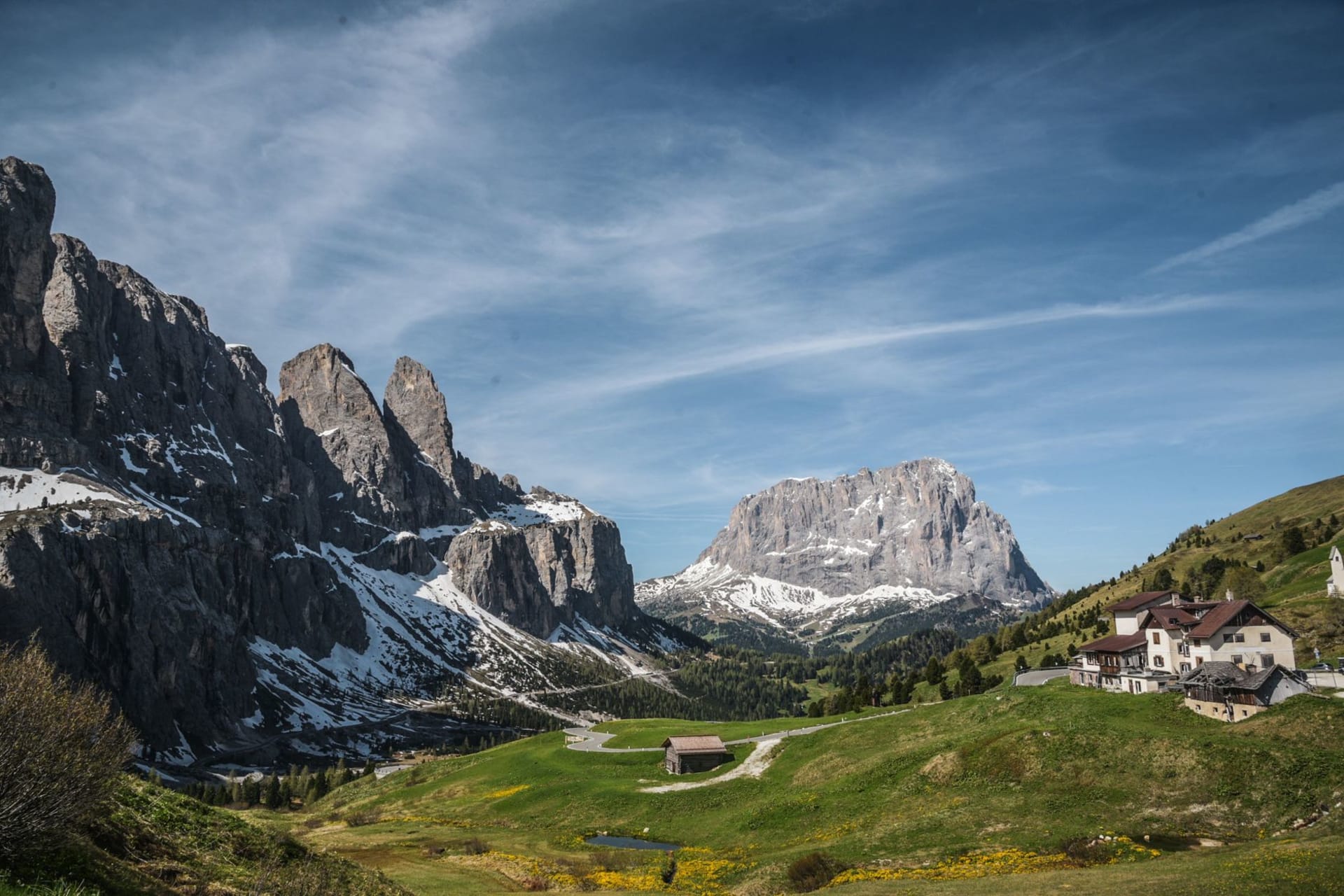
Val Gardena
"Three languages in one valley, and somehow they all smell like pine resin."
Ortisei and the Wood Carving Question
I walked into a workshop in Ortisei without knocking — the door was open and there was the sound of chisels — and the carver inside, a man in his sixties with pine dust on his forearms, showed me what he was working on without pausing. It was a Madonna figure, maybe forty centimeters tall, the features emerging from a block of Swiss pine with the particular patience that craft work requires. He’d been doing this since he was sixteen. His father before him. His son, he said with a shrug that meant several things, had taken up computers.
Wood carving has been the economic engine of Val Gardena since the 17th century, when peasants needed an indoor trade for the long winters. The valley produces religious figures, nativity scenes, and an enormous quantity of tourist-grade work that fills every shop window along the main street. The serious stuff happens in workshops you find by walking the side streets and following noise.
The Ladin Language
Between Italian and German, the Val Gardena’s three main villages — Ortisei, Santa Cristina, and Selva — also use Ladin, a Romance language descended from Vulgar Latin that has survived in these isolated valleys since Roman times. It appears on street signs as a third option, in the names of trails and huts, in the naming traditions of families whose surnames read like no other European language I know. It is the smallest of South Tyrol’s three official languages, spoken by about 20,000 people in total, and hearing it in a shop or between two elderly men at a café table feels like catching something rare.
The Sella Ronda Circuit
The Sella Ronda is a 40-kilometer ski circuit that loops around the Sella massif through four valleys and four lift systems. It can be done in either direction in a single day — counterclockwise is usually less crowded in the morning — and it passes through Val Gardena on the southern arc. I’m not a strong skier, and I did about half of it before deciding that watching competent people carve turns on the Ciampinoi was more interesting than attempting to replicate them.
In summer, the same circuit becomes a hiking trail. Slower, quieter, and with views of the rock faces that the speed of skiing doesn’t allow.
What to Eat in the Valley
The Seiser Alm Bahn cable car from Ortisei reaches the Alpe di Siusi plateau, and the mountain huts up there serve the valley’s food: Schlutzkrapfen, Graukäse (a sharp, low-fat grey cheese with an aggressive smell and a devoted following), Speckknödel — large dumplings made with cured meat in a clear broth. At the Rifugio Comici near the Sella Group, Lia ordered the Tris di canederli — three dumplings, three different fillings — and ate them in the kind of silence that indicates approval.
The wine at altitude is usually house Lagrein poured without ceremony. It’s fine. The view supplements the flavour.
When to go: December through March for skiing (the Sella Ronda season peaks in January-February). June through September for hiking. Late September and October are underrated — the valley empties, the larches turn, and the huts are still open.