A Town Built Around Doing Less
Merano was a fashionable health resort in the 19th century, and it still carries that energy in a way that feels less dated than reassuring. The architecture is ornate without being pompous — Art Nouveau villas half-hidden behind magnolia trees, colonnaded promenades running along the Passirio river, a thermal bath complex that manages to look genuinely grand without being vulgar. It’s a town designed for slow mornings, unhurried wine, and the particular pleasure of walking a riverside path with no destination in mind.
I arrived in November, which turned out to be exactly right. The chestnut festival had just ended, the summer tourists were long gone, and the lanes near the covered Kurpromenade held that specific late-autumn quality where the light turns amber at 3pm and everyone moves a little slower.
The Gardens of Trauttmansdorff
I went to the Trauttmansdorff castle gardens half-skeptical — garden tourism has a way of feeling obligatory rather than rewarding — and spent three hours there. The gardens cascade down terraced hillsides above the city in a series of themed sections: a sun terrace with Mediterranean plantings, a water garden, a forest section with ancient trees and the particular smell of wet moss and decomposing leaves that I find more appealing than most perfumes. Empress Elisabeth of Austria wintered here multiple times in the 1870s and 80s; the castle was restored specifically to honor that association.
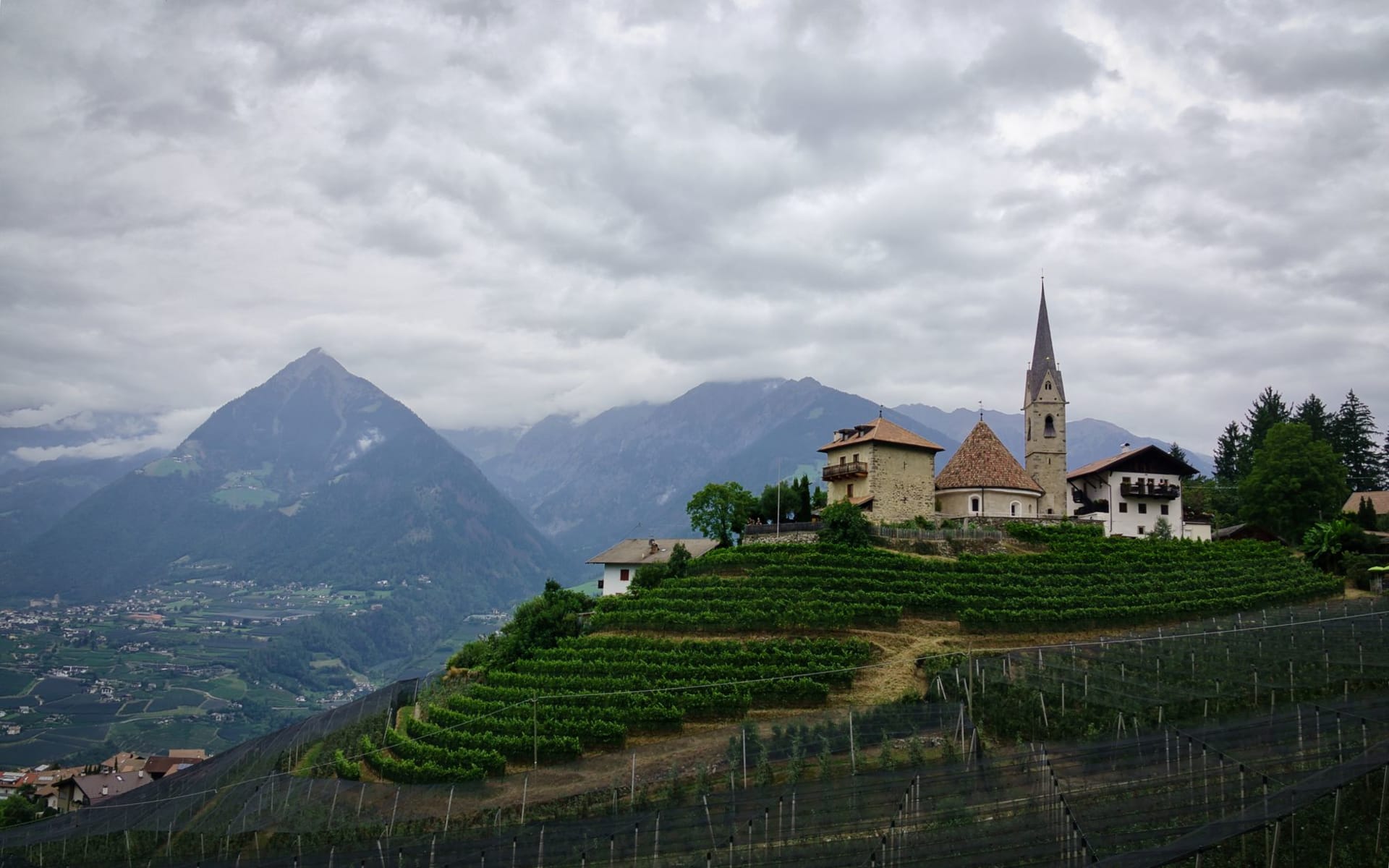
The views from the upper terraces — down into the valley, across to the vineyards and orchards on the opposite slope — are the kind that make you stand still for longer than you planned.
Thermal Baths and the Question of Temperature
The Terme Merano opened in 2005 and is designed with the kind of ruthless modernity that might clash with the Belle Époque surroundings but somehow doesn’t. I went on a Tuesday afternoon. Thirteen pools at various temperatures, the ones outside steaming gently in the cold air against a backdrop of bare vines and the castle walls. I moved from a 34-degree outdoor pool to a 36-degree indoor one and then back, the way you do when you’ve lost track of time in the best possible way.
Lia, who is more discerning about these things than I am, declared it one of the better spa experiences she’d had in Europe. I take that seriously.
Wine in the Valley
Merano sits at the northern end of a wine corridor that runs south toward Bolzano, and the local cooperative — Cantina Merano — has been making Gewürztraminer and Pinot Bianco here long enough that the bottles don’t bother explaining themselves. I tasted through a handful at a small Vinothek near the medieval castle, standing at a wooden counter in a room that smelled of oak and stone.
The Castle Trauttmansdorff itself has a wine bar in the lower village. The house Lagrein is poured cold, which is wrong, but the terrace view compensates.
When to go: April through June for the gardens in bloom. Late October for the chestnut festival and autumn light on the vineyards. December brings a restrained Christmas market. Avoid July and August unless you enjoy sharing the promenade with half of Bavaria.