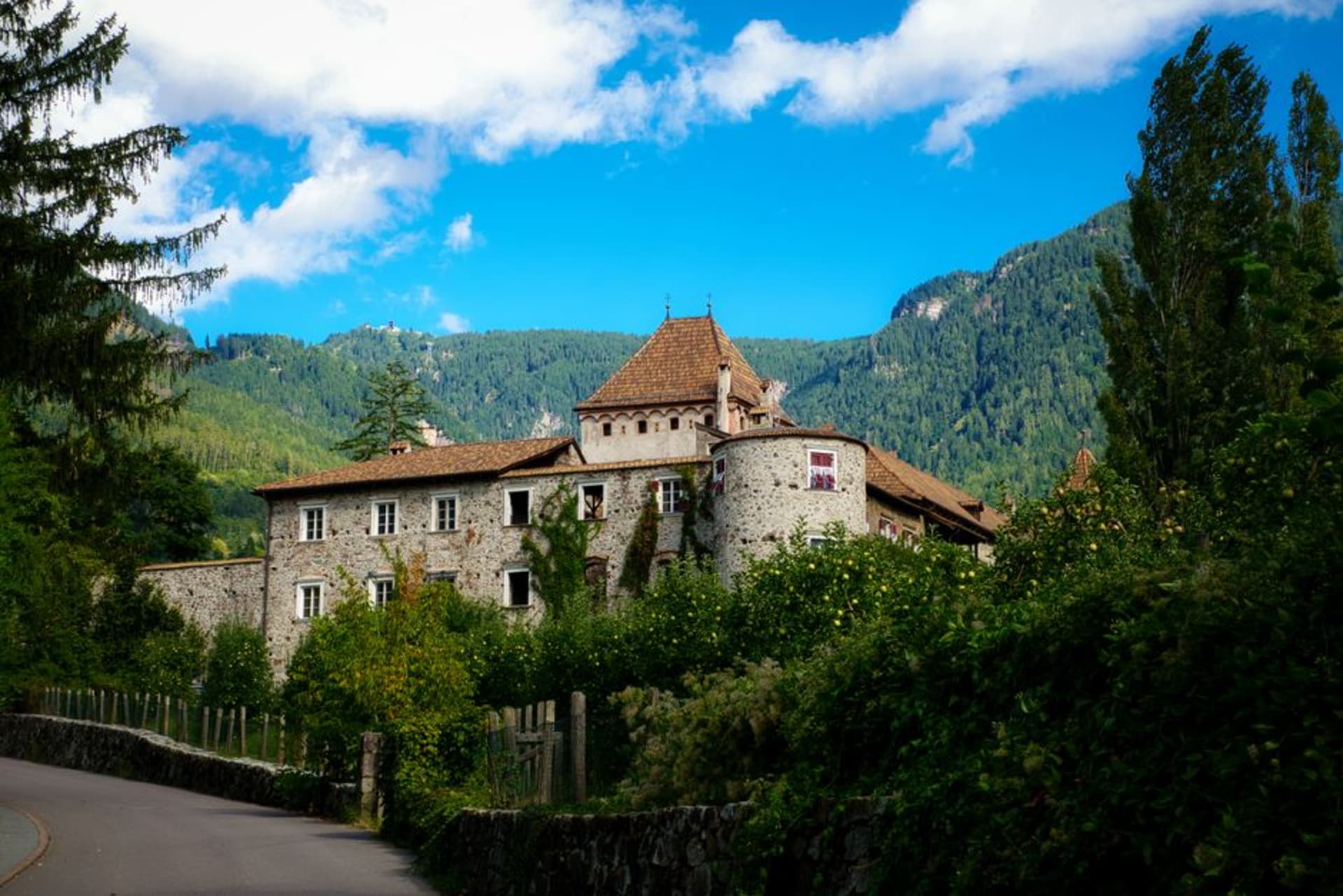
Glurns
"I did a full lap of the town walls before Lia had even finished her cappuccino — that's how small Glurns is, and I mean that as a compliment."
A pocket-sized walled town near the Swiss border where the medieval ramparts are still fully intact and you can walk the whole loop in twenty minutes.

Glurns is the kind of place I’d have driven straight past if a friend in Bolzano hadn’t specifically told us to stop. It’s tiny — genuinely one of the smallest towns in Europe, something like 900 people — and sits way out in the Vinschgau valley, close enough to Switzerland and Austria that you start to lose track of which country’s cheese you’re eating. We came in on a day trip from Meran, half-expecting a quick photo stop, and ended up staying for lunch and a long walk we hadn’t planned.
What got me was how complete the walls still are. Most medieval towns I’ve seen keep a gate here, a tower stump there, evidence of fortification rather than the thing itself. Glurns has the full loop — ramparts, corner towers, moat outline — wrapped tight around a town so small you could toss a stone across it. Walking the perimeter path outside the walls, with the Vinschgau’s orchard-lined flatness stretching out on one side and the stone facades rising on the other, felt almost staged, like a film set nobody had gotten around to populating with extras.
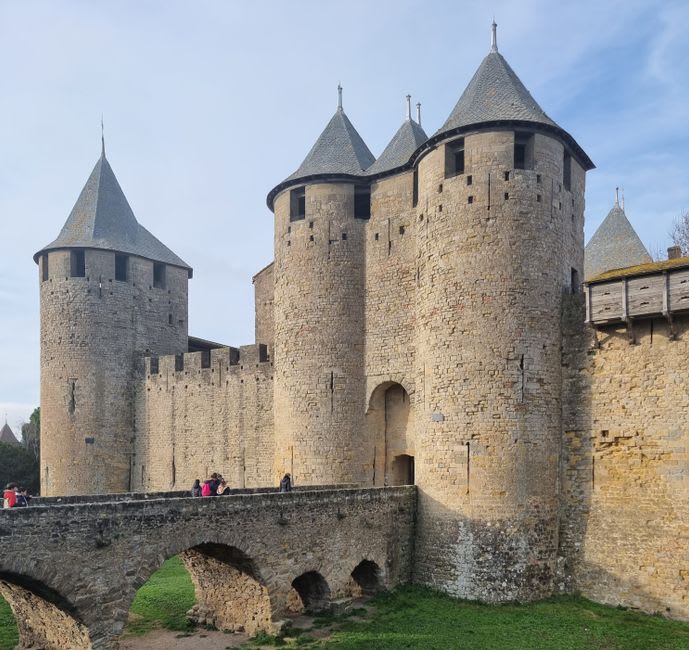
Inside, the arcaded main street does most of the work — low stone arches you duck slightly under, house facades painted in faded ochre and rust, a scattering of cafes that all seem to know each other’s business. We had a plate of Schlutzkrapfen (spinach and ricotta ravioli, this valley’s answer to everything) at a place just off the square, and the woman running it told us, unprompted, that half the town works the apple orchards outside the walls the rest of the year. The Vinschgau grows an enormous share of Italy’s apples, which is not a fact I expected to learn in a medieval fortress town.

If I’m honest, an hour and a half covers it — this isn’t a place to build a whole day around unless you’re cycling the Vinschgau valley route, which a lot of people do, since the old rail line has been converted into one of the better bike paths I’ve seen in the Alps. We saw more cyclists than cars, which felt right for a town this size.
When to go: Late spring through early autumn, when the surrounding orchards are either in blossom (April) or heavy with fruit (September) and the valley bike path is fully open.
Keep exploring
More from South Tyrol
 south-tyrol
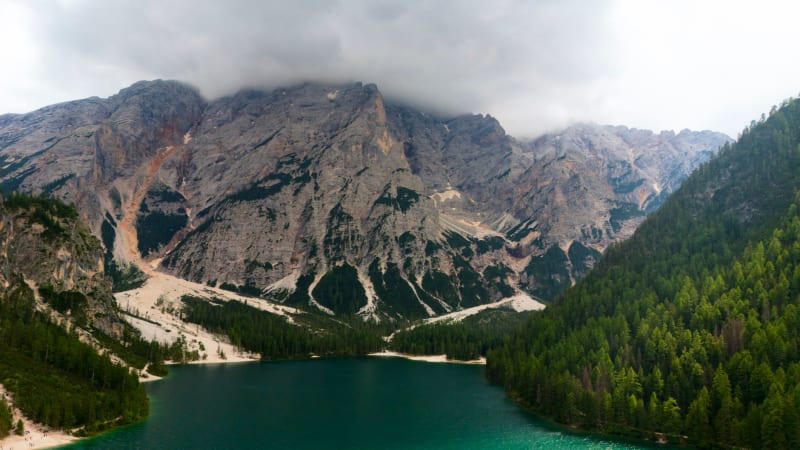
Lago di Braies
A turquoise lake at the end of a dead-end valley in the Dolomites, so photogenic it has generated its own overcrowding problem — and so beautiful it remains worth the effort of getting there early.
Explore south-tyrol
Lago di Carezza
A small alpine lake in the Dolomites whose impossibly green water mirrors the jagged Latemar range, ringed by dark spruce forest.
Explore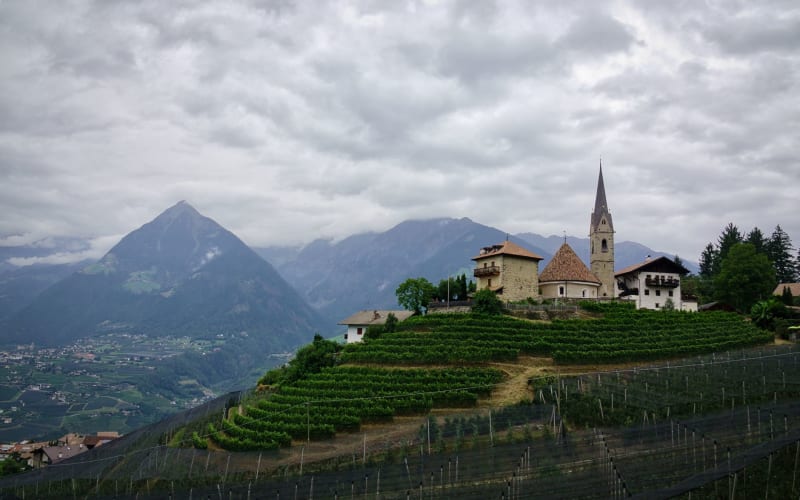 south-tyrol
Merano
A Belle Époque spa town tucked into a narrow Alpine valley where thermal waters, castle gardens, and the ghost of Empress Sissi combine into something quietly, stubbornly elegant.
Explore south-tyrol
Ortisei
A Dolomite village where cable cars swallow you up at the edge of town and spit you out among jagged grey peaks within minutes.
Explore south-tyrol
Plan de Corones
A rounded Dolomite summit where Zaha Hadid buried a museum into the rock and left nothing but concrete slits framing the peaks beyond.
Explore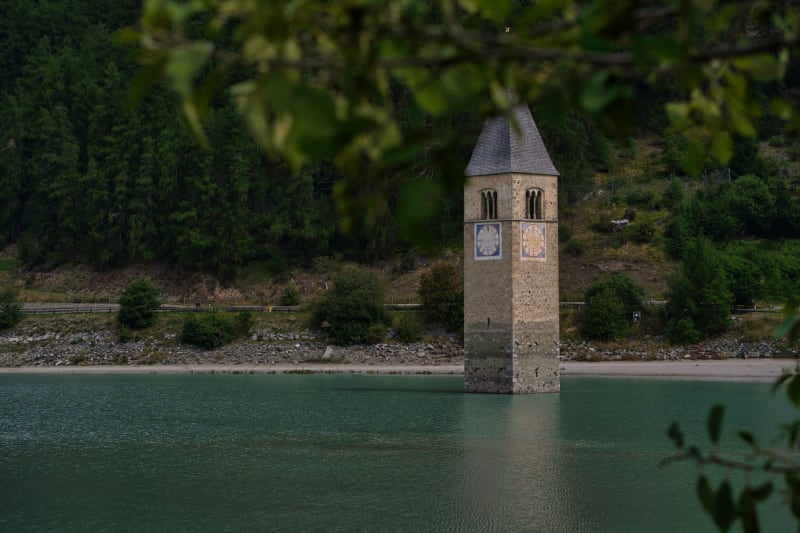 south-tyrol
Reschensee
A reservoir in the upper Val Venosta built in 1950 by flooding three villages — the drowned 14th-century bell tower still rises from the water's surface as one of the most eerie landmarks in the Alps.
Explore