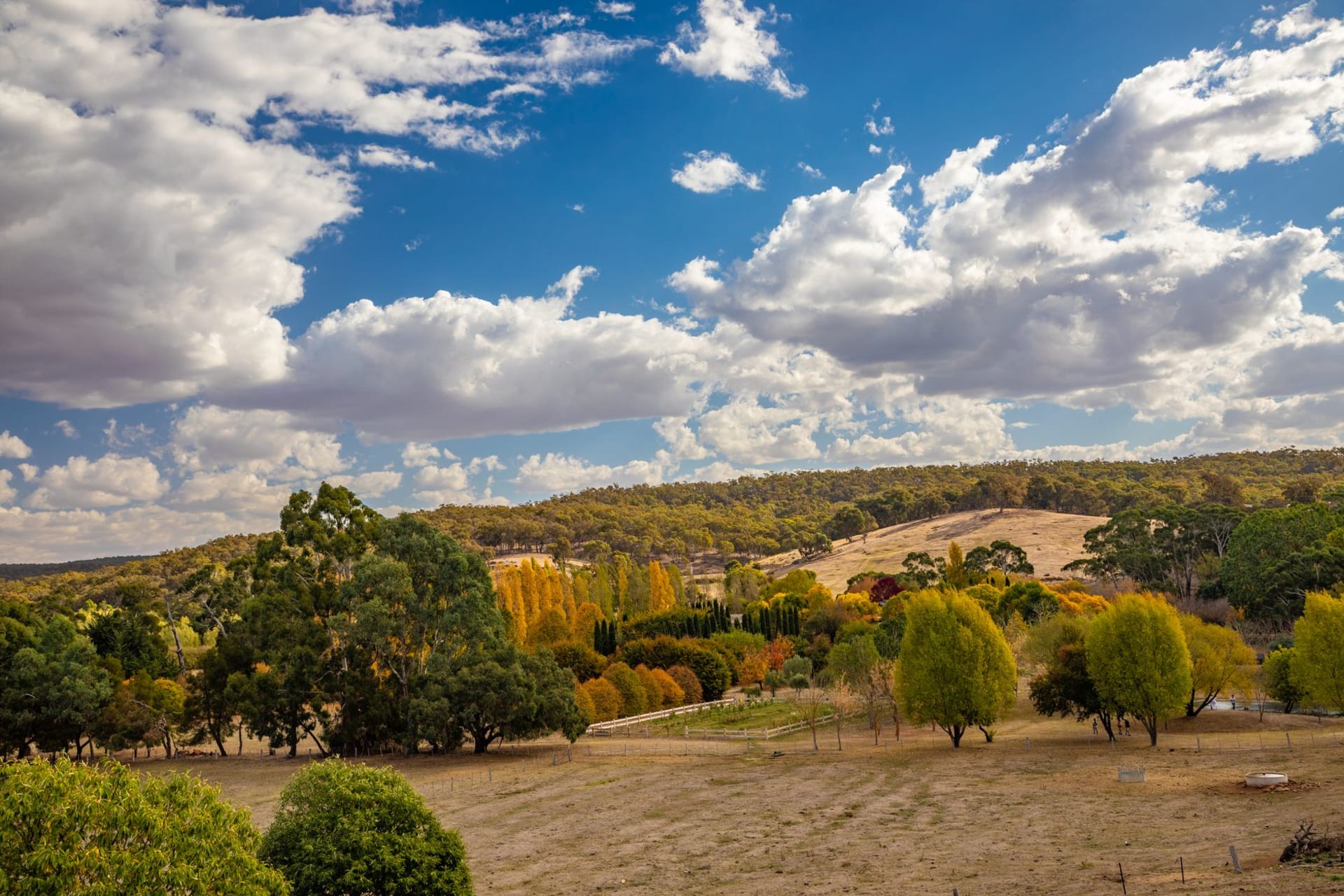
Adelaide Hills
"I didn't expect to be thinking about Austrian wine in the middle of South Australia."
The Change in the Air
Driving east from Adelaide on the South Eastern Freeway, there’s a point — you’re climbing through tunnels and cuttings in the Mount Lofty Ranges — where the temperature drops noticeably and the vegetation changes. The dry, eucalyptus scrub of the plains gives way to something denser and cooler: taller gums, undergrowth, the smell of leaf litter and moisture that doesn’t exist on the flat below. You’ve arrived in the Hills.
This climatic separation from the city is the Hills’ defining condition. The higher elevation and the maritime influence trapped by the ranges creates a microclimate where cool-climate grapes — Sauvignon Blanc, Chardonnay, Pinot Noir, and, unexpectedly, Grüner Veltliner — thrive in ways they can’t manage in warmer regions.
Hahndorf and the German Thread
Hahndorf is the oldest surviving German settlement in Australia, established in 1839, and its main street has the kind of preserved heritage character that usually implies tourism at the expense of authenticity. Here it’s more complicated. Yes, there are plenty of shops selling Bavarian-themed merchandise and bratwurst to day-trippers from Adelaide. But there are also genuinely good bakeries, a fine sausage shop, and the Hahndorf Inn, which has been serving the community in some form for the better part of two centuries.
I walked the main street early on a Saturday morning, before the coach groups arrived, and found a produce market setting up under the old trees. An elderly man was selling jars of quince paste. I bought two, which tells you something about the quality.
The Wine That Surprised Me
The Adelaide Hills wine scene is more diverse and more interesting than it gets credit for outside of Australia. The Sauvignon Blanc is genuinely excellent — more structured than Marlborough, with an herbal quality that sits well with local produce. The Chardonnay can be world-class from the best producers. But what stopped me in my tracks was a Grüner Veltliner at Hahndorf Hill Winery.
Grüner is an Austrian grape — white pepper, white fruit, lean and food-friendly — and I’d had no reason to expect it in South Australia. But the cool-climate conditions in the Hills suit it remarkably well, and the resulting wine had that characteristic white pepper note alongside a citrus freshness that I spent some time thinking about afterward. The winery has been championing alternative varieties for decades. This sometimes happens in regions that don’t feel obligated to make Shiraz.
Cleland and the Peak
Cleland Wildlife Park sits on the slopes of Mount Lofty, and it’s one of the better Australian wildlife parks I’ve visited because the enclosures feel almost incidental to a landscape that looks wild. Kangaroos wander freely through the grounds. Koalas are in the trees where trees happen to be. Wombats do what wombats do, which is mostly dig and be improbably heavy for their size.
Mount Lofty Summit, at 727 metres, has a view over Adelaide and the plains to the Gulf St Vincent that makes clear why this range matters to the city below. I went up late in the afternoon and watched the light fail over the water and the city lights come on in sequence. The wind at the summit was cold enough to make me appreciate the café at the top.
What to Eat
The Hills have developed a food producer culture that supplies the best Adelaide restaurants. Cherry orchards and apple orchards operate farm gates during season. There are artisan cheesemakers and smallgoods producers working at a quality level that gets talked about seriously. The basket of things to carry back to the city is generally too heavy for one visit to reasonably address.
When to go: October and November for blossom and the apple orchards in flower. April and May for autumn colours, harvest in the wineries, and cool walking conditions. Winter brings fog and occasional frost that makes the Hills atmospheric in a way that suits slow cellar-door days.