Blyde River Canyon
"I have stood at the rim of bigger canyons, but never one so determined to be green."
Everyone who comes to South Africa is funnelled toward the Kruger, and rightly so — but the road that climbs the escarpment just west of it, the Panorama Route, gets a fraction of the attention and is one of the more quietly astonishing drives I have done anywhere. Blyde River Canyon is its heart. We came up from the lowveld in the late afternoon, the air cooling as we climbed, and Lia, who had spent two days photographing elephants, said she needed a day of landscape with nothing in it that could trample her. The canyon obliged.
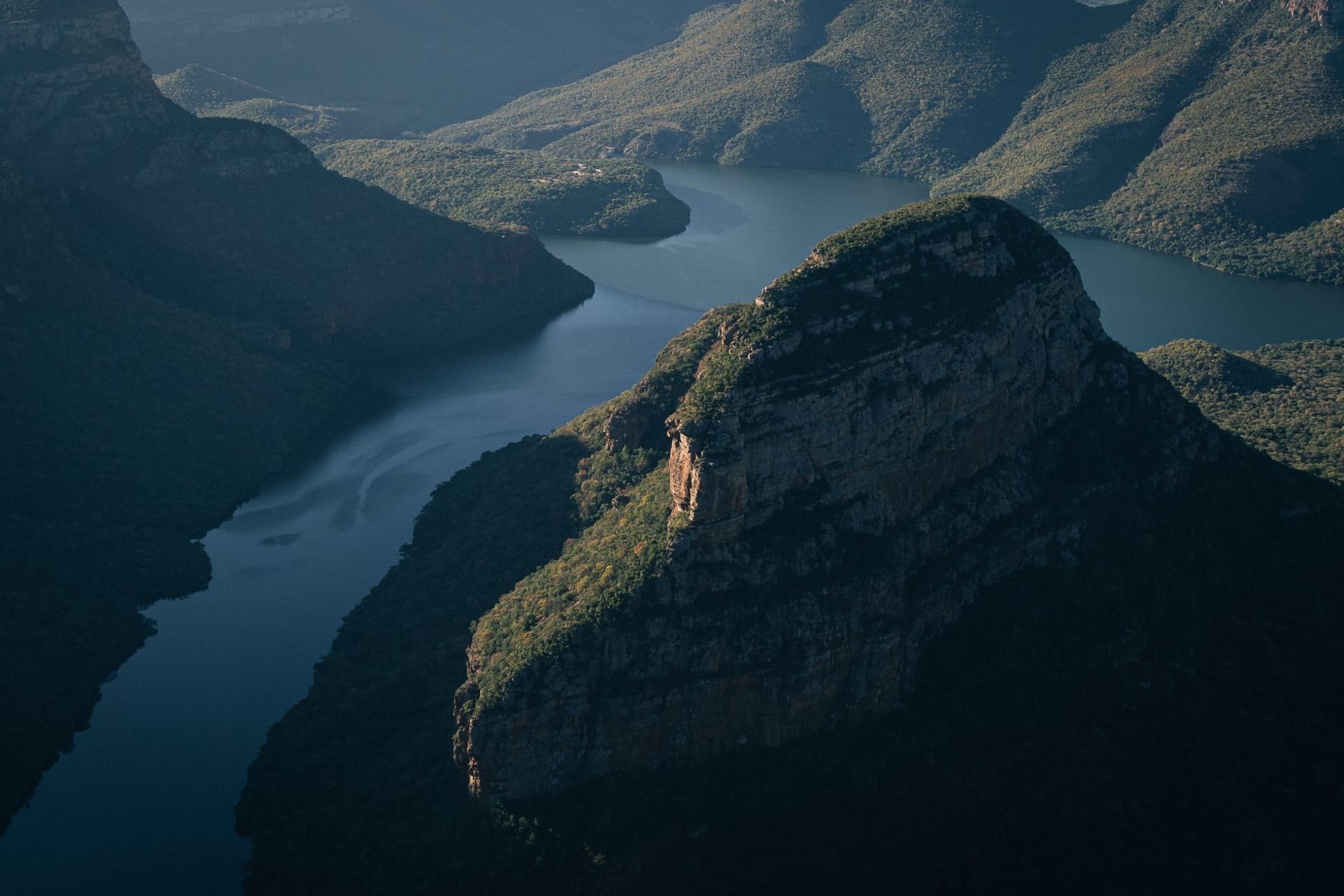
The Three Rondavels
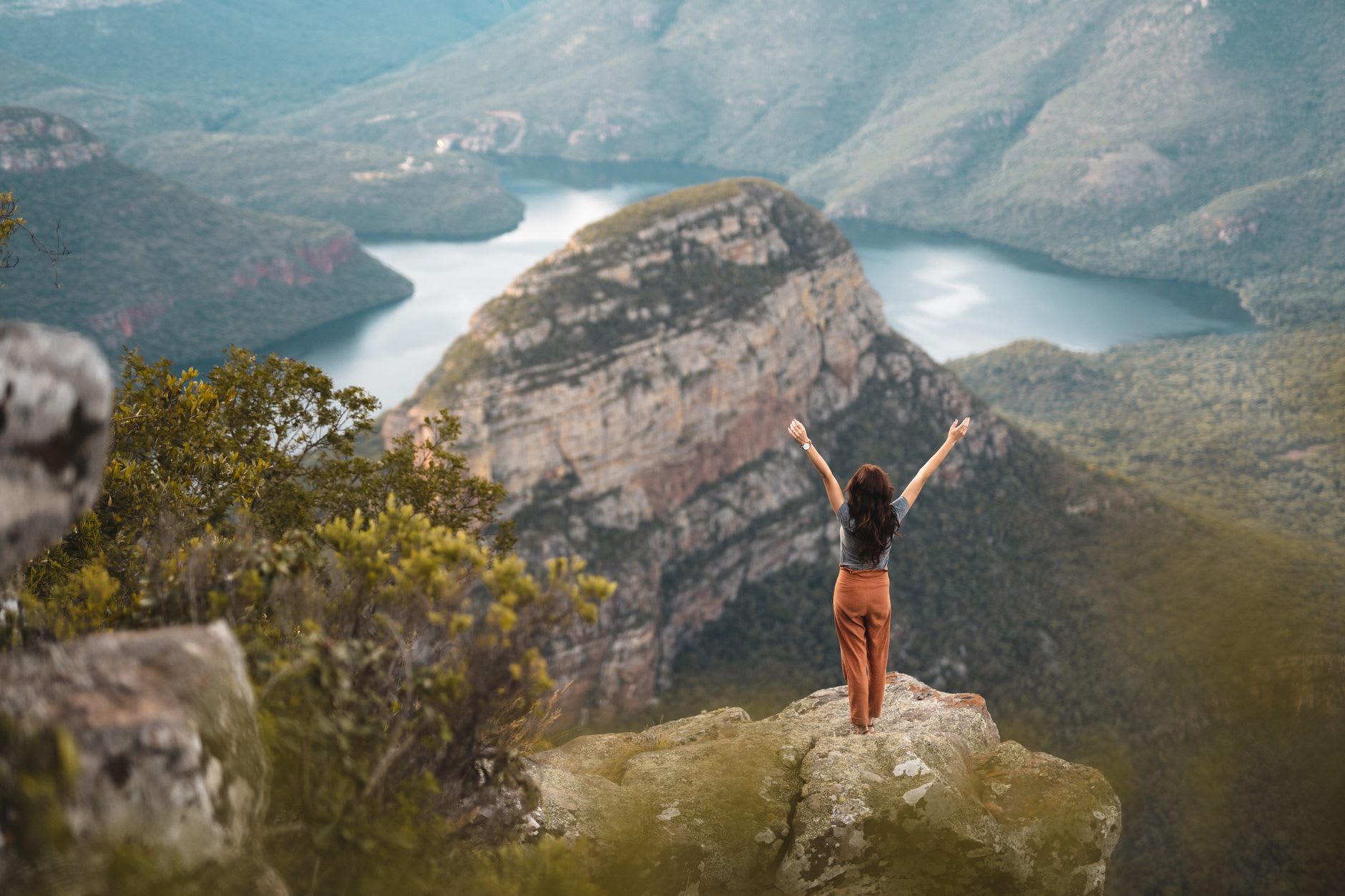
The signature view is the Three Rondavels — three enormous rounded peaks, flat-topped and green, that the Pedi people named for the round thatched huts they resemble, though I think the resemblance flatters the huts. They rise out of the canyon wall above the Blyde River, which winds far below in a colour I can only call jade, swollen here into the Blyderivierspoort reservoir. We arrived maybe forty minutes before sunset and watched the light walk across the three domes, turning the grass on their crowns from olive to gold to a deep bruised rose.
What surprised me is how green the whole thing is. I had a mental image of canyons as red, arid, Arizonan places — and Blyde is the third-largest canyon on earth, but it is carpeted in subtropical forest, its walls furred with vegetation, mist pooling in the side gorges at dawn. It is the wettest, most alive canyon I have ever stood over. A pair of crowned eagles rode the thermals coming up the wall, close enough that I heard the wind in their feathers.
Bourke’s Luck Potholes
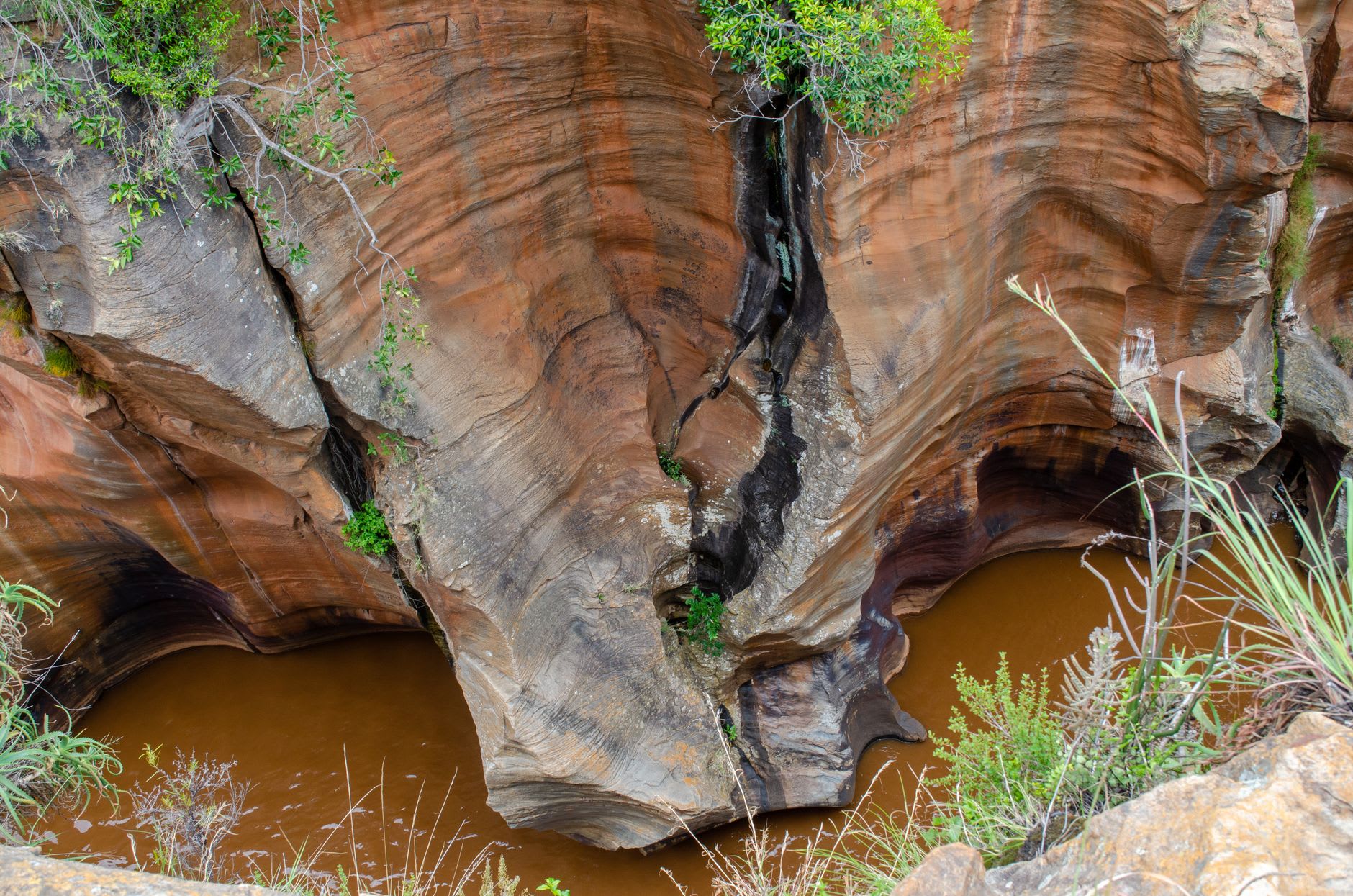
A few kilometres up the route, where the Treur River throws itself into the Blyde, the water has drilled the bedrock into a surreal sculpture garden of cylindrical pits and smooth-walled shafts — Bourke’s Luck Potholes, named for a hopeful gold prospector who, by most accounts, never struck it rich here. Walkways and little footbridges thread across the gorge, and the rock has been carved into shapes so fluid they look poured rather than eroded.
Lia spent an hour here with her camera, crouched at the railings, while I sat on a warm rock and did absolutely nothing, which on a long trip is its own kind of luxury. A vendor near the car park sold us roasted mielies — corn — dusted with chilli salt, and we ate them looking down into the churn. The whole Panorama Route can be done in a day from the canyon viewpoints, but I would give it two; rushing it feels like cheating.
When to go: The dry winter months, May to September, give the clearest views, though the river runs lower. Come to the Three Rondavels for late afternoon light, and Bourke’s Luck Potholes in the morning before the tour buses. Mornings often bring mist into the canyon — beautiful, but check before you drive up.