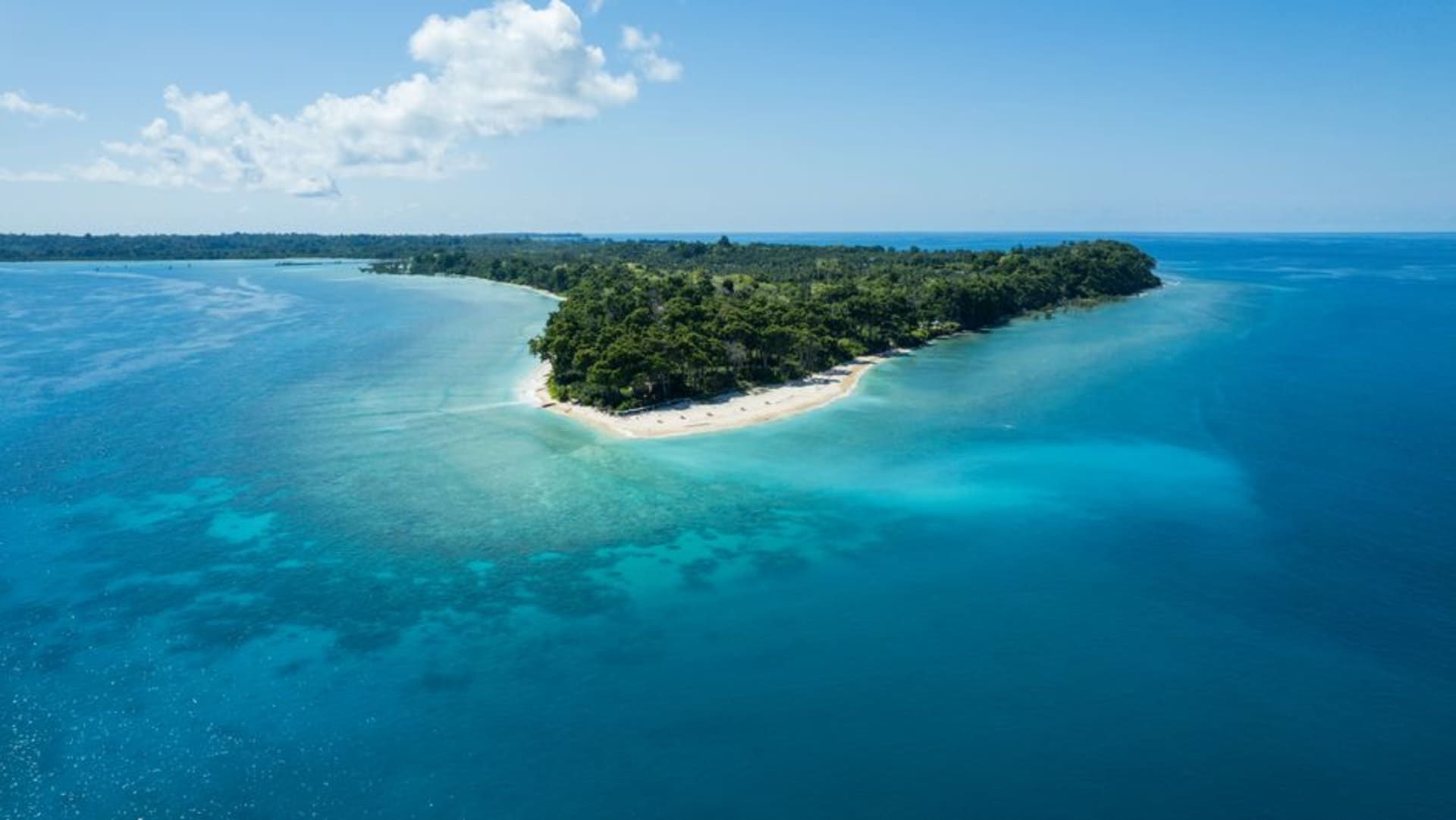
A fifteen-minute-round islet off Gizo where a shipwrecked lieutenant once swam ashore, now a quiet reef stop for an afternoon of snorkeling.
Our boatman from Gizo cut the engine well before we reached it, letting us drift the last stretch toward Kennedy Island so we wouldn’t scrape the reef. I remember thinking it looked almost too small to have a name, let alone a story — a green knob of palms and undergrowth you could walk around in about fifteen minutes, which we later did, barefoot, sand giving way to coral rubble giving way to sand again. Lia had read up on the history the night before at our guesthouse and kept narrating bits of it as we walked: how this was once called Plum Pudding Island, how it only became Kennedy Island after a young US Navy lieutenant named John F. Kennedy swam here in August 1943, leading his surviving PT-109 crew to safety after a Japanese destroyer rammed and sank their boat in the strait nearby.
What struck me more than the swim itself was what came after — two local scouts, Biuku Gasa and Eroni Kumana, paddled out from here carrying a coconut shell carved with a rescue message, and that small act of navigation and courage ended up, decades later, sitting on Kennedy’s desk in the Oval Office as a paperweight. Standing on that tiny beach with Lia, trying to picture a stranded crew hiding in the same scrub we were swatting mosquitoes in, made the whole story feel much less like a plaque and much more like a place. There’s no monument crowding the shore, no gift shop, just the trees and the tide line, which somehow made it land harder.
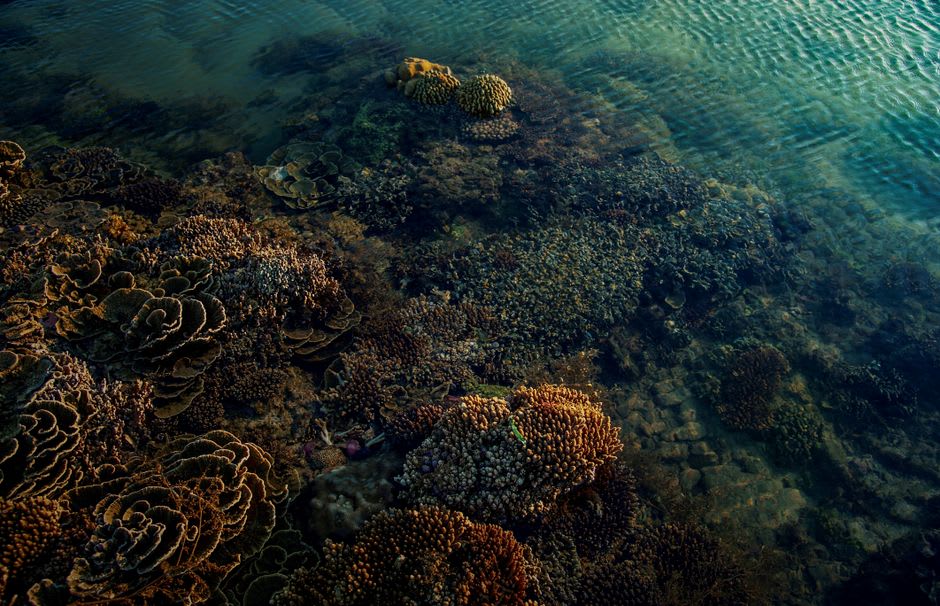
We spent most of the afternoon in the water rather than on land. The fringing reef around Kennedy Island is still largely intact, and within a few strokes of the boat we were over coral gardens thick with parrotfish and the occasional reef shark cruising the drop-off. I ate my packed lunch — rice, tinned tuna, a warm mango Lia had picked up in Gizo market — sitting on the sand with salt still drying on my shoulders, watching another day-trip boat idle offshore waiting its turn at the mooring.
It’s a strange kind of pilgrimage, going out of your way to visit an islet mostly for fifteen minutes of walking and an afternoon of snorkeling, but that’s exactly what makes Kennedy Island worth the trip — it never tries to be more than what it is.
When to go: We went in July, squarely in the dry season that runs June to September, and the crossing from Gizo was calm enough that Lia didn’t once reach for the motion sickness tablets she’d packed.