Velika Planina
"Somewhere above 1,500 meters, Slovenia stops being a country and starts being a pasture with a very good view."
A high alpine plateau above Kamnik where herdsmen still summer their cattle in a scattered village of steep-roofed wooden huts — one of the last working pastoral landscapes left in the Alps.
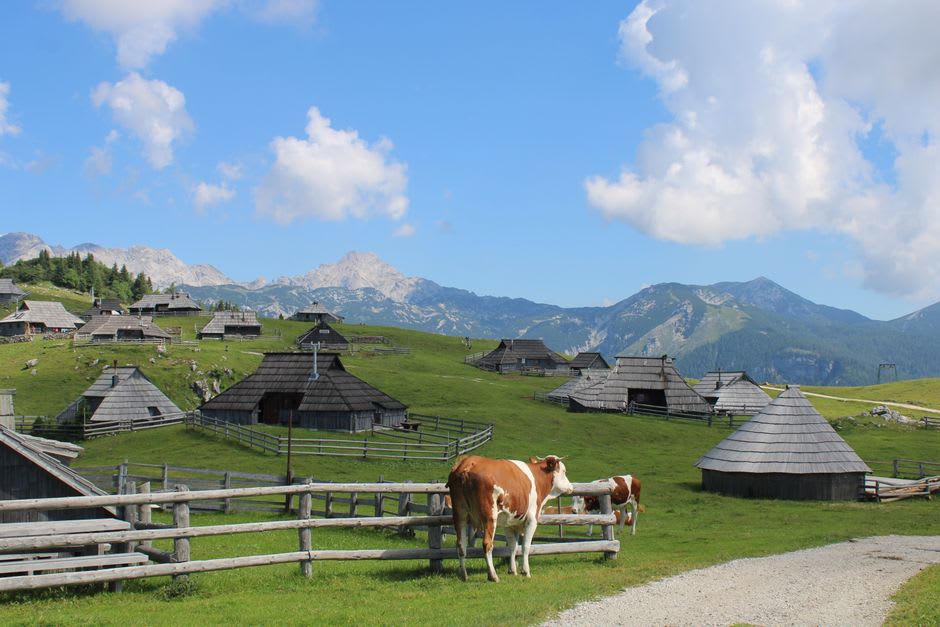
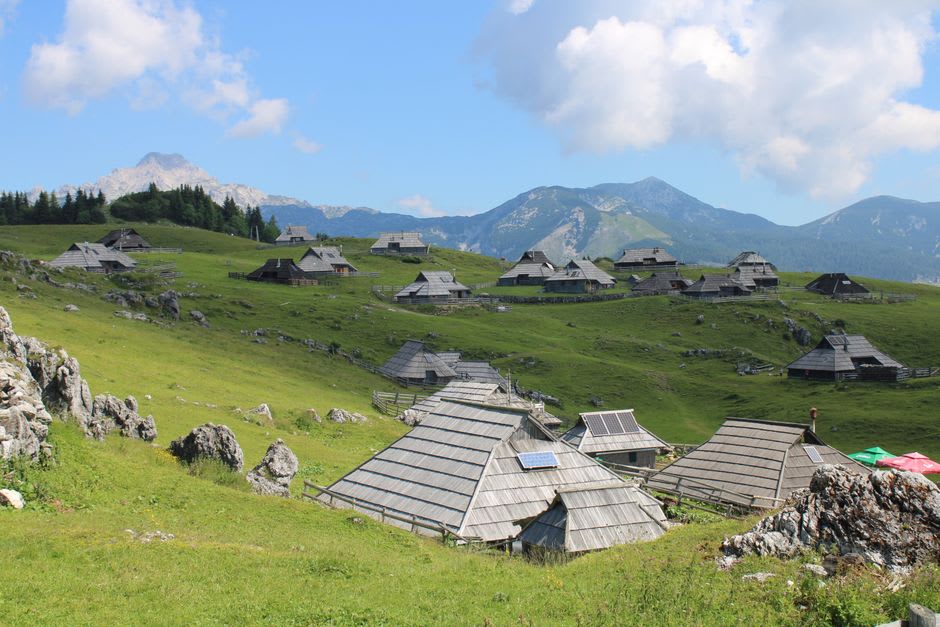
The cable car up from Kamniška Bistrica takes about five minutes and deposits you in a different century. Below, the valley is forest and rushing water; above, suddenly, is open grassland scattered with round wooden huts that look like they were built by someone who’d only ever heard mushrooms described secondhand. Lia said exactly that, and then spent the next hour photographing them from every possible angle.
The Herdsmen’s Village
Velika Planina isn’t a reconstruction or a museum piece — it’s a working pastoral settlement, one of the largest in the Alps still in active seasonal use. From June to September, herders bring cattle up from the valleys to graze the plateau’s grasslands, living in the same style of hut their families have used for generations: round or oval, steep conical or gabled roofs shingled in wooden shakes, no nails in the original construction, built low and rounded specifically to survive the plateau’s brutal winter winds. Most stand empty in the shoulder seasons, shutters closed, waiting. In midsummer, smoke comes from a few chimneys and you can buy fresh cheese directly from a herder’s hut if you catch one open.
Walking the Plateau
The plateau itself sits around 1,500 meters and rolls out much further than it looks from the cable car station — we walked for nearly three hours and never ran out of new folds of grassland to cross. Cattle graze loose, unbothered by hikers, and the path network is easy enough that we saw families with small children making the same loop we were. The views open constantly: Grintovec and the higher Kamnik Alps to the north, the Kamniška Bistrica valley dropping away steeply to the south, and on a clear day, the haze of the Ljubljana basin far in the distance. There’s a small chapel partway across the plateau, and a mountain hut, Domžalski Dom, serving the kind of unfussy alpine food — bean soup, štruklji, strong coffee — that tastes better at altitude than it has any right to.
The Walk Down, If You’re Feeling Ambitious
We took the cable car both ways, which is the sensible option. But there’s a marked trail down through the forest to Kamniška Bistrica that takes about two hours and passes a small chapel and a couple of viewpoints — worth it if your knees are younger than mine, or if you simply want more time inside the silence before the valley traffic finds you again.
When to go: June to September, when the huts are occupied and the grazing herds are up. The cable car closes for maintenance some weeks each year and the huts are shuttered outside summer, so this is a genuinely seasonal destination — check operating dates before making the drive up from Kamnik.
Keep exploring
More from Slovenia
 slovenia
 Vilenica Cave
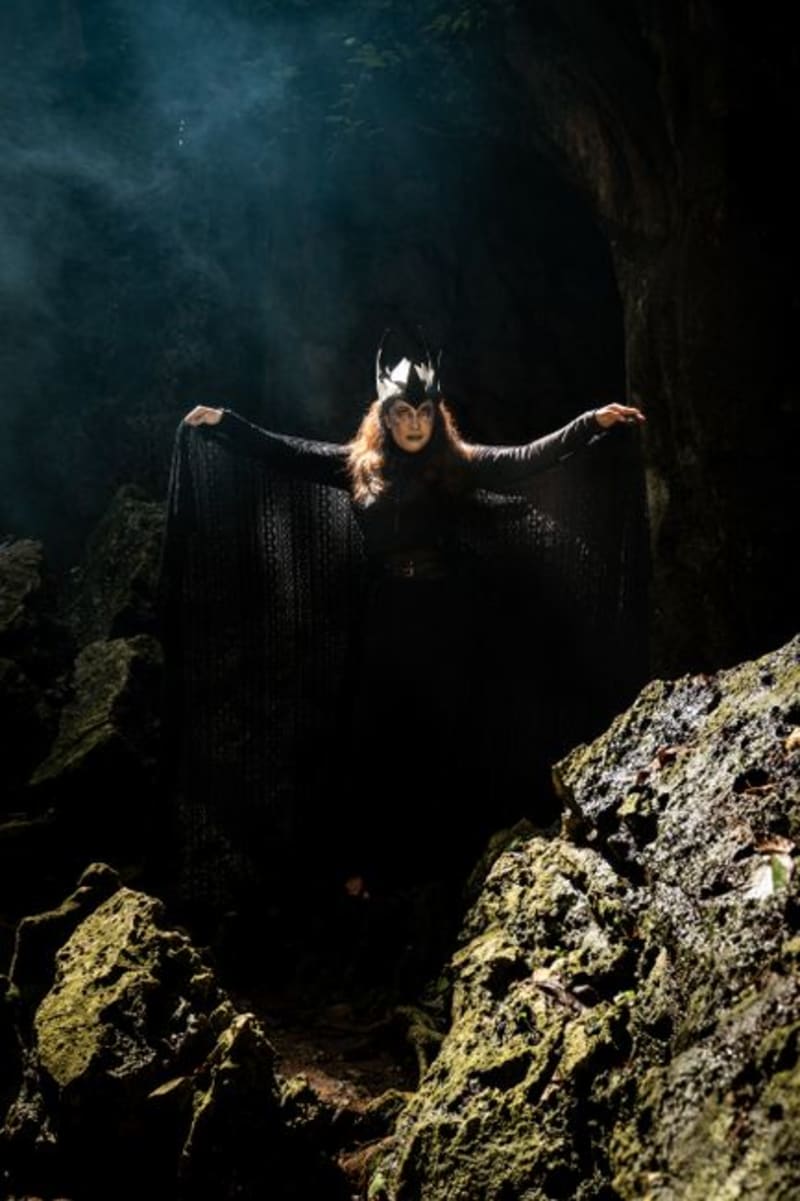
Europe's oldest tourist cave, opened to visitors in 1633, with a natural concert hall that has hosted a literary prize ceremony every autumn since the 1980s — caving and culture sharing the same limestone chamber.
Explore slovenia
 Vintgar Gorge
A wooden walkway threaded along a limestone gorge outside Bled, where the Radovna River runs a color that makes you forget the crowds at the lake entirely.
Explore slovenia
 Vipava Valley
A wind-scoured wine valley between the Alps and the Karst, where the same violent bora that terrifies drivers also produces some of Slovenia's most distinctive white wines.
Explore slovenia
 Vogel
A cable car climbing 1,000 meters above Lake Bohinj to a ski station turned summer viewpoint, where the whole Julian Alps range spreads out at once.
Explore slovenia
 Vršič Pass
Fifty hairpin turns over the highest road pass in the Julian Alps, built by Russian prisoners of war and driven today for the view, not the destination.
Explore slovenia
 Žužemberk
A ruined medieval fortress rebuilt after wartime destruction stands guard over the Krka River in southern Dolenjska, one of the region's most photogenic and least-crowded castle ruins.
Explore