A tiny farming village in the Bohinj valley where centuries-old double hayracks still stand in working fields, unbothered by the tourism happening a few kilometers downhill.
We nearly drove past Studor entirely — it’s the kind of village that doesn’t announce itself, a scattering of farmhouses along a single lane a few kilometers from Bohinj lake, easy to mistake for somewhere with nothing in particular to see. A guesthouse owner in Stara Fužina insisted otherwise, and we’re glad we listened, because Studor turned out to hold one of the best-preserved clusters of traditional Slovenian hayracks in the country.
The Kozolec, Explained
The double hayrack — kozolec toplar in Slovenian — is a structure I’d seen dotted across the countryside for days without understanding what I was looking at. It’s essentially two single hayracks joined under a shared, steeply pitched roof, designed to dry hay and grain in a climate where summer rain arrives without warning. Studor’s row of kozolci, some dating back over a century, still stand in active use in the fields behind the village houses, their dark wood weathered to a uniform grey-brown that photographs beautifully in low afternoon light.
A Village That Kept Its Shape
Beyond the hayracks, Studor’s real appeal is how little it’s been rearranged for visitors. There’s no gift shop, no ticket office — just a walking loop through the village past stone farmhouses with carved wooden balconies, a small chapel, and working barns that smell exactly like working barns. We passed an elderly woman feeding chickens in her front yard who nodded a hello and went straight back to it, entirely unbothered by our presence, which felt like the correct register for the place.
Why It Matters More Than It Looks
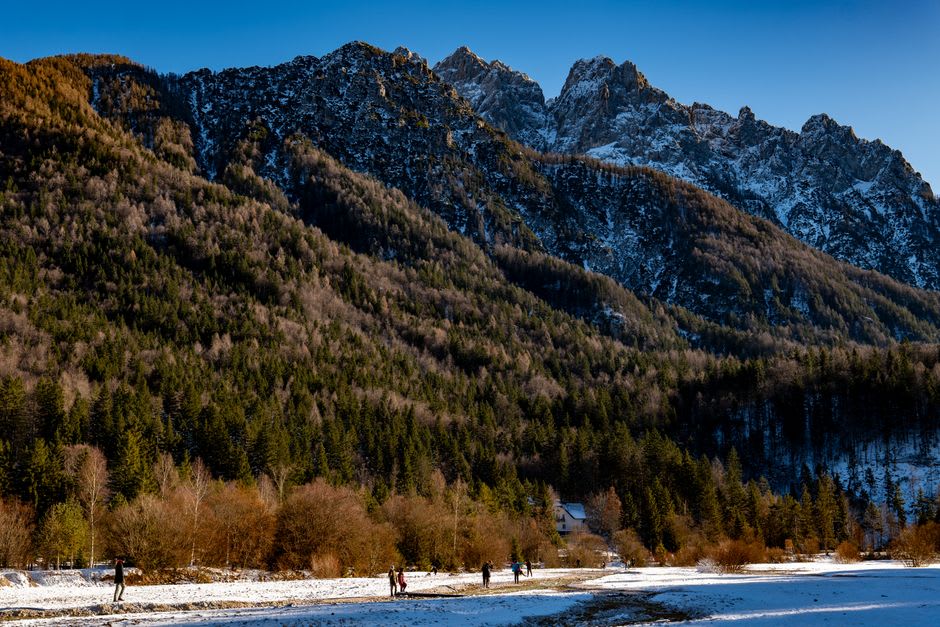
Studor is part of the Triglav National Park’s protected cultural landscape, one of a handful of villages where traditional Bohinj farming architecture has been preserved rather than replaced. It’s easy to treat it as a fifteen-minute photo stop on the way to somewhere else, but slowing down here — walking the full loop, reading the small information boards, watching how the hayracks are still actually used — gave us a better sense of rural Slovenian life than most museums manage.
When to go: Late spring through early autumn, when the hay is out and the hayracks are in active use. Visit in the late afternoon for the best light on the weathered wood.
Keep exploring
More from Slovenia
 slovenia
 Tivoli Park
Ljubljana's green lung, a sprawling landscaped park where locals jog, picnic, and disappear into the woods just minutes from the old town.
Explore slovenia
 Tolmin Gorge
The deepest gorge in Slovenia, where the Tolminka and Zadlaščica rivers meet in a confluence pool locals still swim in despite the cold.
Explore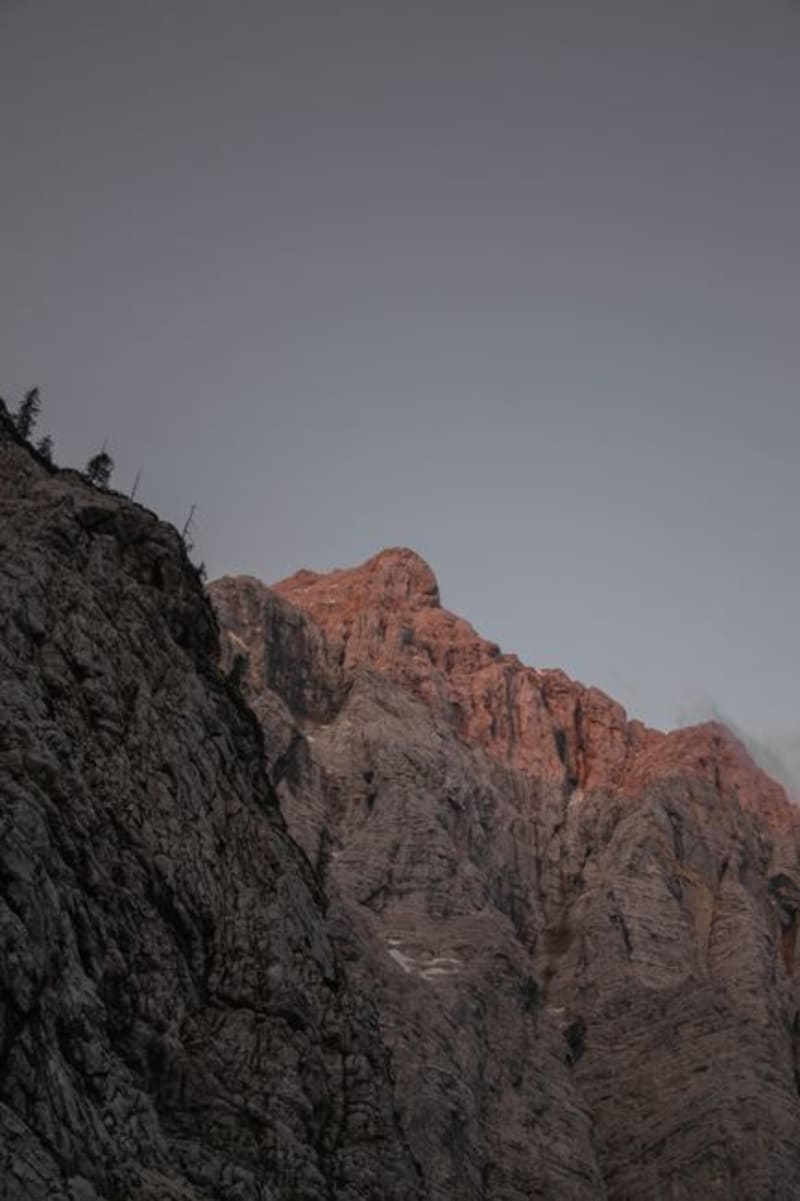 slovenia
 Trenta Valley
The quiet upper reach of the Soča, tucked inside Triglav National Park, where shepherd huts outnumber tourists and the river is at its purest.
Explore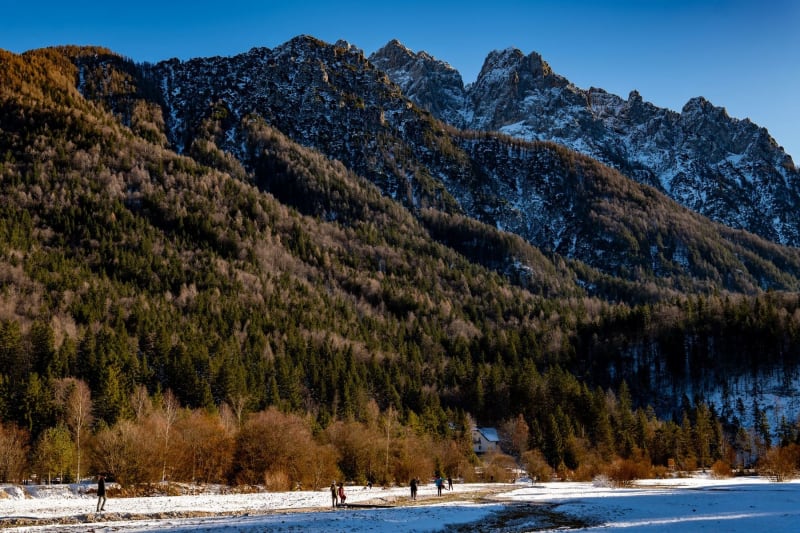 slovenia
 Triglav National Park
Slovenia's only national park wraps around its highest peak, hiding emerald rivers, limestone plateaus, and trails few foreigners ever find.
Explore slovenia
 Trnovo
A quiet canal-side neighborhood just south of the old town, where Plečnik's church and a slower pace of life reward the short walk from the crowds.
Explore slovenia
 Velika Planina
A high alpine plateau above Kamnik where herdsmen still summer their cattle in a scattered village of steep-roofed wooden huts — one of the last working pastoral landscapes left in the Alps.
Explore