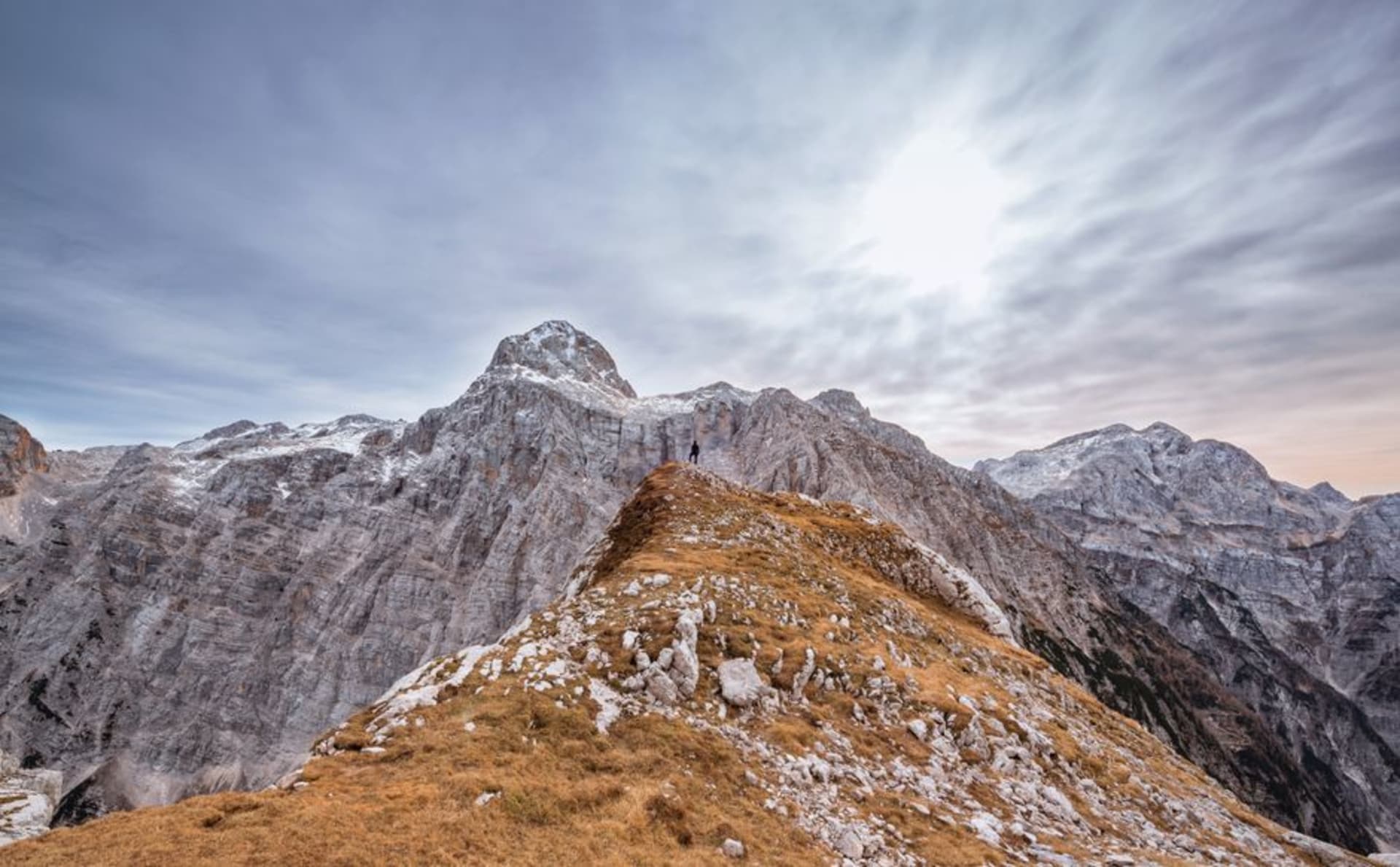
Trenta Valley
"This is the Soča before it becomes famous — smaller, colder, and somehow even more itself."
The quiet upper reach of the Soča, tucked inside Triglav National Park, where shepherd huts outnumber tourists and the river is at its purest.

Coming down from the Vršič Pass, the road drops into Trenta before the valley opens properly toward Bovec, and I nearly missed it because I was still recovering from the hairpins. Lia made me pull over at the first viewpoint, and I’m glad she did, because Trenta is the part of the Soča Valley that most people drive straight through on their way to the rafting outfitters downstream.
Where the River Is Still a Stream
This high up, the Soča hasn’t yet become the wide, photogenic torrent it is near Bovec — it’s narrower here, faster in places, pooling into small pale-green basins between rock. We stopped at one and I put my hand in for exactly as long as it took to regret it; even in August the water coming straight off the Triglav glaciers barely qualifies as liquid. The valley floor is scattered with old hay racks (kozolci) and a scattering of stone huts that shepherds still use in summer for high pastures, giving the whole place a working, lived-in quality rather than a scenic backdrop one.

The Triglav National Park Information Center
There’s a small, well-designed information center in the village of Trenta itself that explains the park’s geology and history without over-explaining it — worth twenty minutes if you want context for the peaks you’ve just driven past. Outside, a botanical trail loops through native alpine flora, easy enough for anyone, and it was there that we saw our first chamois of the trip, unbothered on a slope above the parking area, watching us with what I choose to interpret as mild curiosity.

When to go: June to September, once the Vršič Pass is open and snow has cleared from the trails. The valley is quieter than Bovec or Kobarid year-round, so any clear day works if you’re just passing through.
Keep exploring
More from Slovenia
 slovenia
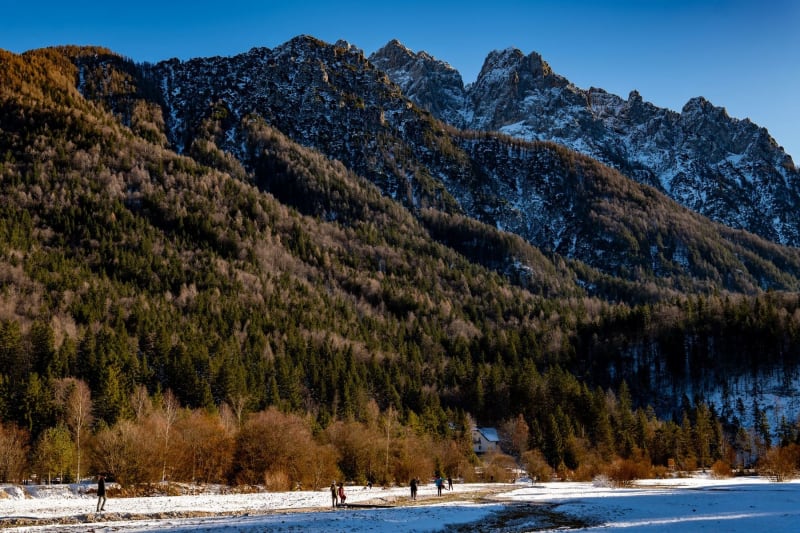
 Triglav National Park
Slovenia's only national park wraps around its highest peak, hiding emerald rivers, limestone plateaus, and trails few foreigners ever find.
Explore slovenia
 Trnovo
A quiet canal-side neighborhood just south of the old town, where Plečnik's church and a slower pace of life reward the short walk from the crowds.
Explore slovenia
 Velika Planina
A high alpine plateau above Kamnik where herdsmen still summer their cattle in a scattered village of steep-roofed wooden huts — one of the last working pastoral landscapes left in the Alps.
Explore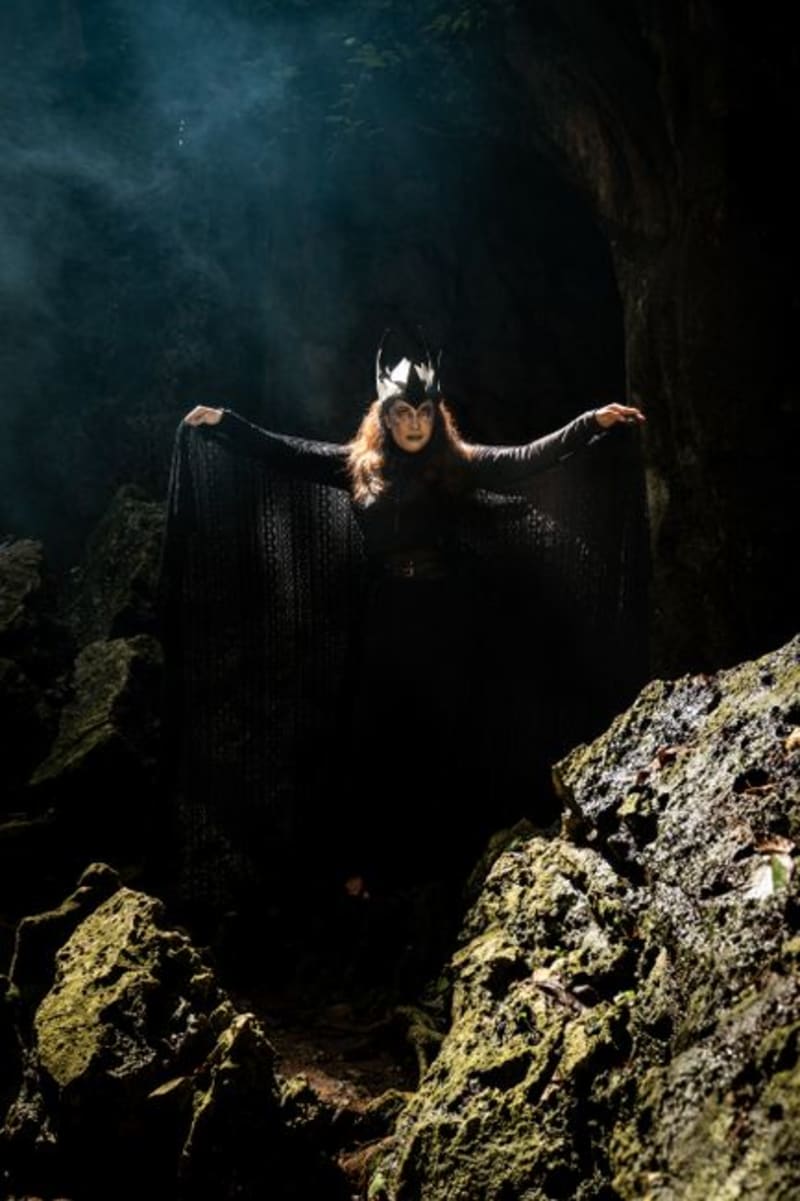 slovenia
 Vilenica Cave
Europe's oldest tourist cave, opened to visitors in 1633, with a natural concert hall that has hosted a literary prize ceremony every autumn since the 1980s — caving and culture sharing the same limestone chamber.
Explore slovenia
 Vintgar Gorge
A wooden walkway threaded along a limestone gorge outside Bled, where the Radovna River runs a color that makes you forget the crowds at the lake entirely.
Explore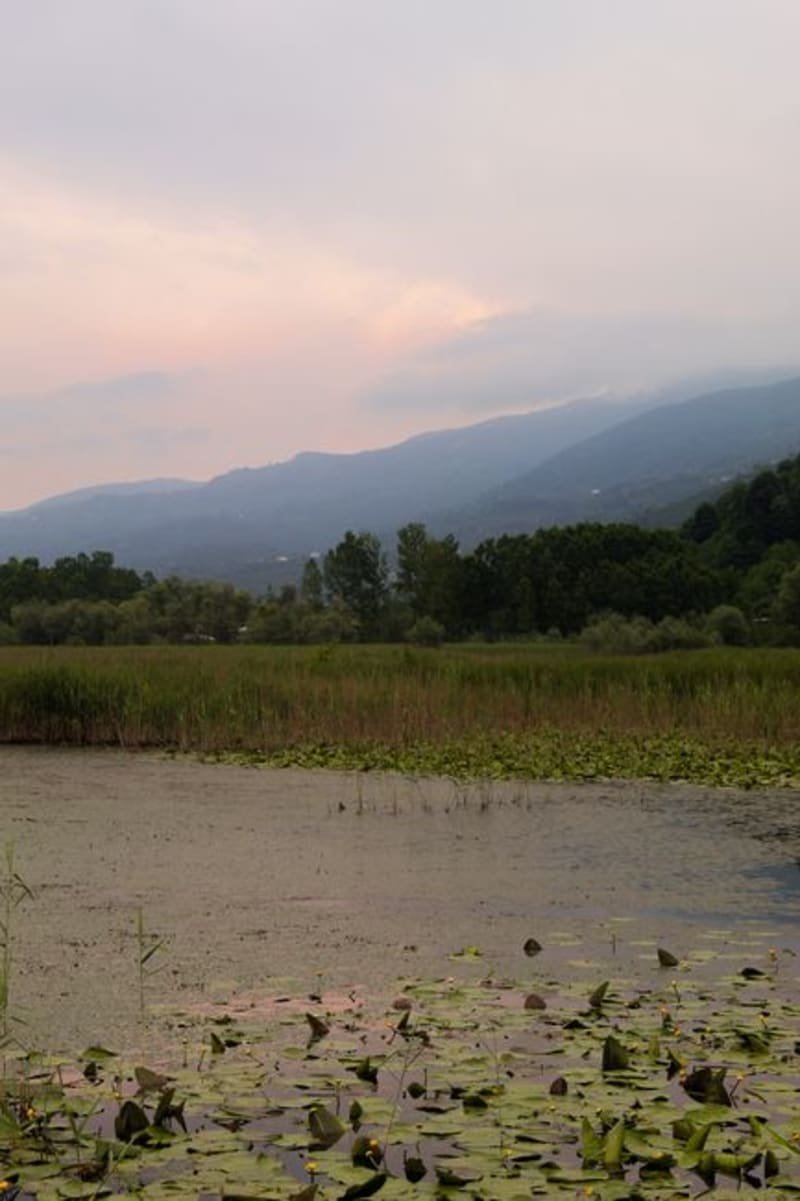 slovenia
 Vipava Valley
A wind-scoured wine valley between the Alps and the Karst, where the same violent bora that terrifies drivers also produces some of Slovenia's most distinctive white wines.
Explore