Škofja Loka
"Twenty minutes from Ljubljana and somehow nobody else had made the trip that morning."
A medieval town at the confluence of two rivers, twenty minutes from Ljubljana, where a stone bridge, a hilltop castle, and a Baroque town square somehow avoid every tour bus in Slovenia.
We took the bus from Ljubljana on a whim, mostly because Lia wanted to see a town whose name she liked saying out loud — Škofja Loka, bishop’s meadow — and because every guidebook mention of it came with some version of the phrase “often overlooked.” Twenty minutes later we were standing on a stone bridge older than most European capitals, and the overlooked part made no sense to me at all.
Where Two Rivers Meet
Škofja Loka sits at the confluence of the Selška Sora and Poljanska Sora rivers, which combine here to form the Sora proper, and the old town occupies the tongue of land between them like it was drawn with a compass. The Capuchin Bridge, built in the 14th century and rebuilt in stone after flood damage in the 15th, crosses the water on sturdy pointed arches, and it’s still the way locals walk between the old town and the newer district on the opposite bank — a working bridge, not a museum piece behind a rope.
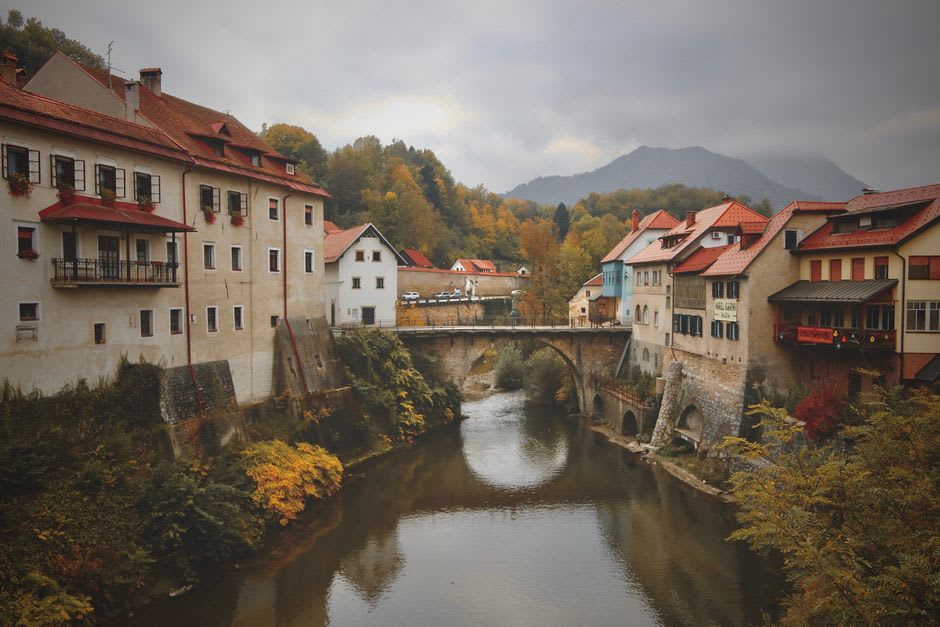
The main square, Mestni trg, slopes gently uphill in a long, elegant curve lined with pastel Baroque and Gothic facades — yellow, ochre, dusty pink — that survived largely intact because the town was spared the heavy bombing and postwar redevelopment that flattened parts of larger Slovenian cities. We sat outside a café at the top of the slope for the better part of an hour doing nothing but watching the light change on the buildings opposite, which is not something I usually admit to enjoying but did here without reservation.
The Castle That Watches Over Everything
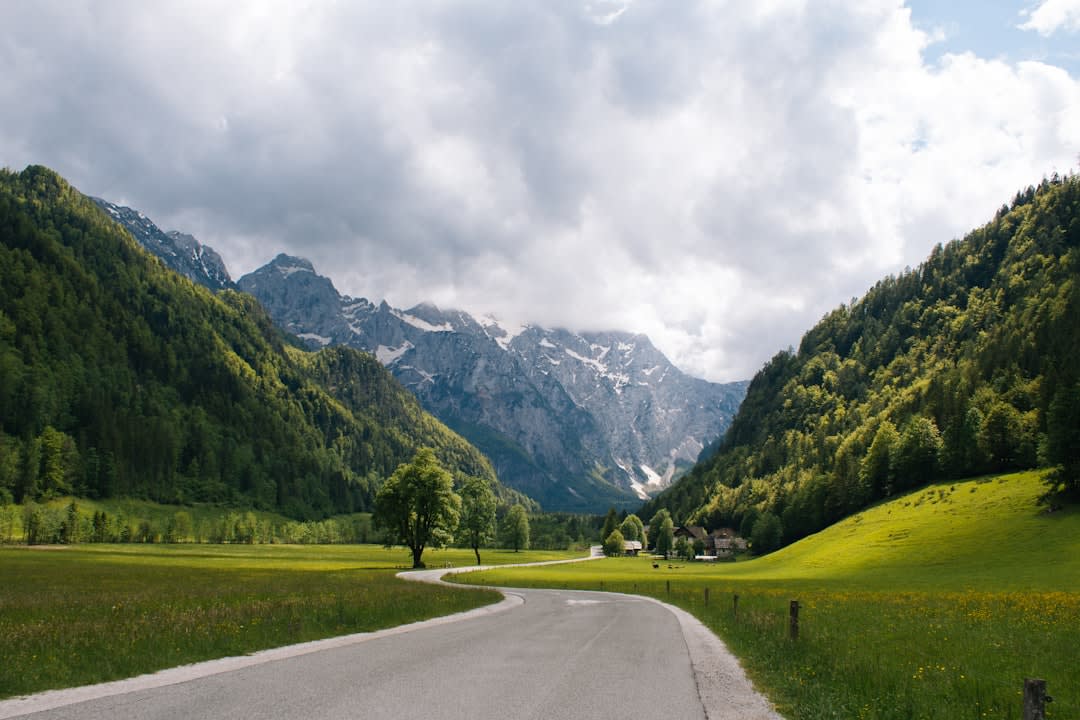
Škofja Loka Castle sits on the hill directly above the old town, originally built in the 13th century by the Bishops of Freising, who ruled the town for nearly eight hundred years before it passed to Austrian and eventually Slovenian hands. The climb up is steep enough to earn the view: the old town’s terracotta roofs laid out below, the two rivers meeting, and on a clear day the Julian Alps stacked up along the northern horizon. The castle now houses a regional museum that’s honestly better than it has any right to be for a town this size — well-curated exhibits on local history, folk costume, and religious art that don’t require rushing through.
Passion Play and Practical Notes
Every six years, Škofja Loka stages the Škofja Loka Passion Play, based on the oldest surviving dramatic text in the Slovene language, performed by hundreds of local volunteers through the streets and courtyards of the old town rather than on a stage. We weren’t there for a performance year, but the pride locals took in describing it — unprompted, more than once — told me everything about how seriously this town holds its own history.
When to go: April through October for the best light on the old town and comfortable walking to the castle. A day trip from Ljubljana works well, though an overnight lets you catch the square at dusk when the day-trippers, such as they are, have gone home.
Keep exploring
More from Slovenia
 slovenia
 Slovenske Konjice
A small wine town under the Pohorje foothills, home to Slovenia's oldest working winery and the haunting ruins of a Carthusian monastery in the hills above.
Explore slovenia
 Soča Valley
A glacially carved corridor in the Julian Alps where the river runs an impossible shade of jade and every bend in the road carries the weight of a forgotten war.
Explore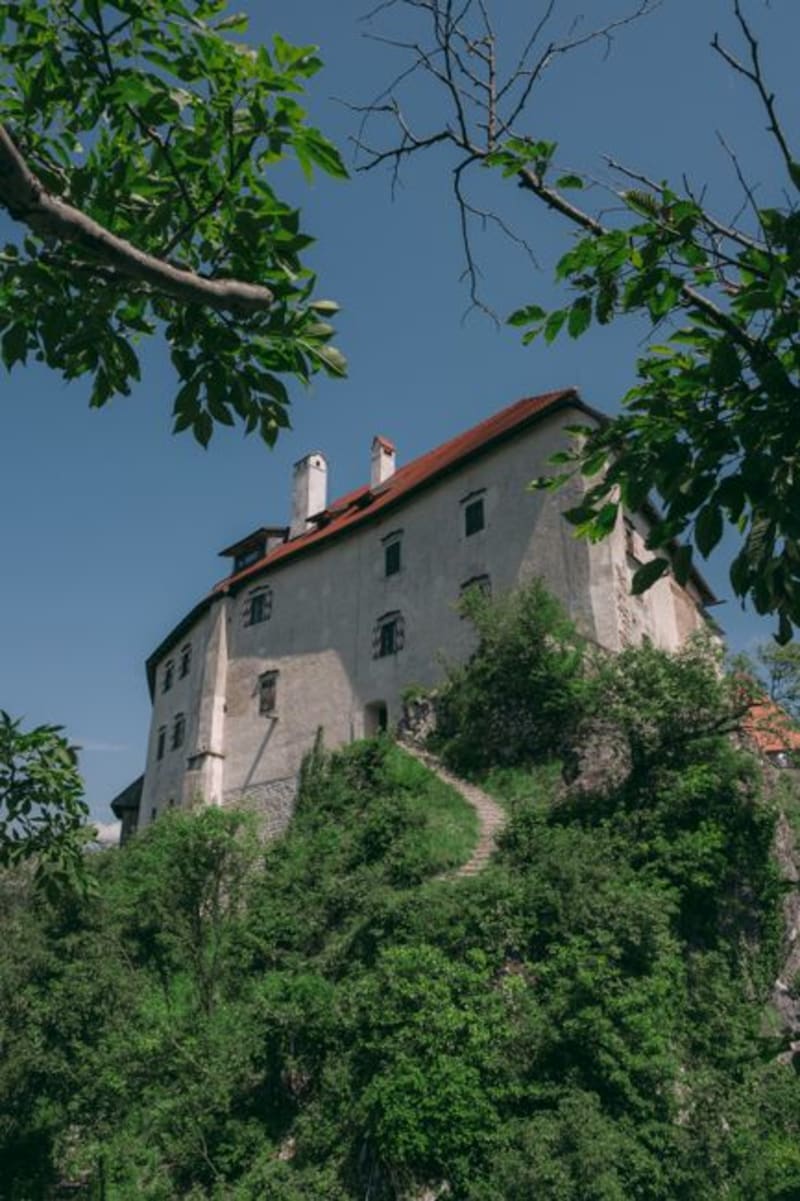 slovenia
 Socerb Castle
A clifftop ruin on the edge of the Karst plateau with a view over the Gulf of Trieste that stretches into three countries, and a cave beneath it once mistaken for the entrance to the underworld.
Explore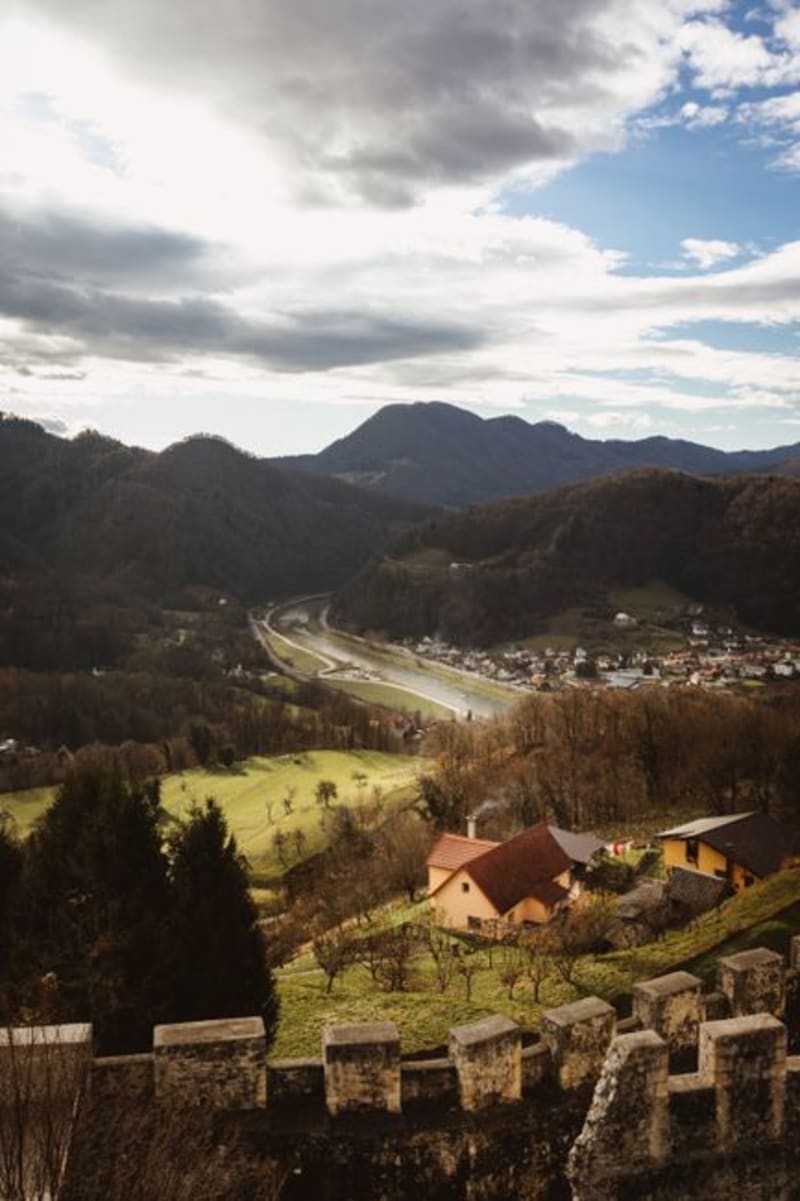 slovenia
 Solčava
A tiny village at the head of the Upper Savinja Valley, the last settlement before the mountains take over completely, and the starting point of one of the most spectacular panoramic drives in the Alps.
Explore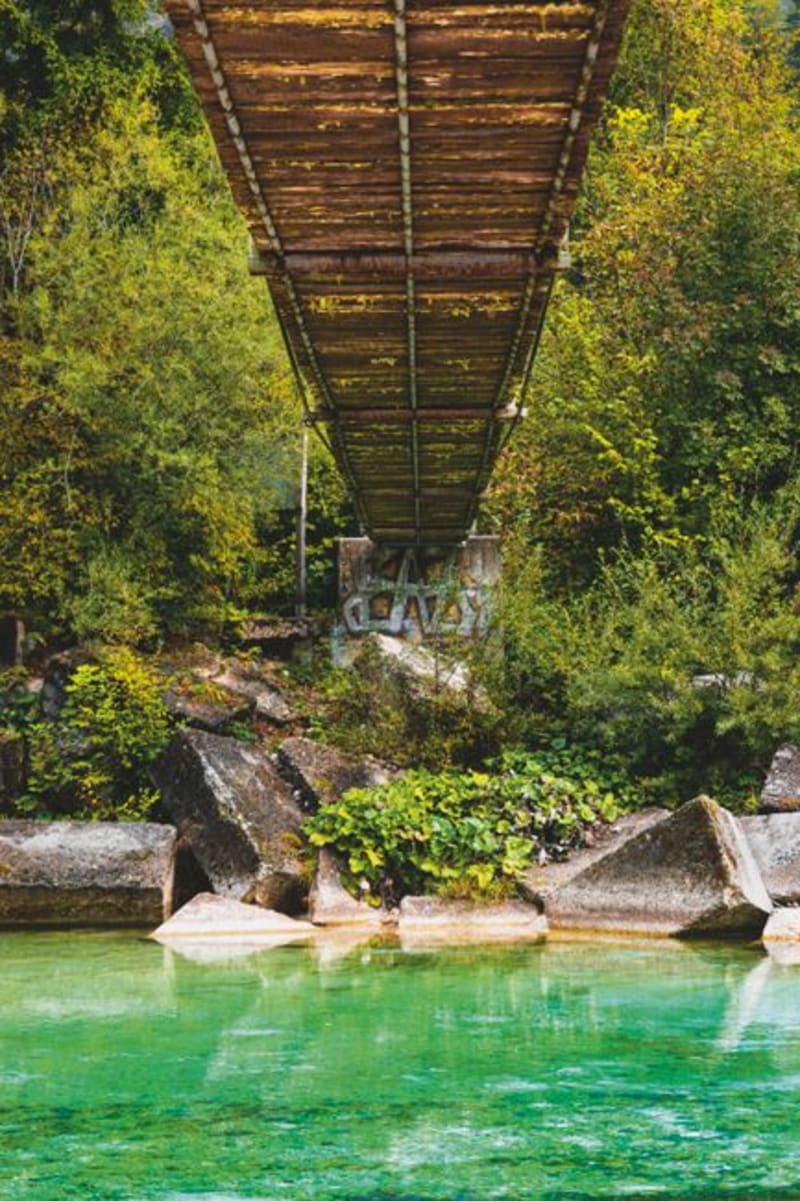 slovenia
 Solkan Bridge
The largest stone railway arch bridge in the world, spanning the Soča near Nova Gorica in a single elegant span that has carried trains across the river since 1906.
Explore slovenia
 Štanjel
A karst hill village so tightly stacked in pale stone that it looks fused to the rock beneath it, with a modernist garden by architect Max Fabiani tucked improbably into its medieval core.
Explore