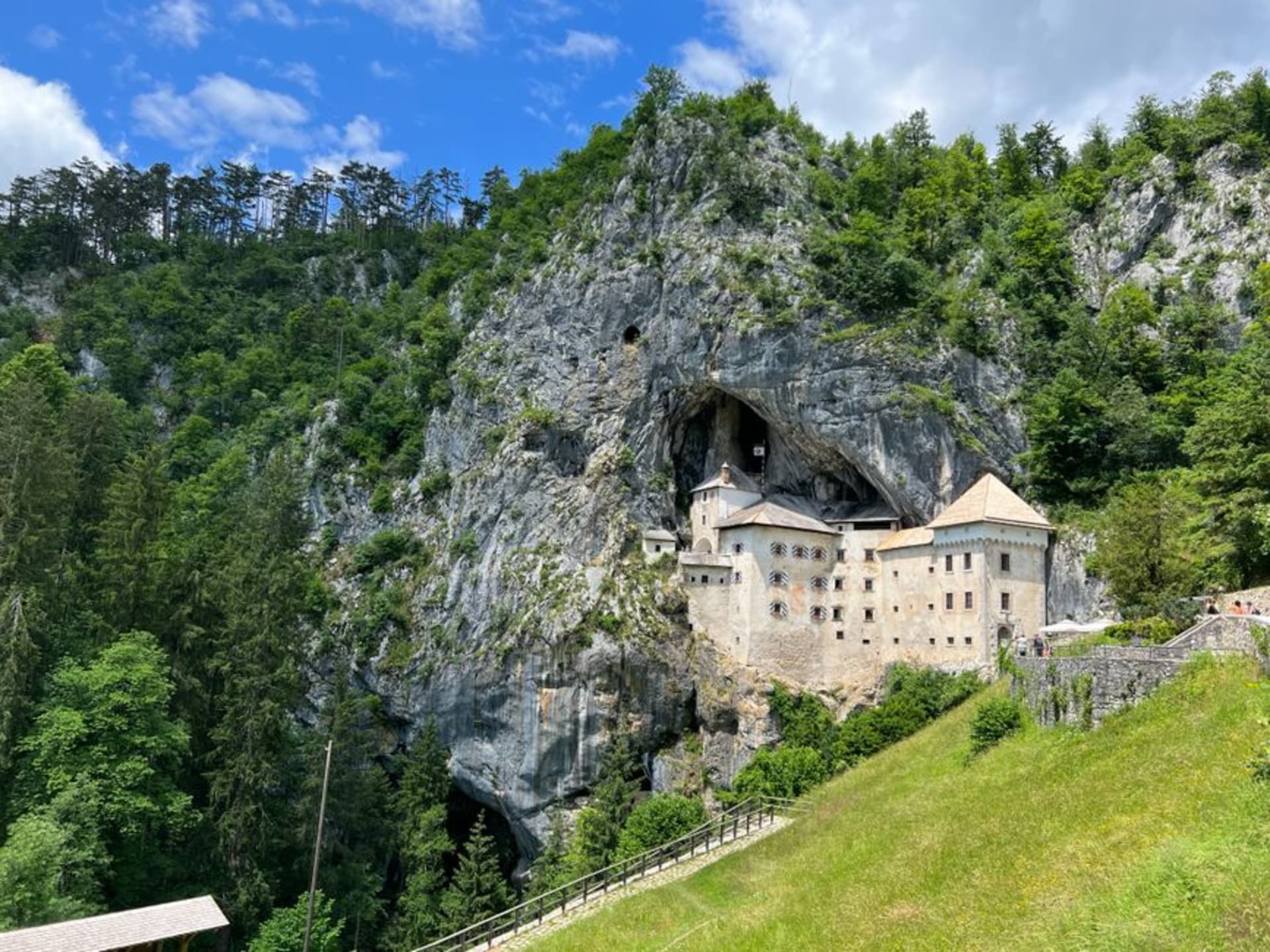
A Renaissance castle built directly into the mouth of a cave halfway up a 123-meter cliff, home to a robber knight who held off a Habsburg army for over a year using tunnels no besieger ever found.
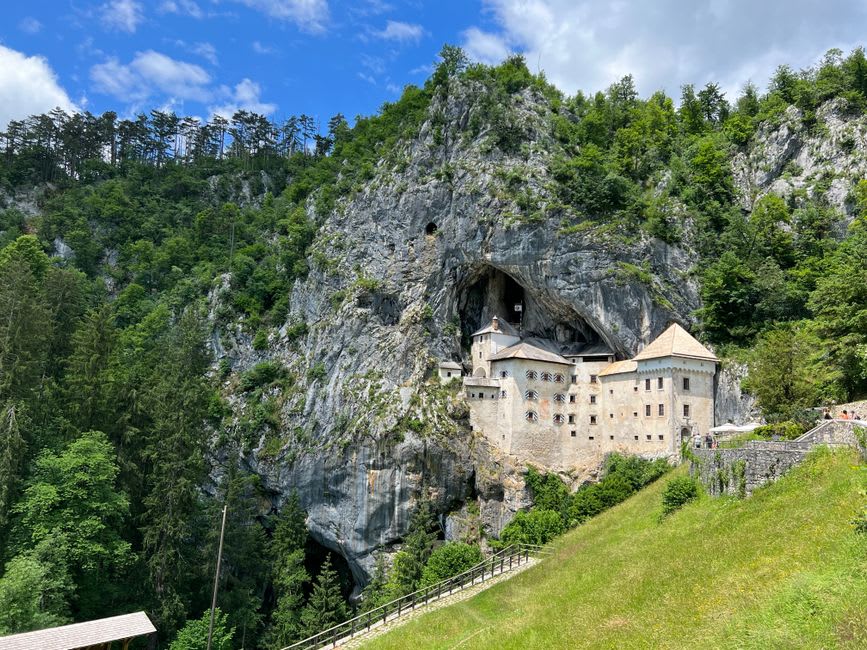
I’d seen photos of Predjama before I went and assumed they were doing something clever with the angle — that the castle merely looked embedded in the rock from one specific viewpoint and turned out to be a normal building once you got closer. It isn’t. It’s a normal building on the front and a cave on every other side, and the two things have fused so completely over five centuries that the roofline just stops where the limestone starts.
The Robber Knight
The castle’s fame rests almost entirely on one man: Erasmus of Predjama, a 15th-century knight who murdered an imperial commander in a duel and retreated here to wait out the consequences. The Habsburgs besieged the castle for over a year. What should have been a siege of days stretched into a standoff because Erasmus had access to a network of tunnels running up through the mountain behind the fortress, connecting to the valley beyond the besiegers’ lines. He resupplied his own siege, dined on fresh cherries in full view of the starving army below, and by most accounts thoroughly enjoyed himself doing it. He was eventually killed by a cannonball while using the one part of the castle his tunnels didn’t reach — the outhouse, according to the version every guide tells with visible relish, whether or not it’s strictly verifiable.
Inside the Rock
The interior rooms are modest by castle standards — a great hall, a chapel, a torture chamber that leans into the theatrics a little more than the history probably warrants — but the real interest is architectural. Corridors dead-end into raw cave wall. A staircase carved from stone leads up into passages that are only partially lit, part fortress, part show cave. The cave system behind the castle continues for kilometers and is itself a protected site, home to a colony of bats and, deeper in, populations of the same olm salamander found at Postojna.
The View From the Meadow
The best photograph isn’t from inside — it’s from the meadow directly below, looking straight up the cliff face at the whole structure holding its ground against several hundred years of gravity. I went in the late afternoon when the sun catches the pale stone at an angle and the castle seems to glow slightly against the darker rock around it. There’s a small footbridge over the stream at the base where most people stop, take the photo everyone takes, and still can’t quite believe what they’re looking at.
When to go: Spring and early autumn keep the crowds manageable; this is a frequent day-trip pairing with Postojna Cave, ten minutes away, so arrive early or late to dodge the tour bus overlap in the middle of the day.