National and University Library
"Plečnik designed a library that makes you feel the weight of knowledge before you've opened a single book."
Jože Plečnik's masterpiece, a brooding brick-and-stone building where dark reading rooms and a theatrical staircase turn a library into architecture worth a detour.
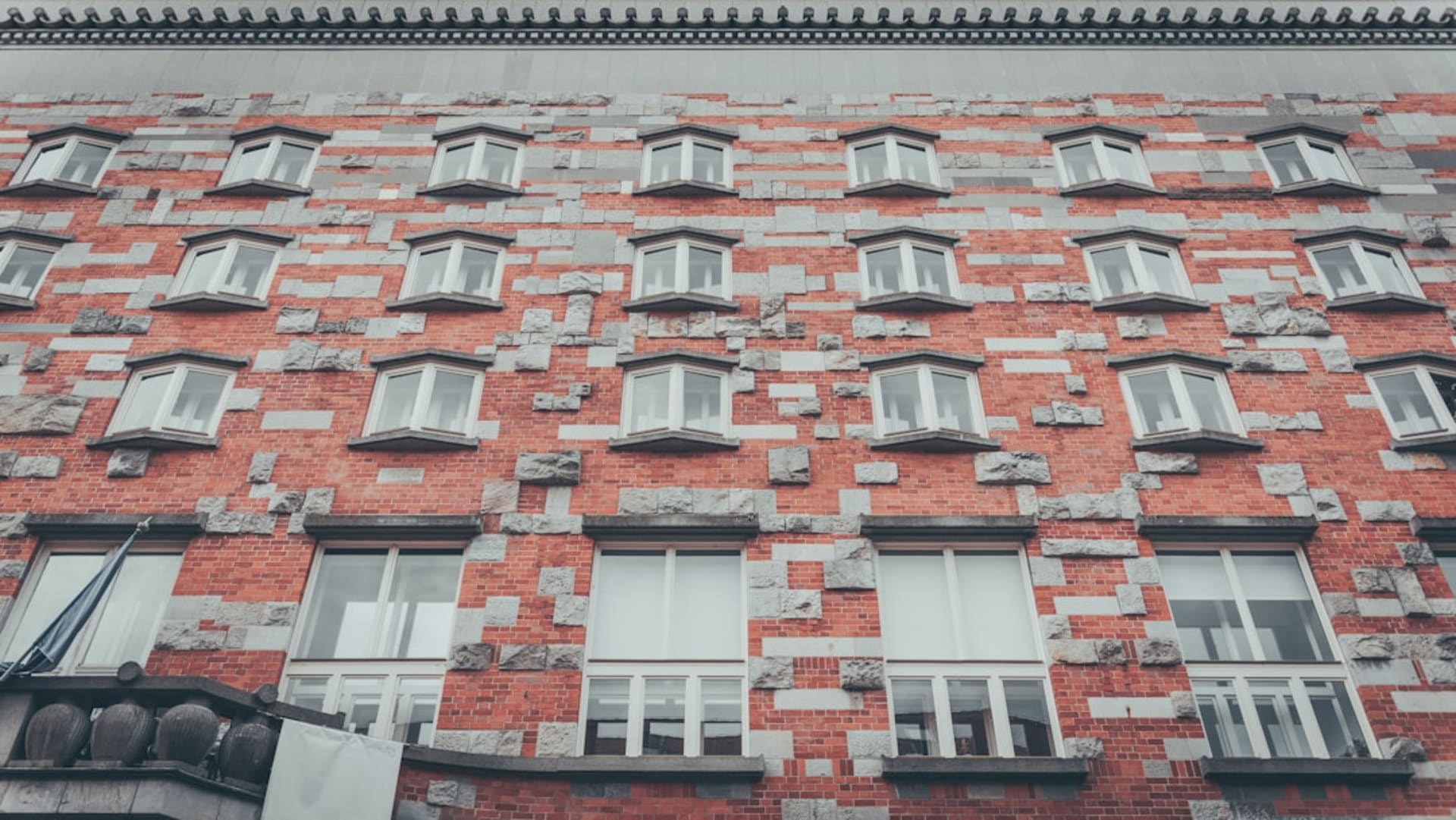
I am not, generally, someone who plans a trip around a building. But the National and University Library — NUK, in the local shorthand — changed my mind for an afternoon. Jože Plečnik, the architect who shaped more of Ljubljana’s character than anyone else, considered this his most personal and symbolically loaded work, and even without any background in architecture, you feel it the moment you approach the facade.
A Deliberately Uneasy Entrance
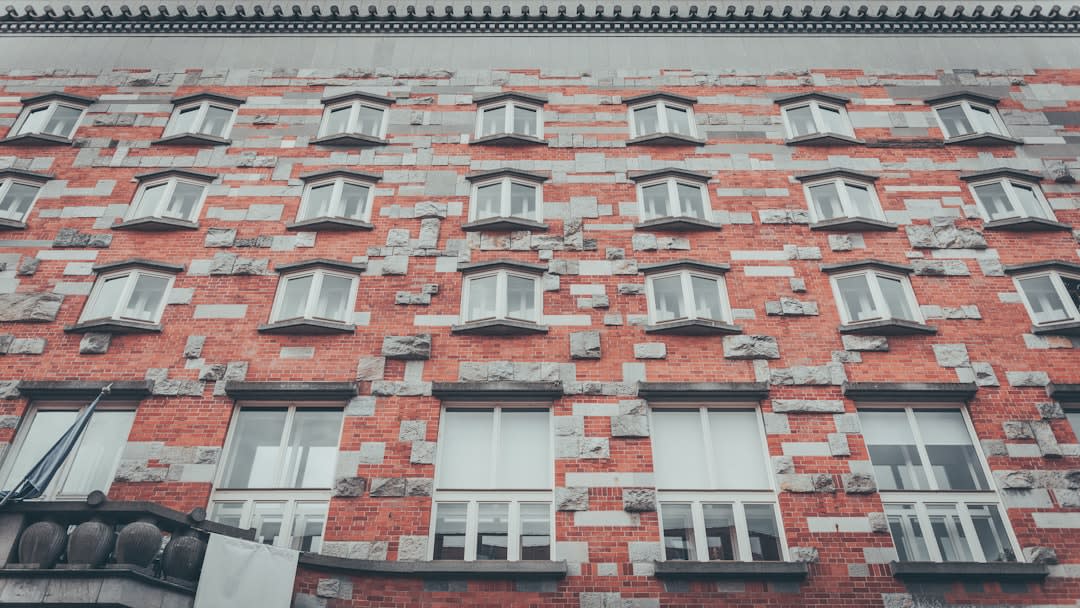
The building mixes rough, undressed stone at its base with smooth red brick above — Plečnik’s own explanation was that it represented the struggle from darkness toward knowledge and light. Whatever the intended symbolism, the effect on a visitor is immediate and a little unsettling: the entrance hall is dim, almost oppressive, lined with black granite columns salvaged, according to local guides, from the rubble of a demolished palace. You feel small walking through it, which I’m fairly sure was the entire point.
Light at the Top of the Stairs
Then comes the staircase. It rises through that same darkness in a series of dramatic switchbacks, narrowing and shifting, until it opens abruptly onto the main reading room — flooded with daylight through tall windows, a total tonal reversal from everything below. Lia, who studied architecture briefly before switching subjects, stood on the top step for a full minute just taking it in. It’s genuinely one of the best-executed spatial sequences I’ve experienced in any public building in Europe, and it costs nothing to walk through if you’re respectful of the students actually trying to study.
Plečnik’s Fingerprints on the City
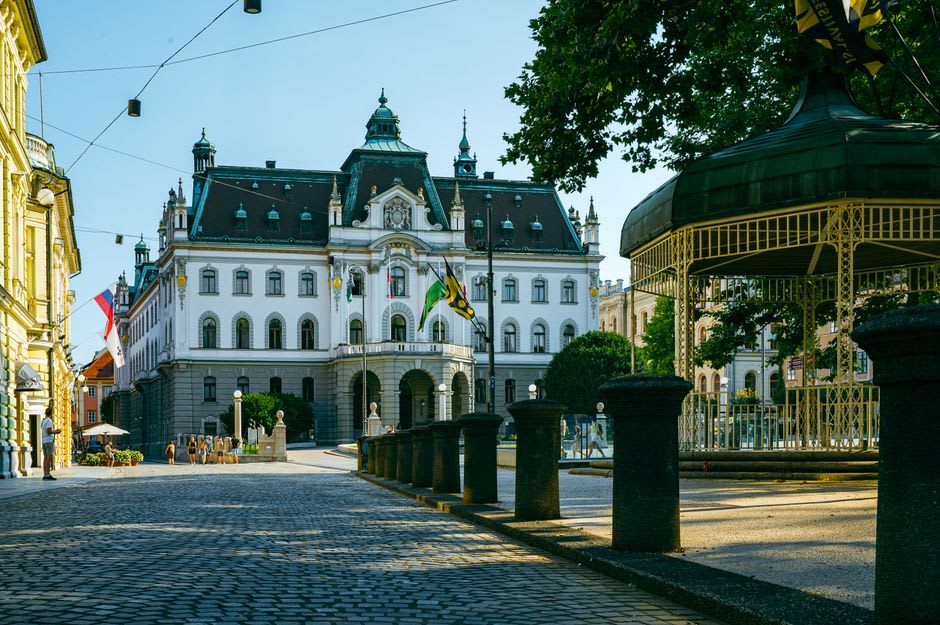
Once you’ve seen NUK, you start noticing Plečnik everywhere in Ljubljana — the Triple Bridge, the riverside colonnade at the Central Market, the pyramids and obelisks scattered through the city’s parks. He’s sometimes called the Slovenian Gaudí, though I’d argue his work is colder and more disciplined, which somehow suits Ljubljana’s temperament better.
When to go: Weekday afternoons, when the reading room is active with students but not overwhelmed. It’s a functioning library, so keep visits brief and quiet, and check ahead if you want to see beyond the main hall.