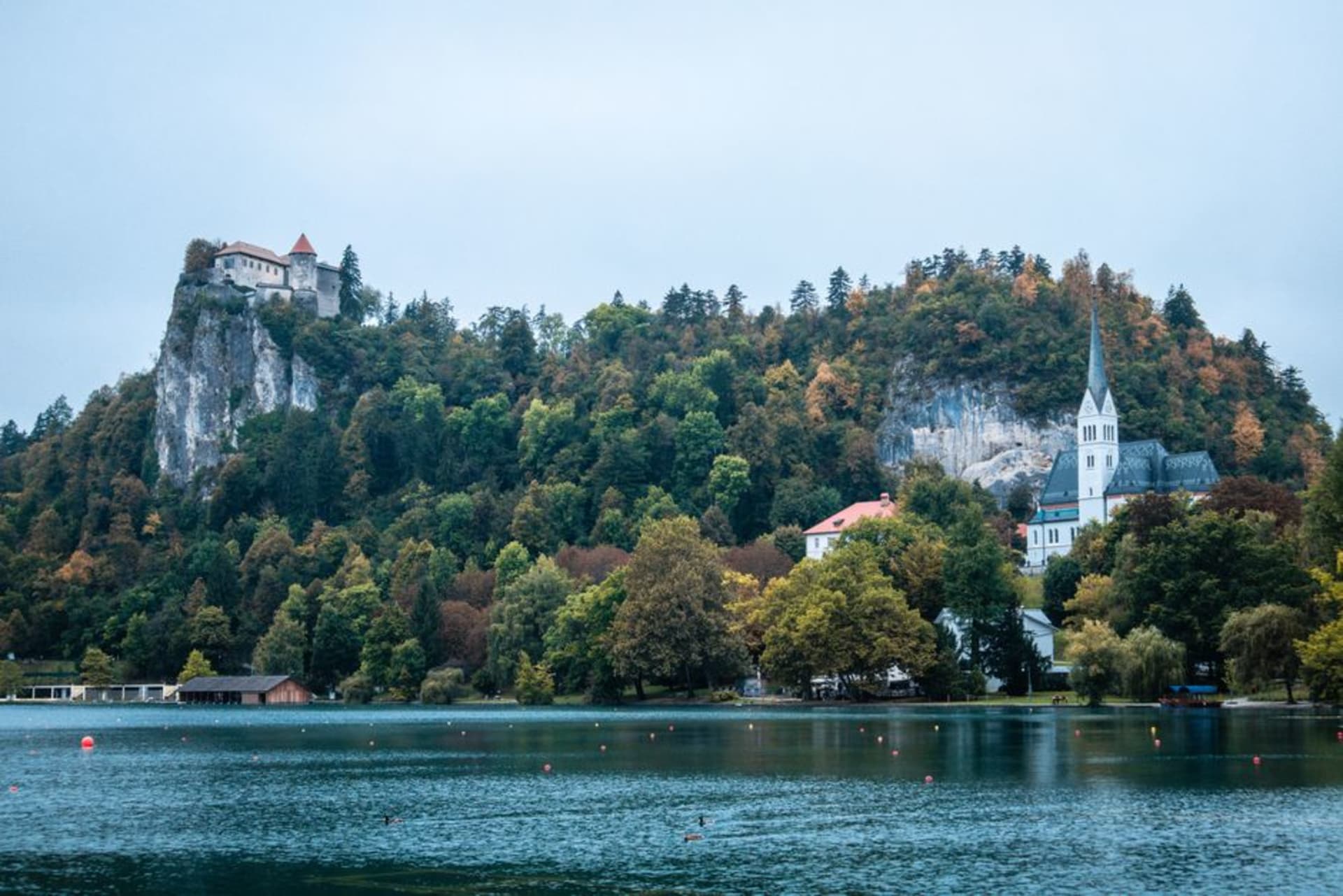
Novo Mesto
"Novo Mesto doesn't perform for visitors, and that honesty was its own kind of charm."
Dolenjska's low-key regional capital wraps around a horseshoe bend of the Krka River beneath a baroque cathedral, functioning as an unpretentious working town rather than a tourist set piece.
Novo Mesto — literally “New Town,” though it’s been around since 1365 — is the capital of Dolenjska, the rolling southeastern region of Slovenia that gets a fraction of the attention paid to the Alps or the coast. Most travel plans skip it entirely on the way between Ljubljana and Croatia, which is a shame, because the town has a specific and appealing quality: it’s a place that functions as itself first and as a destination second.
A River Doing Something Unusual
The defining feature of Novo Mesto is the way the Krka River wraps almost completely around the old town in a tight horseshoe bend, so that the historic core sits on what’s nearly a peninsula. Walking the perimeter path along the water, you get the cathedral and the pastel facades of the old town reflected on one side and the opposite bank’s greenery on the other, and the shape of the bend itself keeps changing your vantage point every few minutes. It’s a genuinely elegant piece of urban geography, one that Novo Mesto doesn’t oversell — there’s no dramatic viewpoint marketed on postcards, just a town going about its day on a river that happens to do something beautiful and slightly strange.
The Cathedral and the Old Town
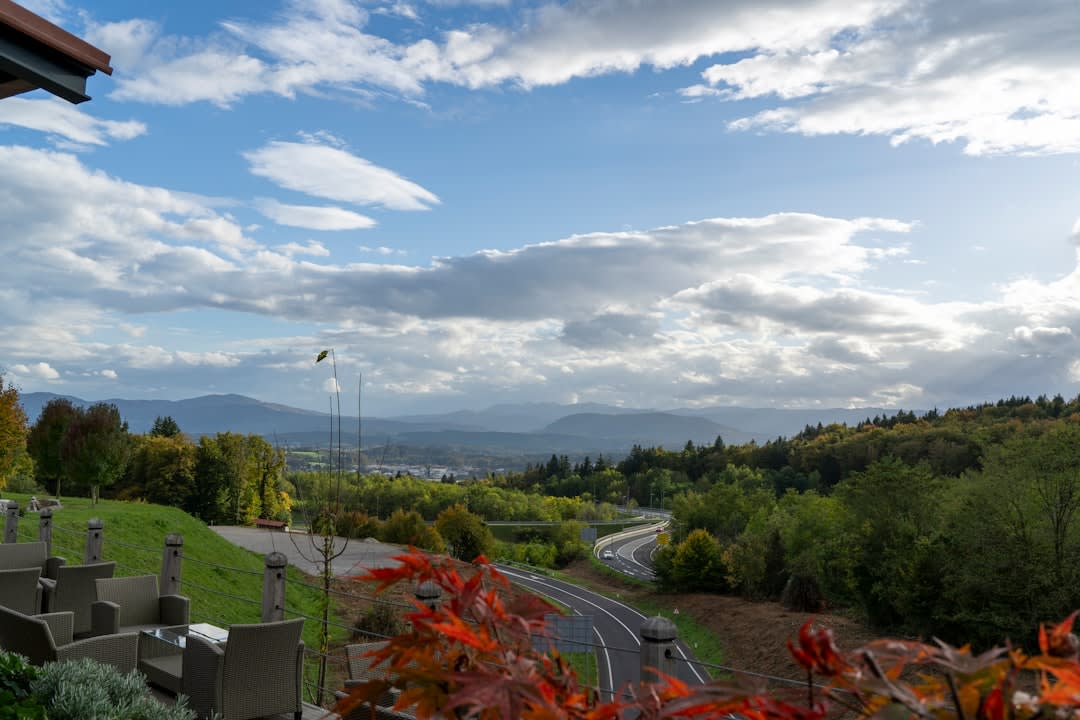
St. Nicholas Cathedral anchors the skyline, its spire visible from most approaches into town, and the old town beneath it is a compact grid of baroque and Habsburg-era buildings in faded pastel colors, more lived-in than restored-for-tourism. Glavni trg, the main square, holds a mix of cafes, a scattering of Roman-era archaeological finds in the local museum, and the kind of unhurried midday foot traffic that tells you this is a town people actually live and work in rather than one performing history for a passing audience. I had coffee at a place on the square where every other table was locals, not visitors, which after weeks of tourist-facing towns felt like a small relief.
Dolenjska Wine Country
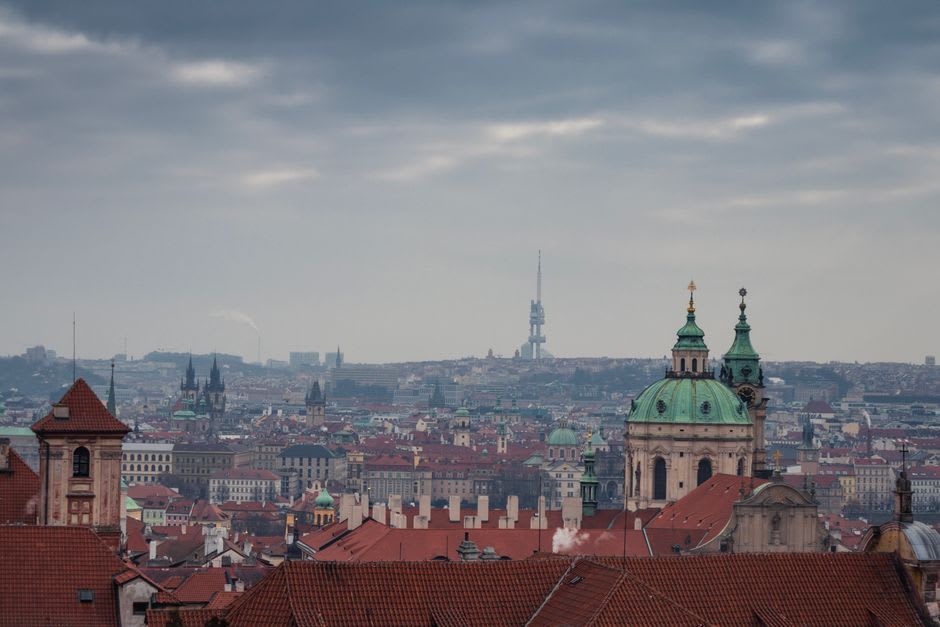
Novo Mesto sits at the edge of Dolenjska’s wine country, known particularly for Cviček, a light, tart red-and-white blend unique to this region and an acquired taste I never fully acquired, though I respected the commitment to a wine style that exists basically nowhere else. The hills around town are terraced with vineyards and dotted with small wine cellars — zidanice — traditional cottages where families still gather to press and store wine, some of which now double as informal tasting rooms if you find the right one and ask.
A Base, Not Just a Stop
Novo Mesto works best as a base for exploring the rest of Dolenjska rather than a full destination in itself — it’s central to Otočec, Kostanjevica na Krki, and the Krka’s gentler upper stretches, all within a short drive. But the town itself, given an afternoon rather than a rushed hour, is worth more attention than most itineraries give it.
When to go: Spring and early autumn offer the best combination of mild weather and wine harvest activity in the surrounding hills. Summer is warm and pleasant for the riverside walk without the coastal crowds. The town is quiet but functional year-round given its role as a regional hub.