Metelkova
"Metelkova is Ljubljana's proof that a city this orderly still has room for controlled anarchy."
A squatted former military barracks turned autonomous cultural zone, covered wall to wall in murals and running on its own chaotic, defiant energy.

Nothing in Ljubljana prepares you for Metelkova. You can be standing in the manicured calm of the old town, walk fifteen minutes northeast past the train station, and suddenly find yourself inside a former Yugoslav army barracks that a group of artists and squatters occupied in the early 1990s and never left. The buildings are still standing largely as the military left them structurally, but every surface — walls, doorframes, staircases, even the pavement — has been reclaimed by paint.
A City Within a City
By day, Metelkova is strange and a little eerie: surreal sculptures made from scrap metal, murals that shift from political to psychedelic to nonsensical block by block, and courtyards that feel abandoned even though people clearly live and work here. I walked through alone on a grey afternoon and had the unsettled, fascinated feeling of exploring a stage set after the play has ended.

By night, it transforms entirely. Metelkova holds a cluster of small clubs and bars, each with its own distinct scene — one leaning industrial techno, another reggae, another hosting whatever underground act happens to be passing through the Balkans that month. Lia and I ended up at a bar called Gala Hala on a Friday night, packed with students and a surprising number of Ljubljana locals well into their forties who clearly treated the place as a second living room.
Culture, Not Just Nightlife
Metelkova isn’t purely a party district. The complex also houses Hostel Celica, a former military prison converted into a genuinely striking budget hostel where you can sleep in a former cell that’s been redesigned by a different artist — we peeked into the lobby out of curiosity and left half-tempted to book a night ourselves. Nearby, the Museum of Contemporary Art Metelkova (+MSUM) covers art from the former Yugoslavia and Eastern Europe, a serious, well-curated counterpoint to the chaos just outside its doors.

When to go: Visit in daylight to actually see the murals and sculptures properly, then come back after 10pm on a weekend if you want the district as it’s really meant to be experienced. Winter nights are quieter; summer weekends can get genuinely loud and crowded.
Keep exploring
More from Slovenia
 slovenia
 Metlika
The capital of Bela Krajina sits against the Kolpa River and the Croatian border, its distinct folk costume, wine, and white birch landscape marking it as culturally apart from the rest of Dolenjska.
Explore slovenia
 Moravske Toplice
A thermal spa town in the flat farmland of Prekmurje where black, mineral-rich water bubbles up from two kilometers underground and the pace of life drops to match the temperature of the pools.
Explore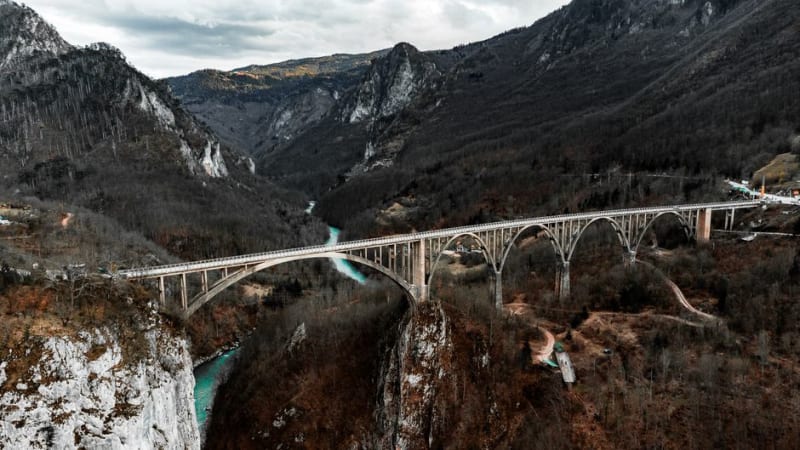 slovenia
 Most na Soči
A small town where two rivers meet in a Y-shaped turquoise lake, holding one of the oldest prehistoric burial sites in Europe on the hill above it.
Explore slovenia
 Mostnica Gorge
A narrow limestone slot carved by a glacial stream at the gateway to the Voje Valley, quiet enough that the loudest thing in it is the water.
Explore slovenia
 Nova Gorica
A planned socialist-era border town built to answer Italy's Gorizia across the frontier, now with a shared central square that erases the line between the two countries entirely.
Explore slovenia
 Novo Mesto
Dolenjska's low-key regional capital wraps around a horseshoe bend of the Krka River beneath a baroque cathedral, functioning as an unpretentious working town rather than a tourist set piece.
Explore