I arrived at Ljubljana’s train station expecting a placeholder — the kind of mid-sized European city you pass through on the way to somewhere more famous. What I found instead was a capital that had quietly figured something out, some balance of density and breathing room that makes it feel less like a city and more like a very good neighborhood.
Along the Ljubljanica
The river is narrow enough that you can shout across it, and at dusk the café terraces on Mestni trg and Stari trg are packed with people who seem to have nowhere better to be. That’s the specific quality of Ljubljana that took me a day to name: no one appears to be passing through. The willows trail their fingers into the green water. The castle above is lit amber. The smell is of roasting coffee from the kiosks near Ribji trg, the old fish market square, mixed with something faintly green from the river itself.
Lia and I walked the bank three times in two days, which is how we discovered that the Tromostovje — the famous Triple Bridge — is less impressive from photographs than from standing underneath it, watching people cross all three arms simultaneously in different directions, as if the bridge were a conversation.
The Market and the Castle
The Central Market along Vodnikov trg is where Ljubljana earns its reputation for livability. On a Saturday morning I ate a burek from a paper bag, still hot, the flaky pastry leaving oil on my fingers, watching a woman negotiate at length over a bunch of radishes. There are honey stalls, mushroom vendors in autumn, vendors selling Carniolan sausage that cures any skepticism about central European food.
The walk up to Ljubljana Castle through the old town takes fifteen minutes and passes through a tangle of medieval lanes — Gornji trg is the quietest — where the windows still have deep stone sills and the buildings lean slightly toward each other across the street like old friends.
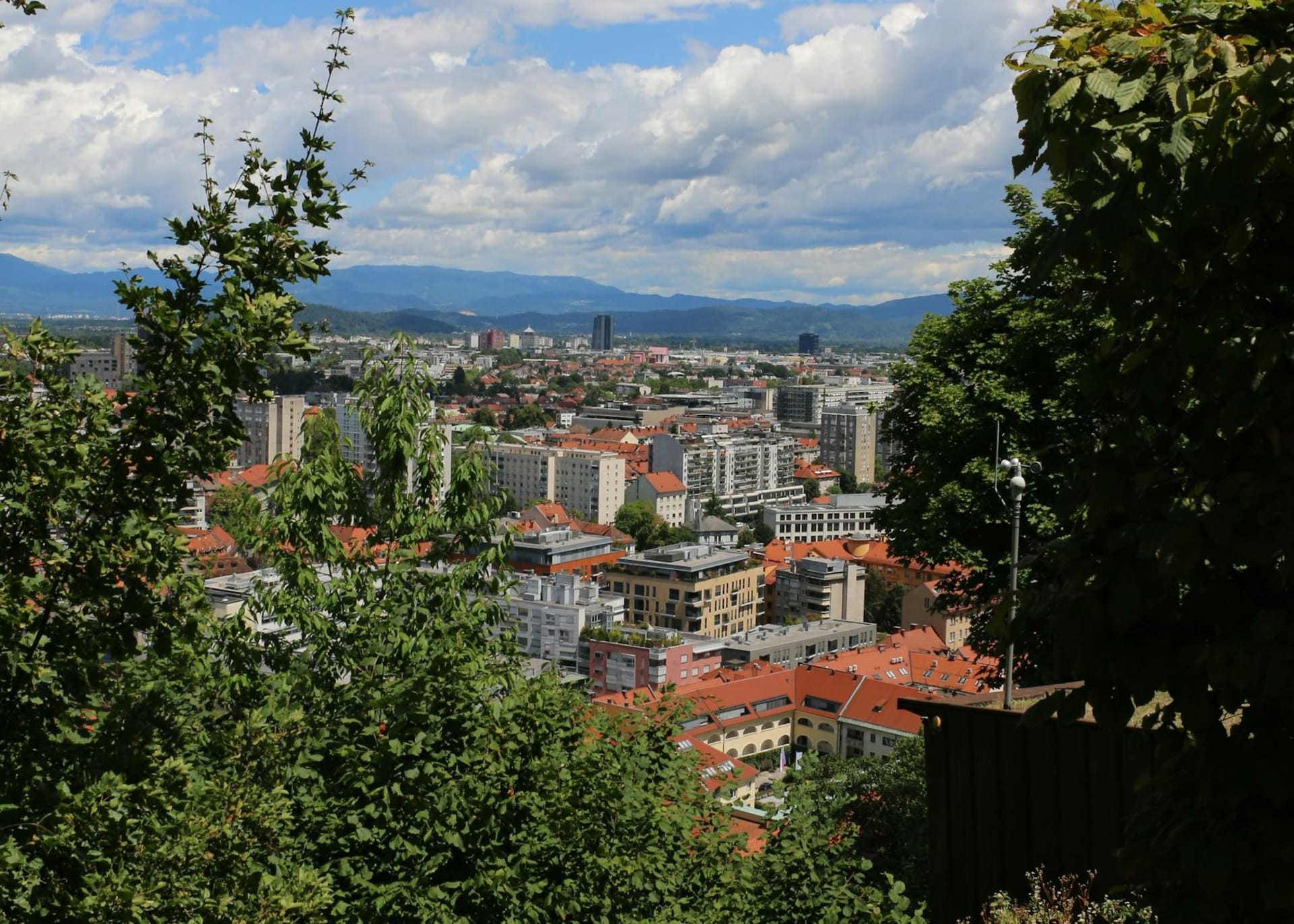
What genuinely surprised me was the castle’s funicular. I had assumed it would be a tourist trap and nearly skipped it. Instead it’s a glass cable car that rises at an angle through the rock itself, a small tunnel of modernist engineering in a medieval hill. The view from the top stretches to the Julian Alps in every direction, and on a clear November morning the peaks were already white.
What to Eat and Drink
Beyond burek, seek out a place serving žlikrofi — Slovenia’s answer to ravioli, filled with potato and herbs and served with lamb. The wine is underrated: Rebula from the Goriška Brda region has a saline mineral quality I didn’t expect from a landlocked country.
When to go: Late spring (May–June) and early autumn (September–October) offer the best weather for walking — mild, dry, the light at a long angle that makes the castle glow. Avoid August, when the city empties slightly and the heat flattens everything.