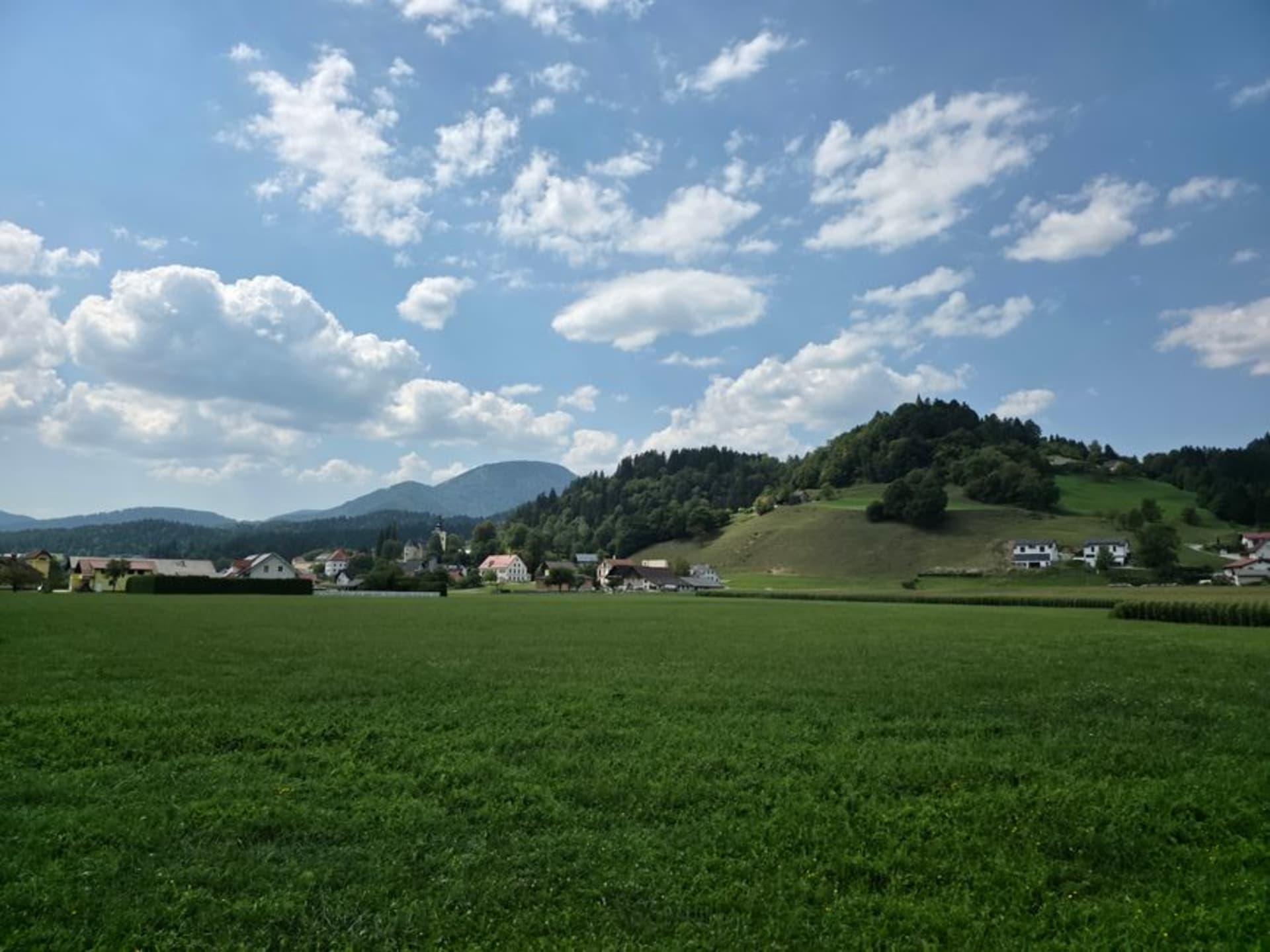
Kostanjevica na Krki
"An entire medieval town on an island, and almost nobody there to see it — I couldn't quite believe our luck."
Slovenia's only true island town sits ringed by the Krka River, its medieval streets now sharing space with a former Cistercian monastery converted into one of the country's most surprising modern sculpture galleries.
Kostanjevica na Krki claims to be Slovenia’s only true island town, and having walked its full perimeter in about fifteen minutes, I believe it. The Krka River splits into two channels here and rejoins on the far side, encircling a small medieval core completely, and the town has apparently existed in this exact watery arrangement since it was founded in the 13th century. It is, by a wide margin, one of the least-visited genuinely remarkable places I found in Slovenia.
Walking the Ring
The old town itself is modest — a scattering of medieval and later houses along a single main street, a small church, facades in that faded Dolenjska pastel palette — but the setting does the heavy lifting. Water is visible from almost every angle, the two channels of the Krka moving quietly past on either side, and the effect of walking a complete loop and ending up exactly where you started, having circled an entire town rather than a park or a monument, is genuinely disorienting in a pleasant way. We crossed one of the small bridges onto the island in early afternoon and had the streets almost entirely to ourselves.
The Monastery Turned Gallery
Just outside the island proper sits Kostanjevica Mansion, a former Cistercian monastery that now houses a genuinely excellent modern and contemporary art collection, including work tied to Forma Viva, an international sculptors’ symposium that has brought artists here since the 1960s to carve monumental works directly from oak and stone in the surrounding forest. Wandering the cloistered courtyards of a centuries-old monastery filled with mid-century modernist sculpture is a stranger, more interesting juxtaposition than it sounds on paper, and the collection is large enough to genuinely surprise you if you arrive, as I did, expecting a modest regional museum.
Forma Viva in the Forest
Scattered through the woodland park around the mansion are dozens of Forma Viva sculptures, left in place since their creation and slowly weathering back into the landscape they were carved from — oak pieces going grey and cracked, decades of exposure turning them into something closer to fossils than artworks. Walking between them on a quiet forest path, coming across each one half-reclaimed by moss and lichen, was one of the more unexpectedly moving hours of the whole Dolenjska stretch of the trip.
When to go: Spring through autumn for comfortable walking weather and the best light on the river. The gallery keeps limited hours outside peak season, so check ahead. Combine easily with Otočec or Novo Mesto as part of a single day exploring the Krka valley.