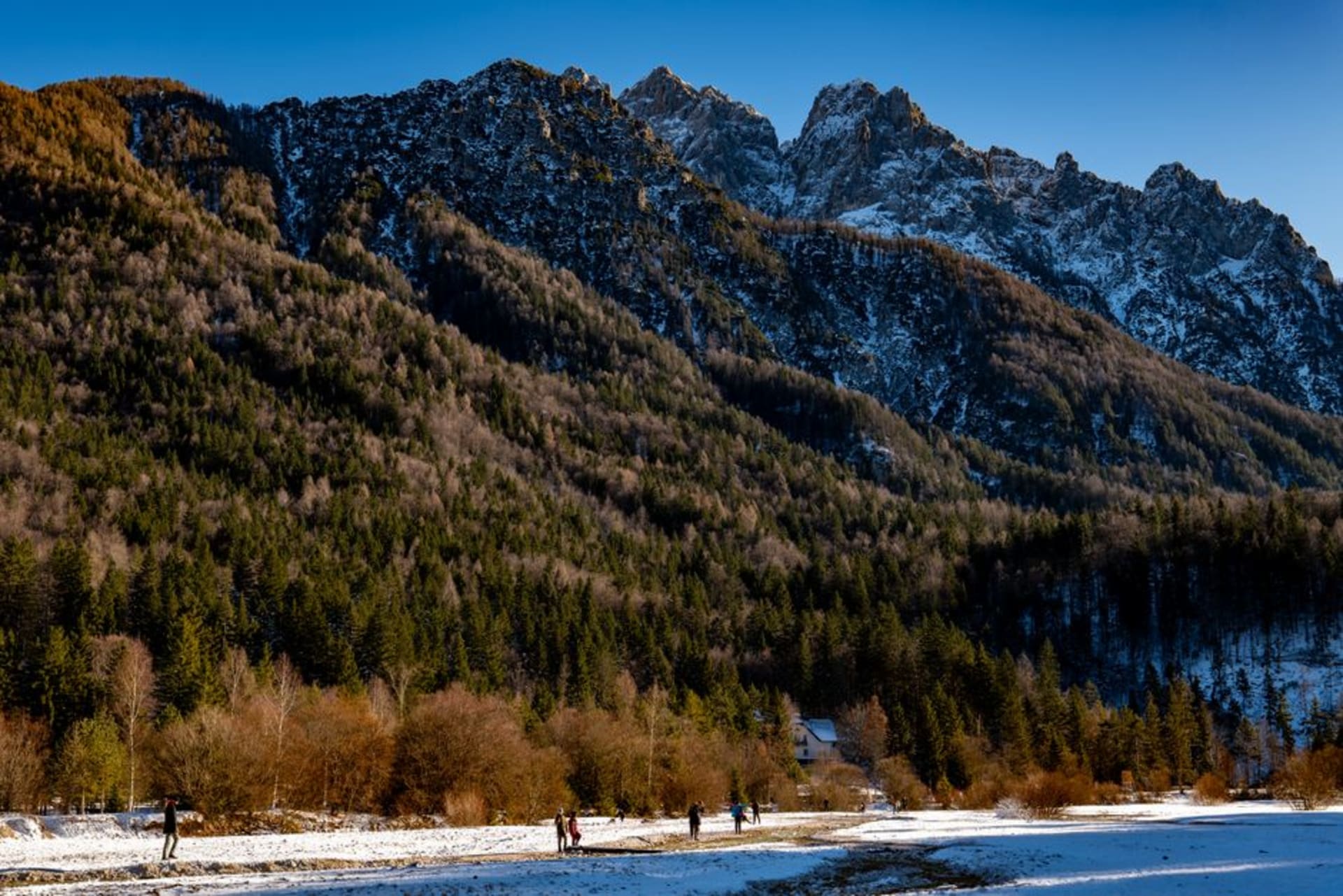
Kočevje
"We sat in a wooden hide for four hours to see a bear for four minutes, and I'd do it again tomorrow."
The largest, densest forest in Slovenia, home to one of Europe's healthiest brown bear populations, a WWII partisan hospital hidden in a canyon, and a town that used to speak German and now barely speaks at all.
Lia found the bear hide operator through a forum post that hadn’t been updated since 2019, sent a WhatsApp message into what felt like the void, and got a reply within the hour: pickup at 5pm, dress in layers, no perfume, no phone flash. That’s Kočevje in miniature — a place that runs on word of mouth because almost nobody thinks to look for it otherwise.
Europe’s Quiet Bear Capital
The Kočevje forest — part of the vast Dinaric range that stretches down into Croatia and Bosnia — holds one of the densest brown bear populations left in Europe, along with wolves and, in the deepest pockets, the occasional lynx. Slovenia doesn’t advertise this the way you’d expect. There’s no bear museum, no gift shop full of plush toys. Just a handful of licensed hides scattered through state forest, reachable only with a guide, where you sit in silence from late afternoon until dark and wait.
Our guide, a forester named Rok who’d clearly done this several hundred times, laid out corn and fallen fruit at a clearing edge before locking us into the hide. The wait was long and mostly uneventful — woodpeckers, a fox that trotted through and ignored us completely, the light going from gold to grey to almost nothing. Then, close to eight, a sow and two cubs came out of the treeline without a sound, worked the clearing for maybe four minutes, and disappeared just as quietly. Nobody spoke until we were back in the van.
A Town That Emptied Twice
Kočevje itself carries a strange, heavy history. It was a Gottschee German settlement for over six hundred years, a linguistic island in the Slovenian forest, until the population was resettled by the Nazi-Italian agreement in 1941 and the villages were largely abandoned or destroyed. Walking the surrounding countryside now, you pass overgrown foundations and orchard trees gone feral where entire communities used to stand — nothing dramatic, just quiet absence, forest reclaiming what it lost less than a century ago.
During the Second World War, the same deep forest sheltered the Partisan resistance almost entirely undetected. Baza 20, a hidden hospital and printing complex built into a narrow gorge an hour’s drive from town, treated wounded fighters through 1943 and 1944 within a few kilometers of German patrols who never found it. Walking the wooden walkways between the reconstructed huts, tucked under an overhang so dense that aerial reconnaissance apparently never spotted it, I understood the forest differently after — not scenery, but cover.
Practicalities
Bear hides must be booked through a licensed operator, typically weeks ahead in peak season (May–September), and cost around 60–100 euros per person including transport. Baza 20 is a short, well-marked hike from a small parking area off the main road toward Rog forest — free to visit, no ticket required.
When to go: May to early October for the bear hides, when the animals are most active and the evenings stay light long enough to make the wait bearable. The forest itself is worth walking any season, though winter access to the more remote trails can be difficult.