Hrastovlje
"The wall was built to keep out the Ottomans. It ended up preserving the frescoes instead."
A fortified medieval church hiding one of Europe's most complete Dance of Death frescoes — skeletons leading a pope, a king, and a peasant to the same grave, painted on the walls of a chapel surrounded by defensive stone.
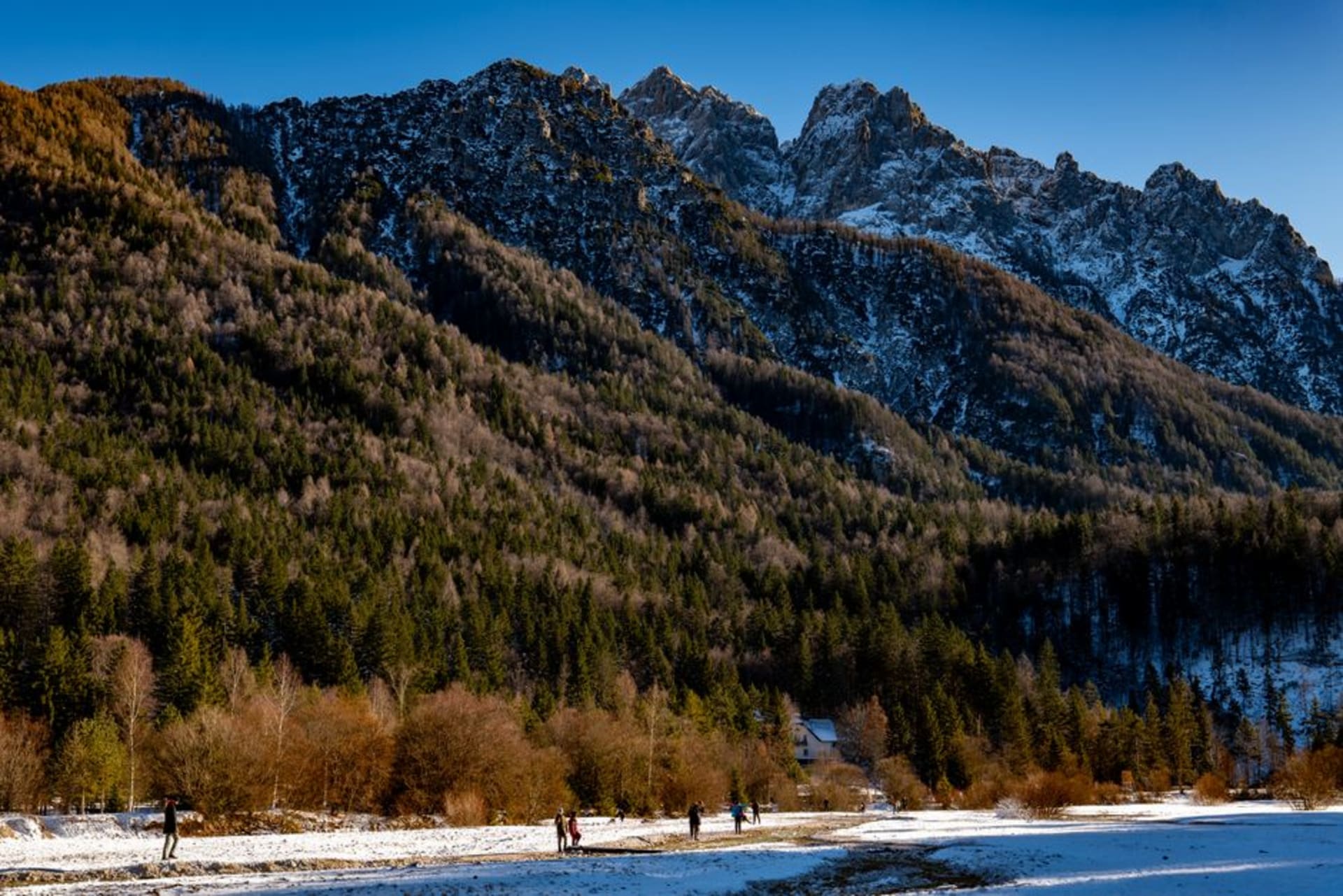
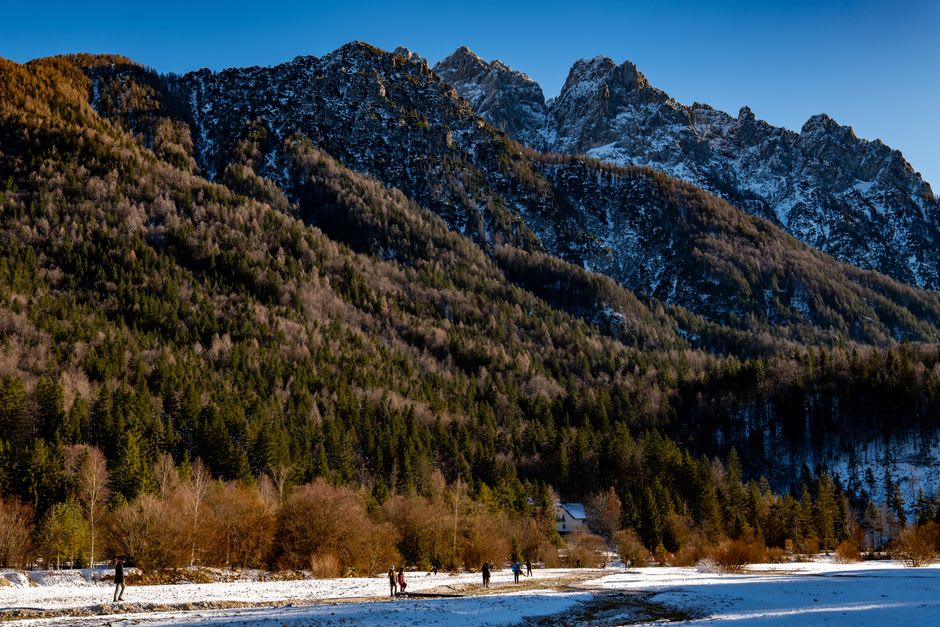
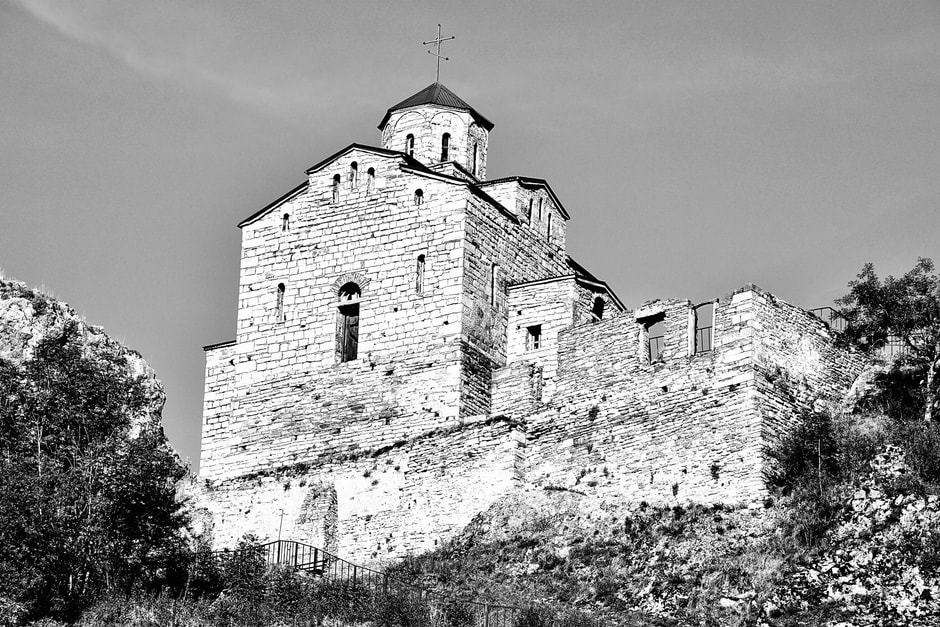
Hrastovlje is easy to drive past — a small village in the Karst hinterland behind Koper, no more than a scattering of houses around a single road. What stops people is a squat stone church ringed by a defensive wall thick enough to have been a genuine fortification, built in the 16th century against Ottoman raiding parties that periodically reached this far into Istria. The wall did its job so thoroughly that it also preserved, almost by accident, one of the best-surviving medieval fresco cycles in Europe.
The Dance of Death
Inside the Holy Trinity Church, the walls are covered floor to ceiling in frescoes painted around 1490 by a artist known only as Johannes de Castua, and the most famous section runs along the west wall: the Danse Macabre, a line of skeletal figures leading representatives of every level of medieval society — pope, emperor, king, merchant, farmer, child — toward the same open grave. It’s not subtle, and it isn’t meant to be. Medieval Dance of Death cycles existed to flatten social hierarchy in the face of mortality, and this one does it with a directness that still lands five centuries later. I stood in front of it for a long time, in a small unheated stone room with weak light through narrow windows, and felt the specific chill of standing inside a memento mori designed to actually work.
A Church Built to Survive
The rest of the frescoes are less grim and more instructive — biblical scenes, an agricultural calendar showing the labor of each month, a version of Adam and Eve rendered with an almost folk-art plainness that contrasts with the sophistication of the Dance of Death panel next to it. The defensive wall surrounding the whole structure has crenellations and a squat corner tower, genuinely built for people to shelter inside during raids, not decorative.
Getting In
The church is normally locked outside of opening hours, with a key held at a nearby house or gostilna — a detail that felt appropriately old-fashioned, ringing a doorbell to be let into a five-hundred-year-old fresco cycle by someone’s grandmother.
When to go: Year-round, though the frescoes photograph best on an overcast day when there’s no harsh light through the small windows; check current opening times locally, as access outside peak season can be irregular.