
Katong
"The laksa auntie asked if we wanted it spicy, and Lia said yes before I could stop her."
A pastel-shophouse neighborhood steeped in Peranakan culture, where laksa arguments matter more than they probably should.

I’d been warned before we even landed in Singapore: do not get drawn into the Katong laksa debate. There are two famous stalls a few doors apart, both claiming the original recipe, both with regulars who treat the other shop like a personal insult. We walked down Joo Chiat Road on our first afternoon in the neighborhood not planning to pick a side, and within an hour we’d eaten at both, out of what I’ll call journalistic integrity and Lia will call greed.
What struck me first wasn’t the food, though — it was the shophouses. Katong and the adjoining Joo Chiat area have some of the best-preserved Peranakan architecture left in Singapore, these narrow two-story buildings in candy colors, salmon pink and mint green and butter yellow, with ornate tiled facades and carved wooden shutters that somehow survived a century of development pressure elsewhere on the island. We spent a good hour just walking slowly, letting Lia photograph doorways while I tried to find shade, because even in the late afternoon the heat here doesn’t ease up much.

The laksa itself, for the record, came thick and orange-red with coconut milk and dried shrimp paste, cockles buried in the noodles, a spoon instead of chopsticks because the noodles here are cut short specifically so you don’t need them. I liked one stall’s broth a little richer, Lia preferred the other’s heat level, and we never resolved it, which I think is honestly the correct outcome given how seriously the neighborhood takes the question. A few stalls down we also found a Peranakan bakery selling kueh in shades of blue and green from pandan and butterfly pea flower, and bought far more than two people should eat in one sitting.
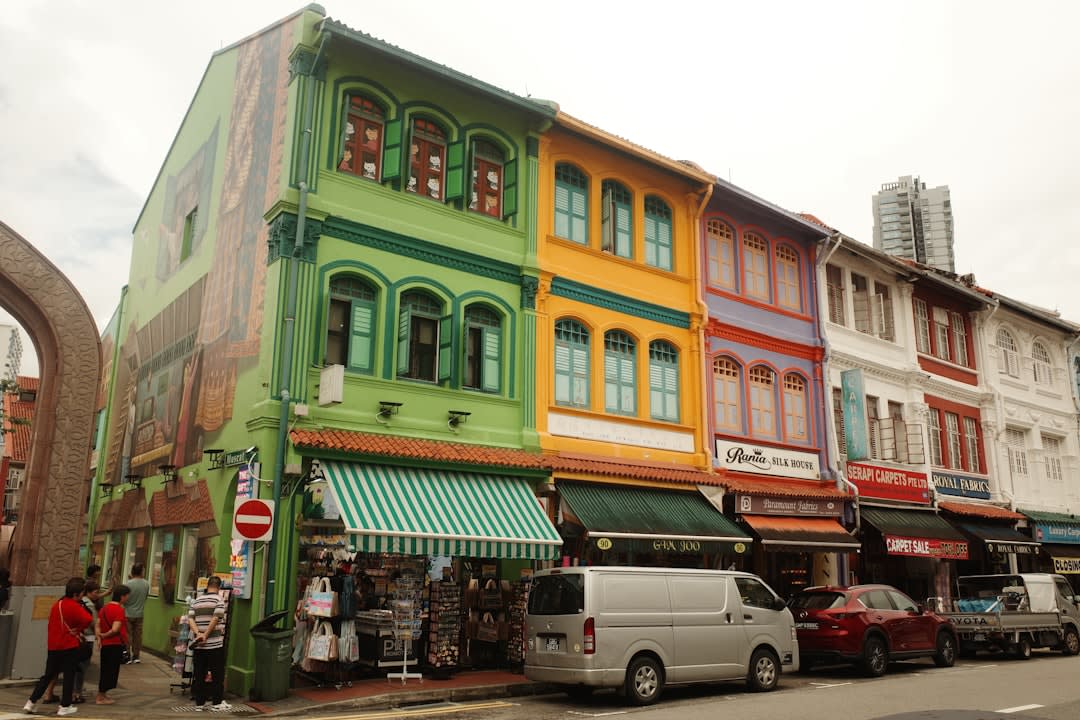
We ended the evening at the Katong Antique House, a small private collection crammed with Peranakan furniture and beadwork that the owner, if you’re lucky enough to catch him there, will walk you through personally. It felt less like a museum and more like being invited into someone’s family history, which in a way it was. Walking back to the main road afterward, past the shophouses lit up gold in the evening light, I understood why people describe Katong as the Singapore that development mostly left alone — it isn’t preserved like a museum piece, it’s just still being lived in.
When to go: Late afternoon into early evening is ideal — you get softer light on the shophouses and the laksa stalls without the peak lunchtime queue.
Keep exploring
More from Singapore
 singapore
Little India
The most sensory neighbourhood on the island — all jasmine garlands, spice shops, and technicolour temples.
Explore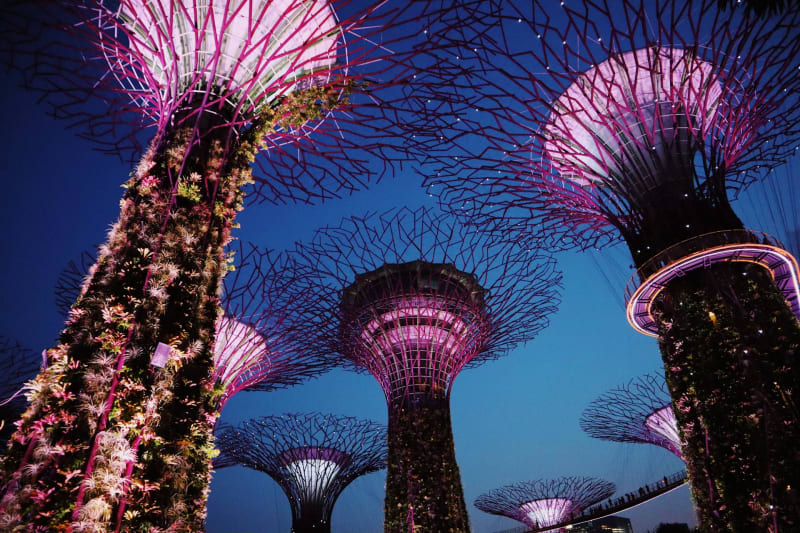 singapore
Marina Bay
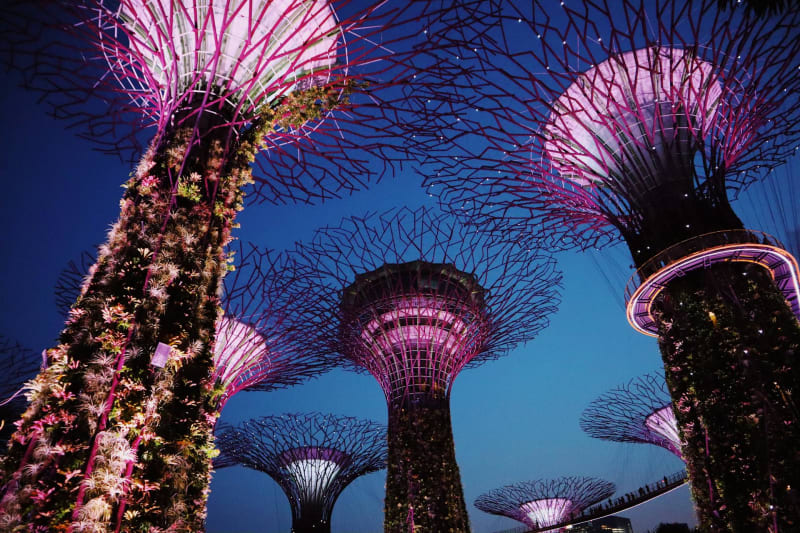
Singapore's architectural showpiece — a waterfront where supertrees, sky pools, and laser shows define a city's ambition.
Explore singapore
Orchard Road
The city's flagship shopping boulevard, a two-kilometer stretch of air-conditioned malls and colonial-era buildings that never quite goes quiet.
Explore singapore
Pulau Ubin
A scruffy, green island ten minutes by bumboat from the city's eastern edge, where Singapore's last surviving kampong holds out against the skyline and a rusty bicycle is still the only sensible way to get around.
Explore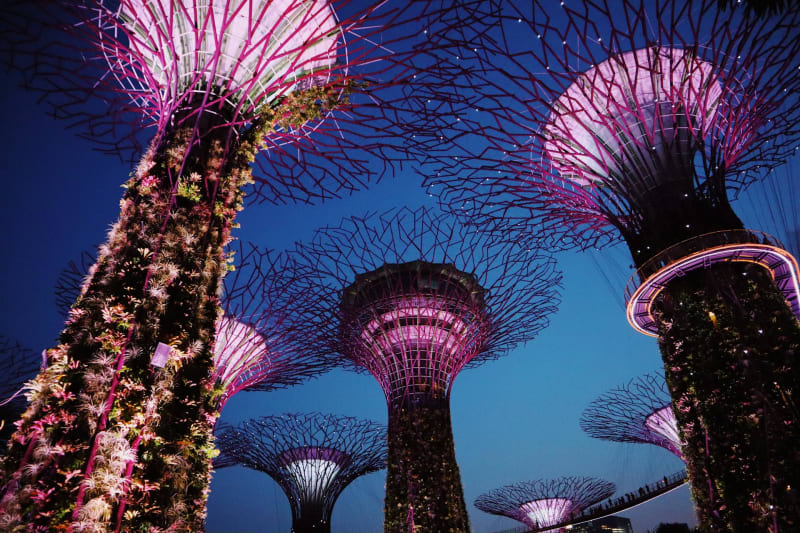 singapore
Sentosa
A resort island off the southern tip where theme parks, beaches, and rainforest trails share improbable real estate.
Explore singapore
Sentosa Beaches
Three connected city beaches with a cable car approach, watching tankers queue for the world's busiest port.
Explore