Buyit Ras
"I got to the edge, looked down, and forgot for a second that I was supposed to say something clever to Lia."
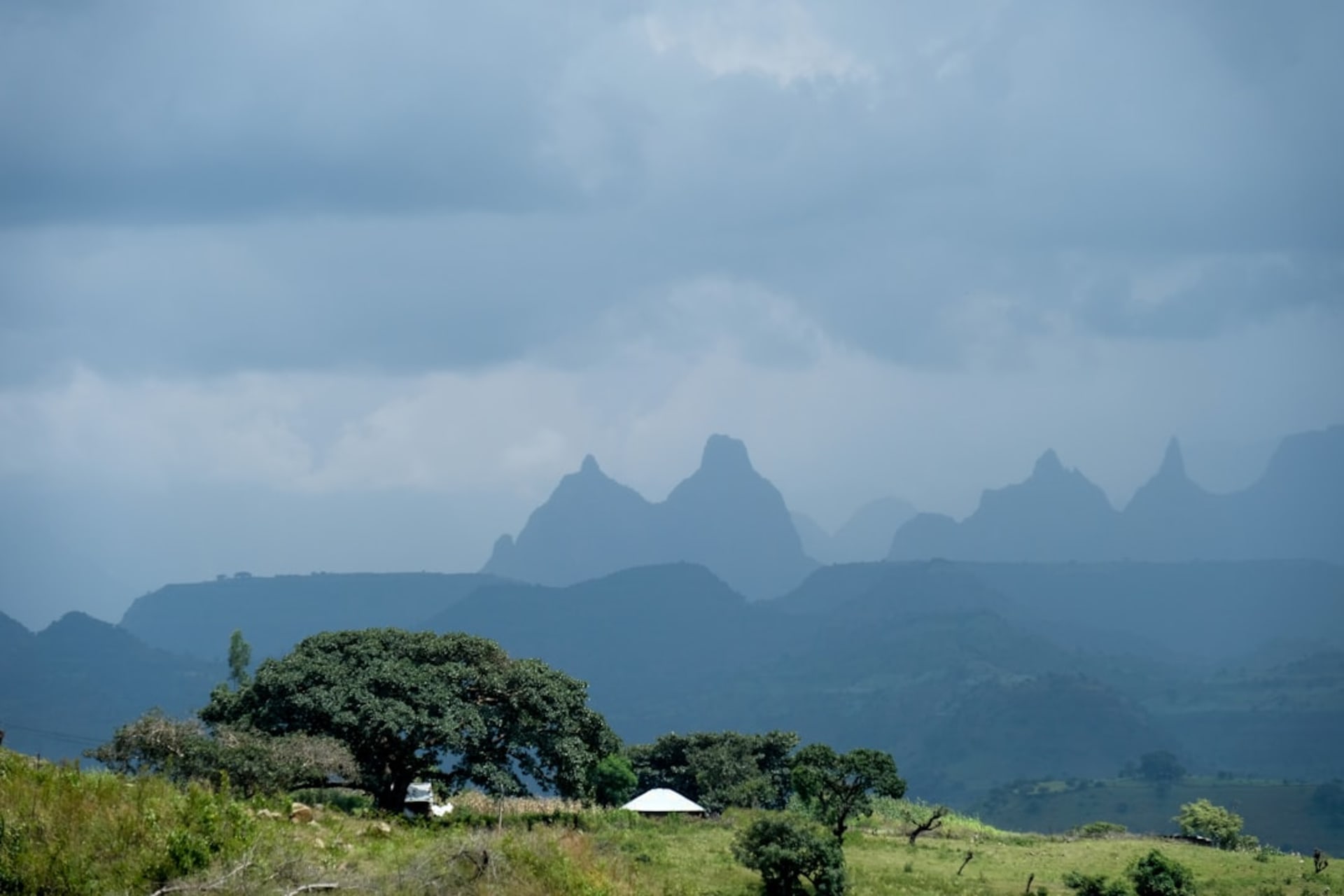
The escarpment viewpoint near Debark where the Simien Mountains stop being a rumor and become a two-thousand-meter drop at your feet.

We hadn’t even done a full day of walking yet when we hit Buyit Ras, and I remember feeling almost cheated by how fast the payoff came. You drive up from Debark, the road turns to gravel, the guide says something like “okay, five minutes,” and then the ground just stops. Not a hill, not a slope — a wall. The escarpment falls away so suddenly that your brain needs a second to recalibrate what “far” means. Lia grabbed my arm without saying anything, which for her is basically a five-star review.
What struck me wasn’t just the height, it was the light. We arrived mid-morning and the haze hadn’t burned off yet, so the lower valleys were still half-swallowed in a soft gray-blue, with only the nearest ridgelines cutting through in sharp green-brown relief. Our guide, a young guy from Debark who’d clearly done this a hundred times, still stood there quietly for a moment before rattling off the names of villages we could just barely make out thousands of feet below. That pause told me more than his commentary did — this view doesn’t get old for people who see it every week.

What people don’t tell you about Buyit Ras is that it’s also where the trip starts feeling real logistically. This is roughly where you meet your scout — armed, government-mandated, mostly there as a formality these days — and where the pack mules get sorted out for the days ahead. So while I was busy having a small existential moment at the cliff edge, there was a very practical scene happening behind me: gear being lashed to mules, guides negotiating routes, someone’s water bottle rolling dangerously close to a very long fall.
I’ll admit I spent longer than necessary just sitting there with my legs dangling over a rock ledge, eating a boiled egg from breakfast, watching a lammergeier — those huge bearded vultures — ride the thermals coming up off the escarpment. It circled without a single wingbeat for what felt like ten minutes. Lia pointed out that the bird was working way less hard than the two of us were about to for the next several days, which, fair.

If you’re short on time and can only do one stop in the Simiens, people will tell you to go straight to Chenek or further, and honestly the deeper trek is worth it if you can manage it. But Buyit Ras is the honest introduction — it tells you exactly what kind of landscape you’re walking into before you’ve committed a single sore muscle to it.
When to go: Visit in the dry months, October through March, for the clearest views and stable footing on the escarpment paths; October–November also brings green valleys still lush from the rainy season.
Keep exploring
More from Simien Mountains
 simien-mountains
Bwahit Peak
Ethiopia's second highest summit at 4,430 meters, a technically accessible high-altitude traverse that rewards with views across the roof of Africa and into the Ras Dashen massif.
Explore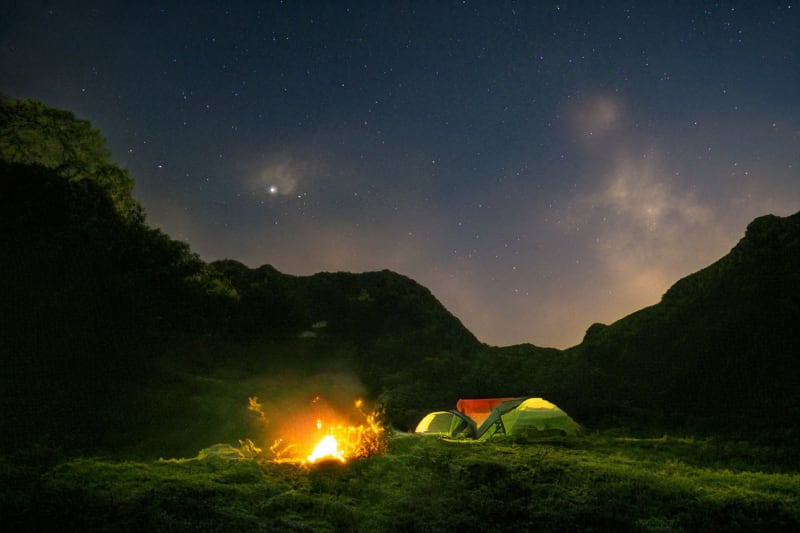 simien-mountains
Chenek Camp
The high-altitude base camp at 3,620 meters near the Simien's tallest peaks, where walia ibex walk the cliff terraces and Ethiopian wolves hunt the moorland at dawn.
Explore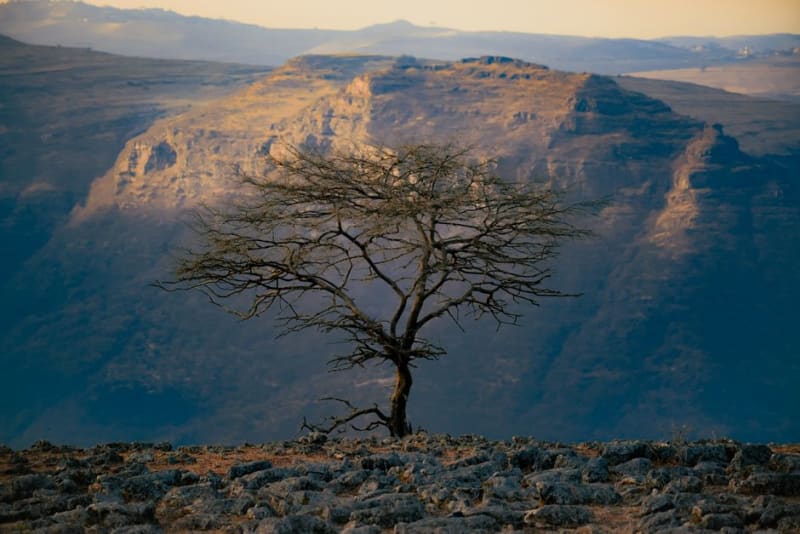 simien-mountains
Chiro Leba
A high camp where converging trekking routes meet a skyline of basalt pillars, one of the Simiens' strangest and most theatrical landscapes.
Explore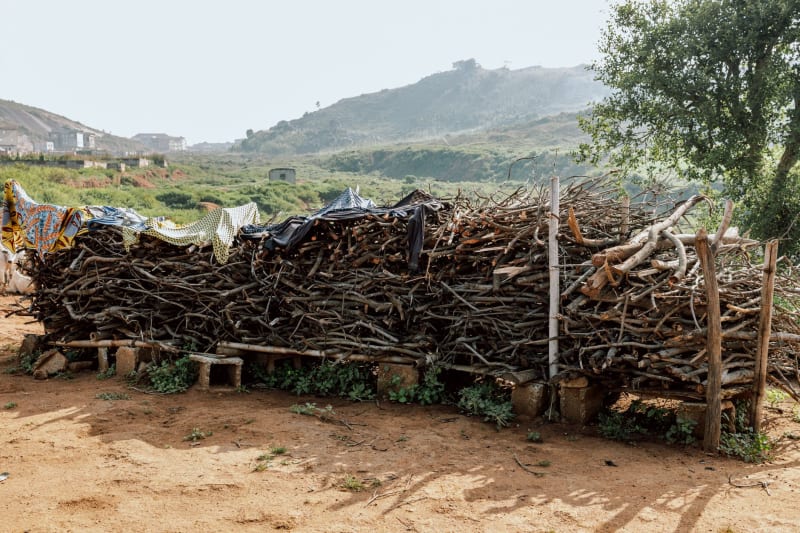 simien-mountains
Debark
The dusty gateway town where every Simien Mountains trek begins and ends, and where the paperwork is just as wild as the landscape ahead.
Explore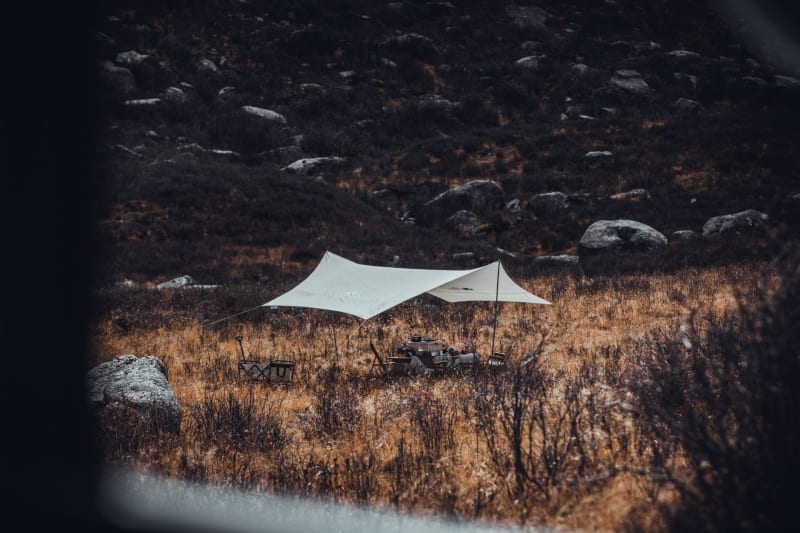 simien-mountains
Geech Camp
The high plateau camp at 3,600 meters where the Afroalpine landscape asserts itself fully and the stars at night are almost offensive in their density.
Explore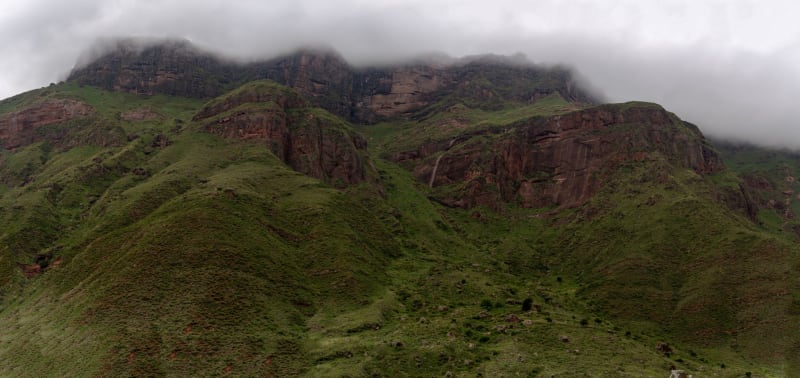 simien-mountains
Imet Gogo
A rocky pinnacle at 3,926 meters that juts from the Simien plateau like a prow, offering what may be the most dramatic escarpment panorama on the entire trek.
Explore