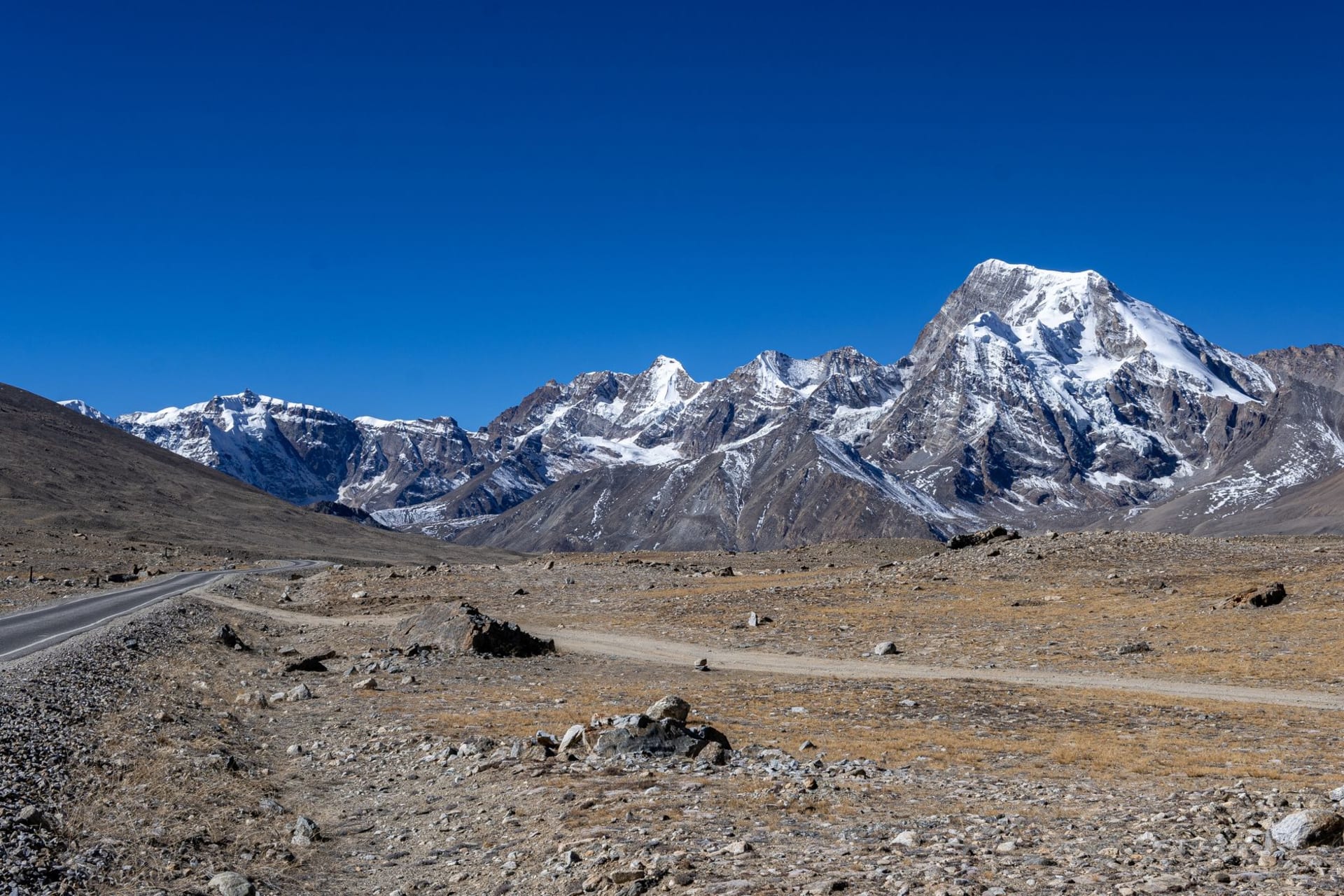
Yumthang Valley
"They call it the Valley of Flowers. For once the tourism slogan was guilty of understatement."
The Long Way Up
You do not casually drop into Yumthang. It sits at around 3,600 metres in the far north of Sikkim, reached by a permit, a shared jeep, and a road that spends the morning arguing with the mountain. We based ourselves in Lachung the night before, a village of wooden houses clinging to a steep slope, and set off at an hour that felt unkind. The driver took the switchbacks with the unhurried confidence of a man who has driven them ten thousand times and intends to drive them ten thousand more.
The valley reveals itself slowly. The forest thins, the peaks close in, and then the road levels into a broad meadow with the Lachung River braiding through it and rhododendrons crowding the slopes on either side. In late spring the Shingba Rhododendron Sanctuary, which the road runs straight through, is a riot — dozens of species, pink and crimson and pale yellow and white, blooming all at once. I am not a flower person. Lia is, mildly. By the end of the morning we had both taken an embarrassing number of photographs.

The Hot Spring and the Cold River
A short walk across a footbridge over the river leads to the Yumthang hot spring, housed in a modest hut where the sulphur water collects in a small stone bath. The smell announces it well before you arrive. The locals swear by it for aches and skin complaints, and after a cold dawn drive I was prepared to believe anything. I soaked my feet, which had gone numb in the jeep, and watched the river run grey-blue with glacial silt a few metres away. The contrast — scalding spring, freezing river, thin bright air — is the kind of sensory whiplash that makes you feel very awake.
There is almost no infrastructure here, which is the point. A few tea stalls in tents serve sweet chai and Maggi noodles, the universal Himalayan trekking food, steam rising from the pots into the cold. We sat on a plastic stool with our hands around hot glasses and said very little, because the valley does not really invite conversation. It invites looking.
Zero Point, Where the Road Gives Up
If you keep going up the valley, the road eventually delivers you to Yumesamdong — known to everyone as Zero Point — at around 4,700 metres, where the tarmac simply ends and the snow takes over. This is the closest a vehicle will take you toward the Tibetan border, and the altitude is no longer a polite suggestion. I climbed a short rise above the parking area and had to stop twice, my heart doing something theatrical, my breath visible and insufficient.
The view from up there is austere in a way the flowering valley below is not: bare slopes, old snow, a silence so complete it has a texture. A group of Indian tourists were throwing snowballs with the unguarded joy of people who had never seen snow before, and it was impossible not to grin along with them. We did not stay long — at that height you are a guest on borrowed oxygen — but I was glad to have stood where the road runs out.

A Note on Doing It Right
Yumthang is fragile, and it is loved a little too hard in season. Take your rubbish back down with you, resist the urge to pick the rhododendrons, and treat the altitude with respect rather than bravado.
When to go: Late March through mid-June for the rhododendron bloom — peak colour is usually late April to early May. October offers crisp clear views without the flowers. The valley closes in deep winter and during the monsoon (July–September) when landslides regularly cut the road. Permits for North Sikkim must be arranged through a registered agency in Gangtok, and the jeep day from Lachung is long, so build in a rest day either side.