St Ninian's Isle
"A beach with the sea on both sides at once — I'd never stood on anything like it."
I’d seen tombolos in textbooks but never walked one until St Ninian’s Isle, on the west side of Shetland’s South Mainland. A tombolo is a bar of sand that connects an island to the shore, and this one is the finest in Britain — a shimmering double crescent of white shell-sand, maybe five hundred metres long, with the sea pressing in from both sides at once. You stand in the middle and there is turquoise water to your left and turquoise water to your right and a low green island ahead, and your sense of which way is “out to sea” simply gives up.
Crossing the Sand
We came on a day of fast Shetland weather, the kind where the sky reorganises itself every ten minutes. When we parked above the beach the tombolo was in full sun, glowing improbably tropical against the dark hills, and by the time we’d walked halfway across, a squall had rolled in off the Atlantic and turned the whole thing slate-grey and stinging. Lia put her hood up and laughed at me, because I’d insisted we wouldn’t need waterproofs. We did need waterproofs.
The sand squeaks underfoot here — proper clean shell-sand, the kind that protests when you walk on it. Out in the middle, exactly between the two beaches, I stopped and turned a slow circle. Fulmars were riding the wind off the island’s cliffs, stiff-winged and motionless, and the only other people in sight were two specks with a dog at the far end. Shetland does empty beaches better than almost anywhere, and on a sand bar with sea on both sides, the emptiness has a particular charge to it.
The Treasure and the Chapel
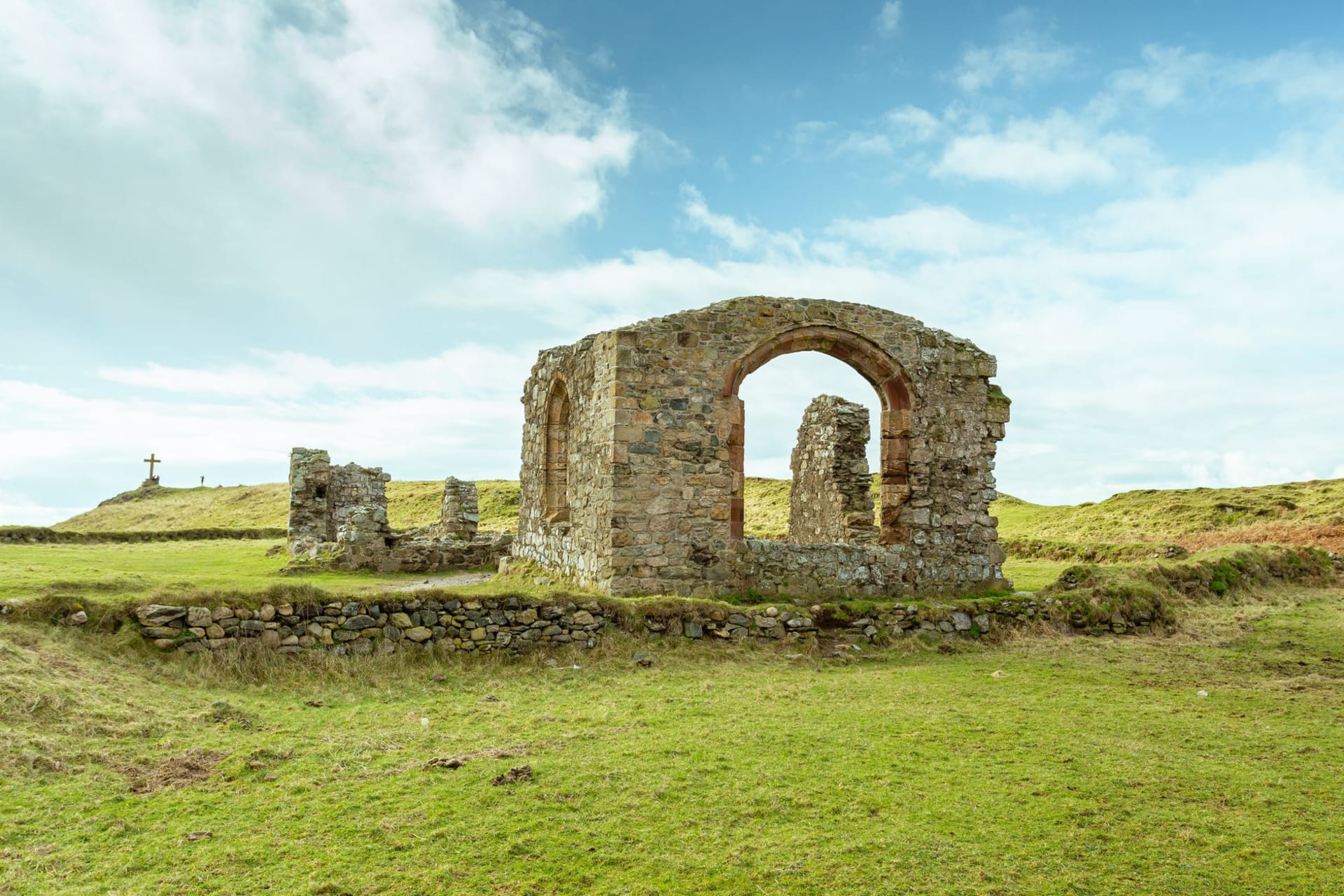
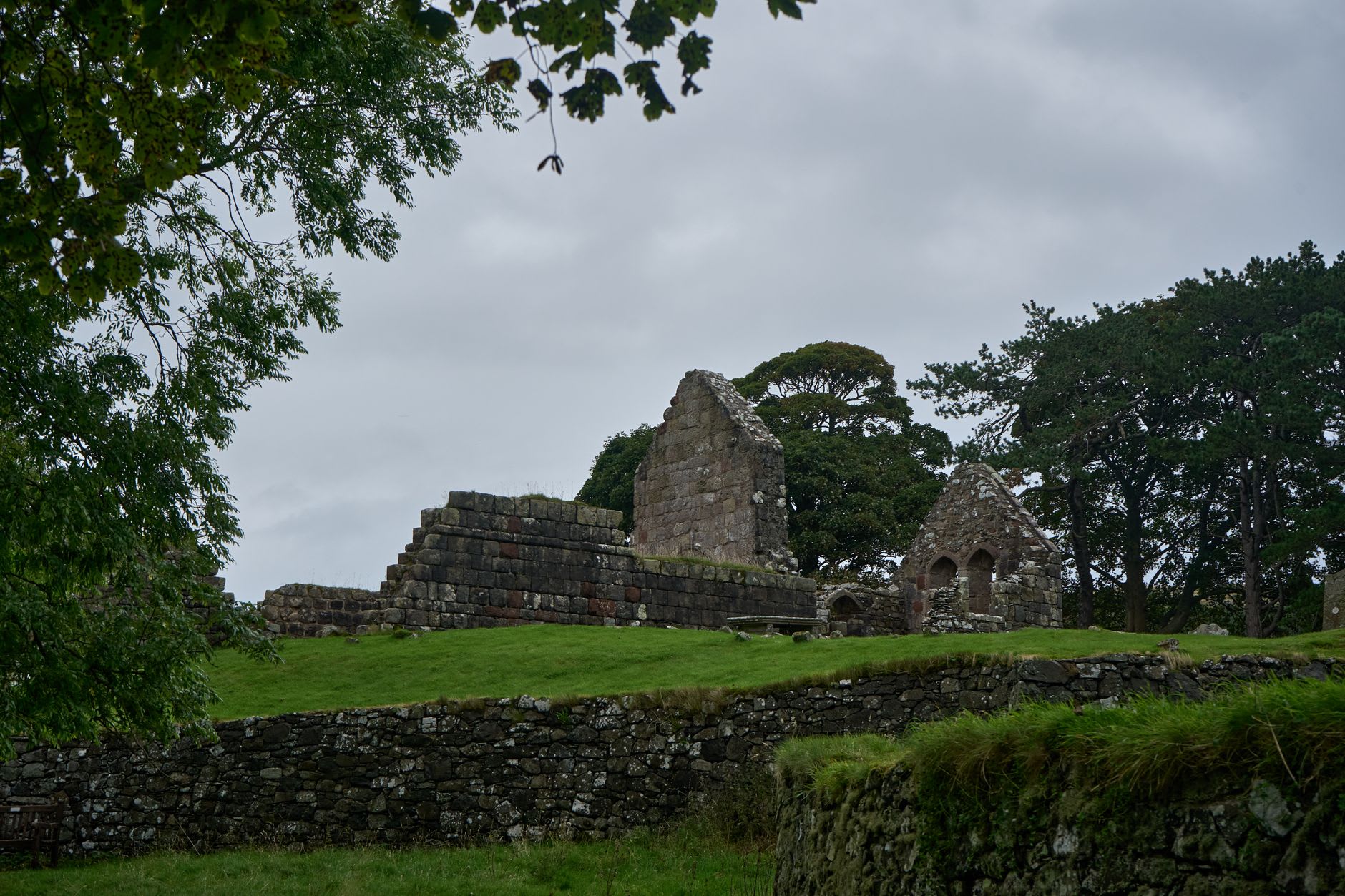
The island at the far end holds the ruins of a medieval chapel, built over a much older Christian site. In 1958, a local schoolboy helping with an excavation lifted a flagstone and found, packed into a larch box beneath it, twenty-eight pieces of Pictish silver — bowls, brooches, a sword chape — hidden around 800 AD, probably from Viking raiders, by people who never came back for it. It’s one of the most important early-medieval hoards ever found in Scotland. The originals are in Edinburgh, which annoys Shetlanders to this day; there are replicas in the museum in Lerwick.
Standing in the roofless chapel with the wind howling through the gaps, I found the story almost unbearably human. Someone hid their most precious things here, under the floor of a church, meaning to return. The grass has grown over the spot now and sheep graze the slope above it, indifferent.
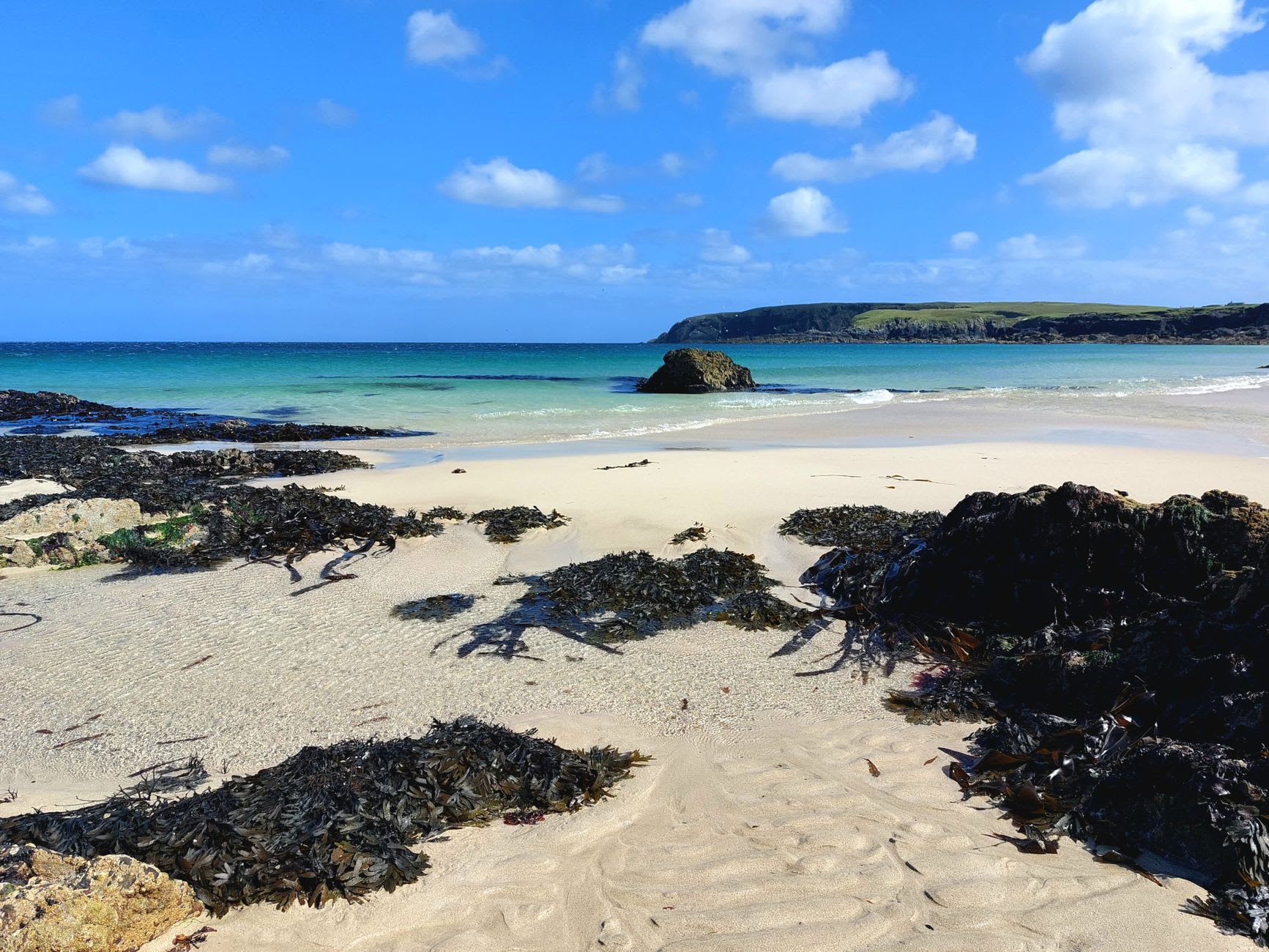
We walked back across the tombolo as the sun came out again, the sand gone luminous, and a seal watched us the whole way from the calm side. Lia said it was the best beach she’d seen in Britain, squall and all. I didn’t argue, partly because she was right and partly because I was still wet.
When to go: May to August for the longest days and the best chance of those sudden tropical-looking sun breaks. The tombolo is walkable at most tides but submerges in the highest ones, so check before you cross — being stranded on the island is romantic only in retrospect. Bring waterproofs regardless of what the forecast, or your travelling companion, claims.