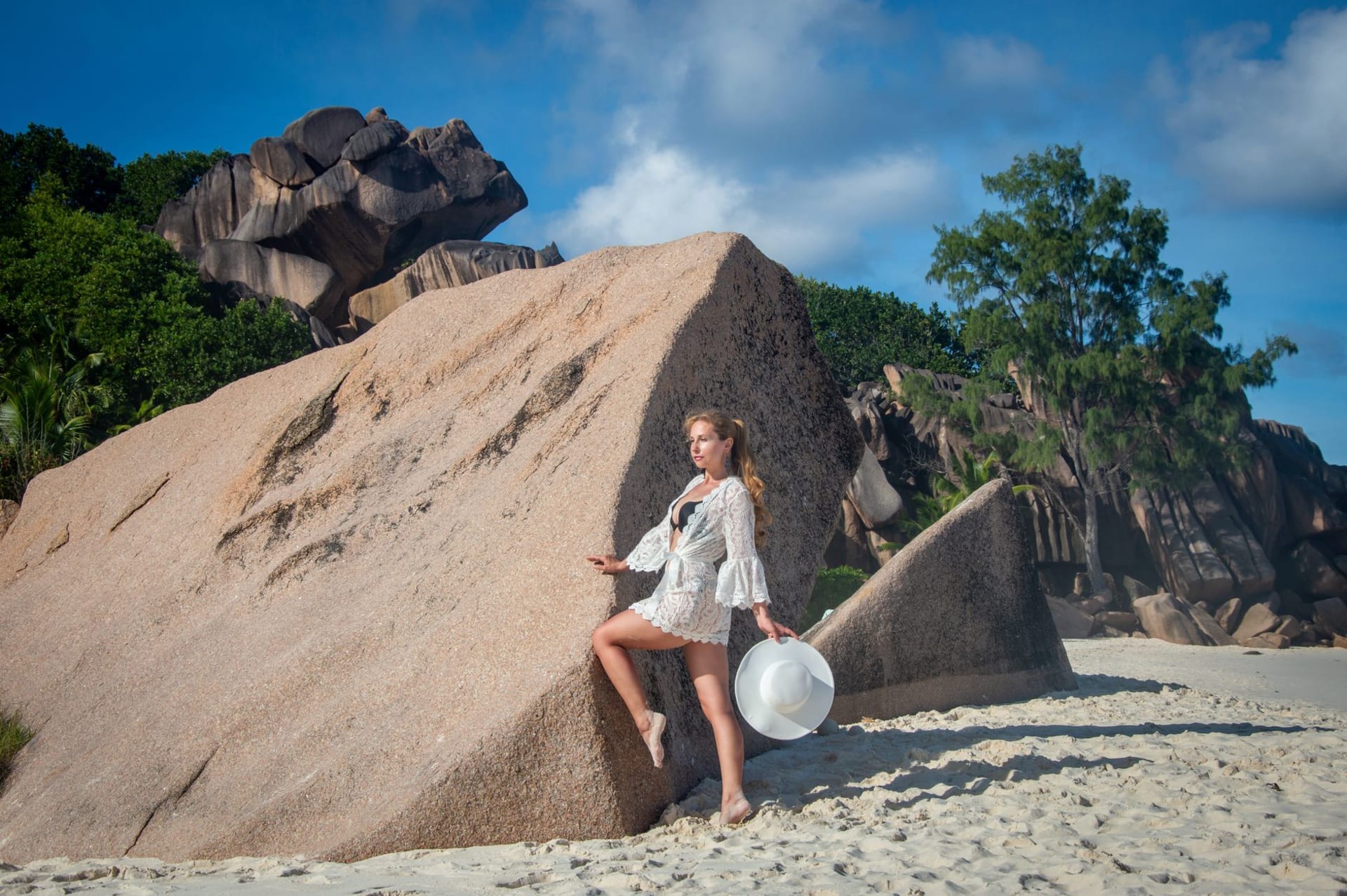
Cousin Island
"The birds don't notice you. You're the guest here, and the island makes that clear."
The boat from Praslin takes about fifteen minutes and deposits you on Cousin’s small beach via a zodiac transfer from the anchored vessel — the island has no jetty, and this arrangement is partly practical and partly a reminder of what you’re entering. Cousin Island Special Reserve is managed by Nature Seychelles, access is limited to morning tours, and the number of visitors allowed on the island at any one time is small. These restrictions exist because the island works: where once the vegetation was cleared for coconut farming and the bird populations were collapsing, the island now supports some of the highest seabird densities of any island in the Indian Ocean.
The ranger who guided my group was a young Seychellois woman named Alicia who spoke about birds with the particular fluency of someone who has spent years in close daily company with them. She walked us in from the beach through coastal scrub that was alive with movement — Seychelles warblers in the undergrowth, Seychelles sunbirds working the flowering shrubs, the flash and call of the endemic Seychelles magpie-robin, a species that was reduced to fewer than twenty individuals in the 1960s and now numbers over two hundred thanks largely to this island’s recovery. Alicia pointed one out perching on a branch three meters from the path. It was a handsome bird — black with a white wing patch — and it looked back at us with an expression of complete equanimity.

The frigate birds are what most people have come to see, and they do not disappoint. Magnificent frigatebirds nest here in the taller trees, and during nesting season the males inflate their red gular pouches to the size of a balloon — an advertisement so absurd and so committed that it becomes, somehow, impressive. I watched a male sit in his nest with his pouch extended, vibrating it slightly in the manner of someone who knows he looks ridiculous but is not prepared to stop. A female landed two branches above him and looked at him with an expression I read as skeptical. He vibrated harder.
The giant Aldabra tortoises that roam the island were introduced from Aldabra and now number over three hundred. They move through the forest interior with a momentum that suggests they are indifferent to obstacles, and several of the paths on the island were effectively blocked by a tortoise making its way from one point to another with the unhurried certainty of an animal that has no predators and nothing pressing to do. We navigated around them. Alicia told me the oldest individual on the island is estimated at one hundred and sixty years.
The beach at Cousin — the same beach you arrive on — is a hawksbill turtle nesting site. Alicia found tracks in the sand from a female who had come up the night before: the flipper marks coming from the water, the disturbed sand of the nest chamber, the return tracks. She measured the distance between the two sets of tracks with her arms. “Big female,” she said, “maybe forty years old. She’s been coming here since before I was born.”
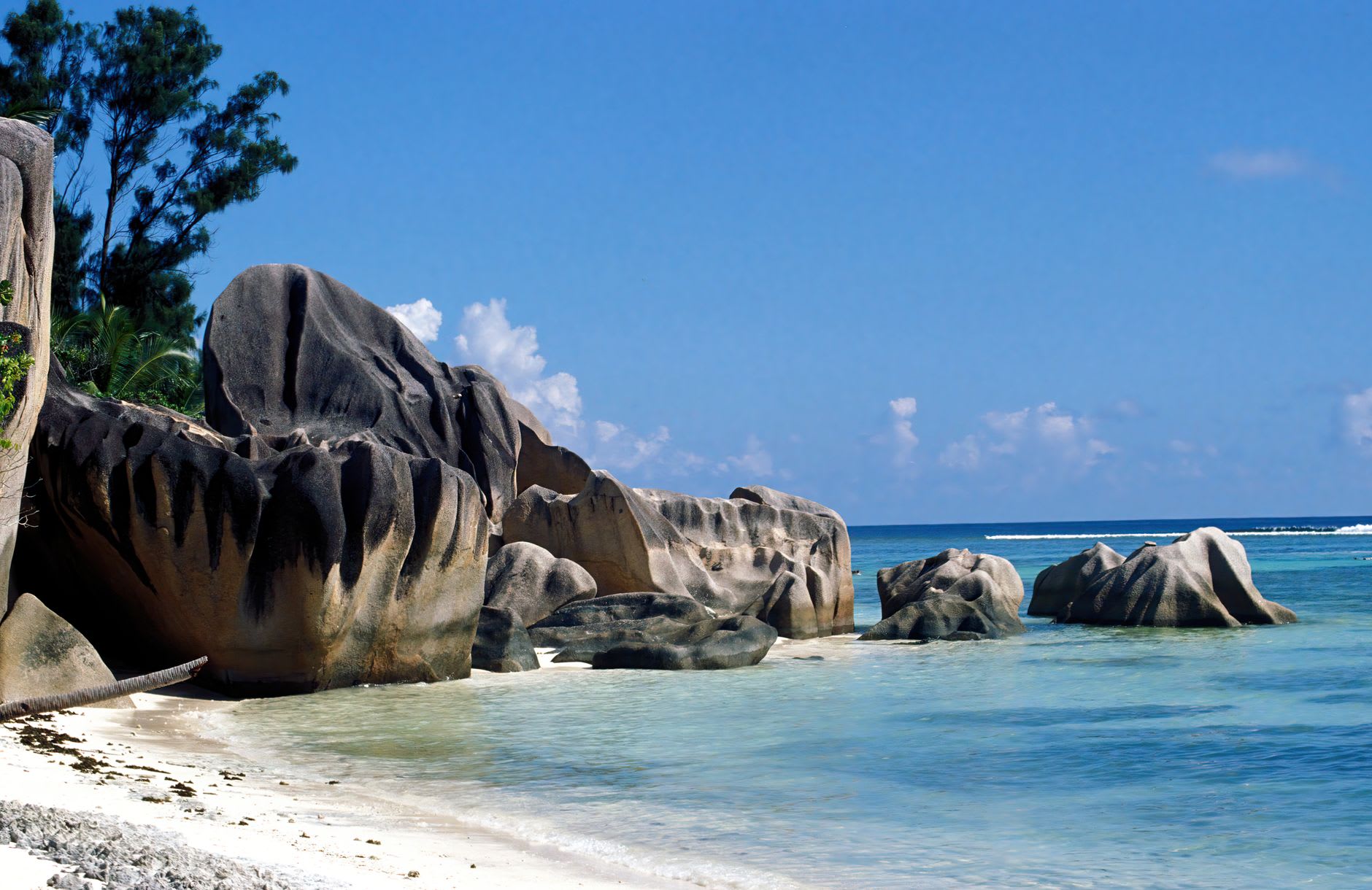
The tour lasted about ninety minutes and then we were in the zodiac and gone, the island diminishing behind us as the boat crossed back toward Praslin. I sat in the bow watching Cousin recede and thinking about the word “rewilded” — how much patient work it describes, how many decades of clearing invasive species and planting native trees and counting birds and watching numbers very slowly climb. The island had been broken and then, improbably, it had been fixed. That is not a story you encounter often enough.
When to go: Cousin Island is accessible only on morning tours, which run from Monday to Friday, year-round. Boats depart from Grand Anse on Praslin. Book through your guesthouse or a tour operator on Praslin at least a day in advance. Seabird nesting season peaks from May to September. Hawksbill turtle nesting occurs mainly from October through January.