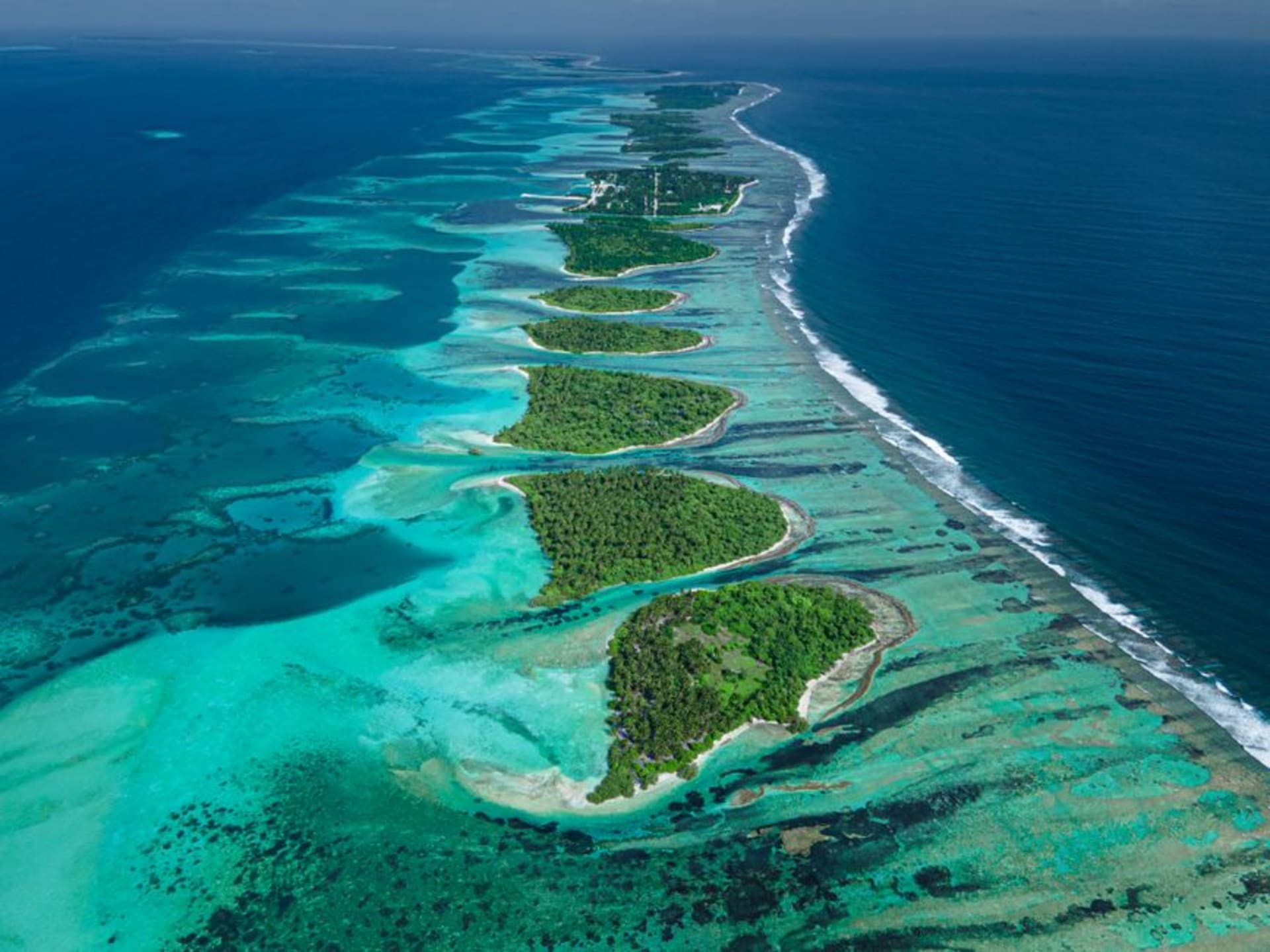
Aldabra Atoll
"Four days on a boat to watch a tortoise chew a leaf — worth every hour."
A raised coral fortress ringed by turquoise lagoon, home to more giant tortoises than anywhere else on Earth.
I’d read about Aldabra for years before Lia and I actually set foot on it, and even then I almost didn’t believe the numbers until I was standing in the middle of them: over 100,000 giant tortoises on one atoll, more than Galápagos holds in total. There’s no runway out here — the world’s second-largest coral atoll sits about 1,150 kilometers southwest of Mahé, and the only way in is a multi-day boat charter arranged through the Seychelles Islands Foundation, which manages the place with a strictness that felt almost monastic after the tourist bustle of the inner islands. We spent three nights crossing open water to get there, and I remember Lia saying, half-joking, that we’d better see a tortoise worth it. We saw thousands.
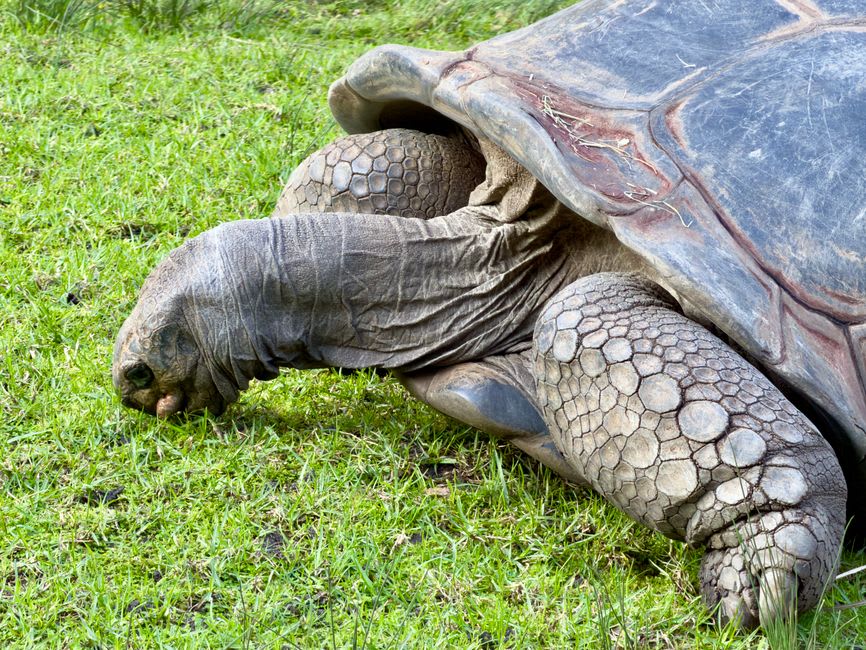
What struck me most wasn’t just the scale of the tortoise population but how close we were allowed to walk among them, always with a ranger, always slowly. One old male — his shell scarred and sun-bleached almost white — barely looked up as I crouched a meter away to watch him work through a mouthful of grass. Lia took maybe forty photos of that single tortoise. I didn’t blame her. There’s something about the unhurried certainty of these animals, some of them older than our grandparents, that resets your sense of time completely.
The lagoon itself is its own universe — a vast tidal expanse enclosed by the atoll’s raised coral rim, draining and filling twice a day in a slow green-blue breathing. Our ranger guide told us the story I’d only half-known before: that Aldabra almost became a British-American military airstrip in the 1960s, and it was a campaign led by the Royal Society that stopped it, a fight that ended up shaping the whole modern conservation movement in this part of the world. Walking the rim at low tide, watching frigatebirds wheel overhead and hearing nothing but wind and water, it was hard to imagine how close this place came to being paved over.
By the time we sailed back toward Mahé I understood why access here is kept so tightly controlled, and honestly I was grateful for it — Aldabra felt less like a destination and more like a place that had simply been left alone long enough to become itself again. It was 1982 when UNESCO inscribed it as a World Heritage Site, and every hour we spent there made that designation feel earned rather than ceremonial.
When to go: We went in early May, right at the tail end of the inter-monsoon window, and the seas were kind to us — I’d aim for either April to May or October to November, since the crossing itself is long enough without adding rough water to the equation.