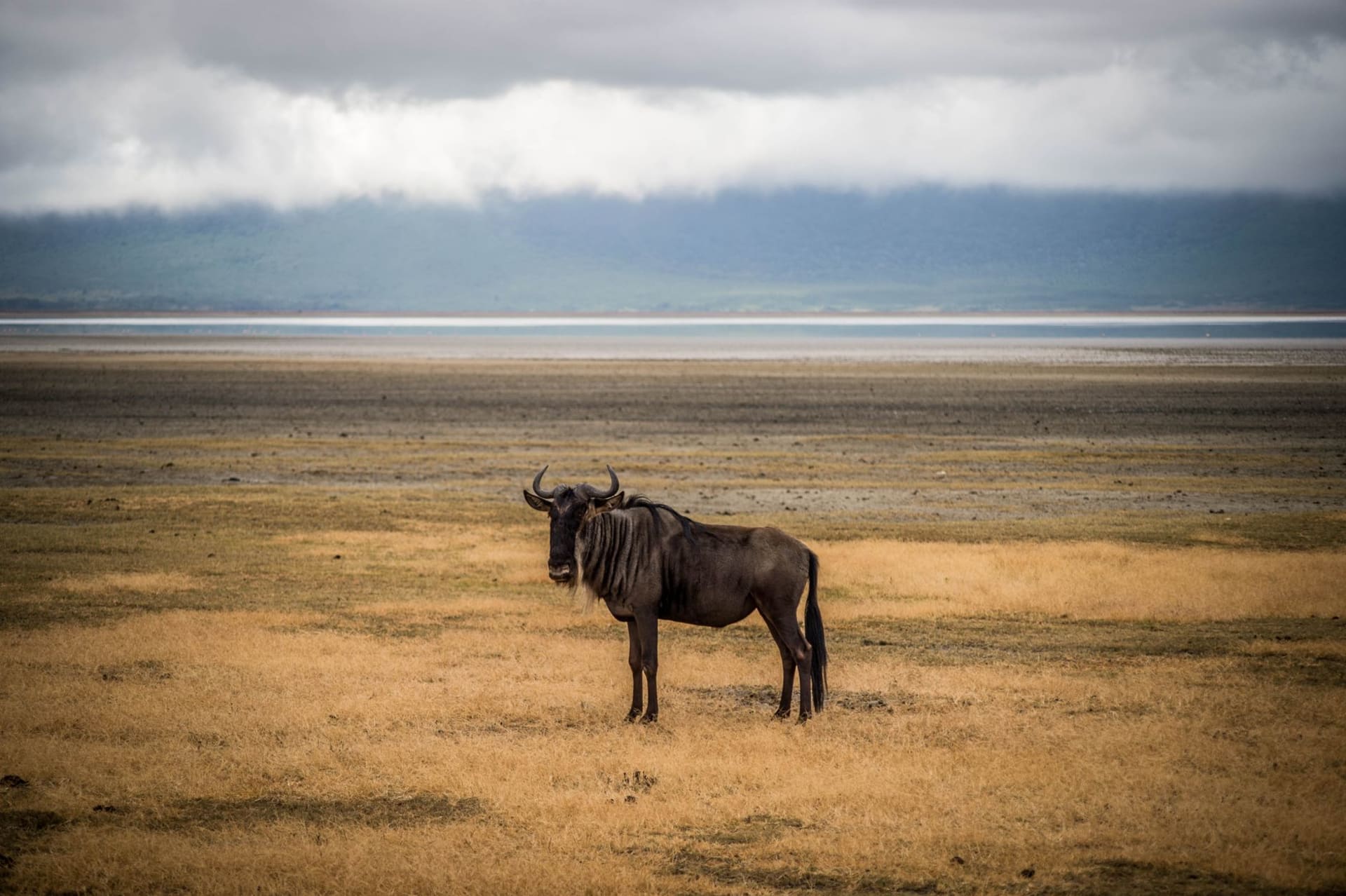
Ndutu Plains
"A calf born at 6am can run with the herd by noon. This is what survival requires."
I arrived in Ndutu in early February, at the height of the calving, and the first thing I saw after landing was a cheetah. Not a cheetah in the distance, in the long grass, identifiable only by the ears — a cheetah sitting upright on the short-grass plains three hundred meters from the airstrip, watching a group of wildebeest cows and calves with an expression of professional concentration. My pilot, taxiing back toward the wind sock, barely glanced at it. “Busy week,” he said.
The southern Serengeti in calving season is unlike the rest of the ecosystem at any other time of year. The wildebeest — somewhere between 300,000 and 500,000 of them by the estimates I read, though estimates feel inadequate when you’re looking at the actual horizon — have congregated on the nutritious short-grass plains around Lake Ndutu and the Maswa border. The grass here grows over an ancient caldera and is packed with minerals the pregnant females need. They have known this, collectively, for perhaps a million years. Every January they arrive from the north, drop their calves — about 8,000 per day at peak, which is a number your brain doesn’t want to hold — and the calves attempt to learn, in a matter of hours, how to stay alive in the same landscape that wants to eat them.
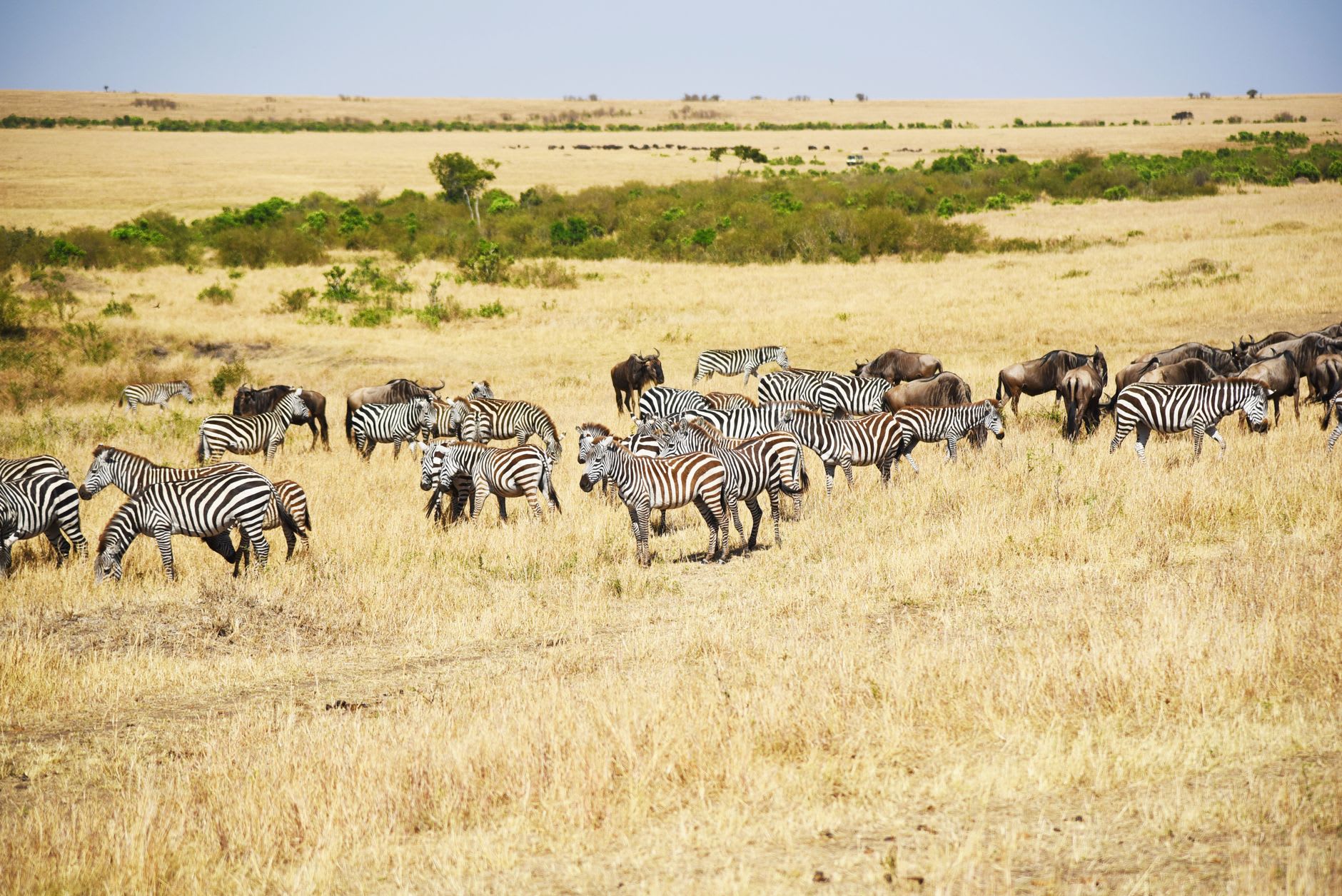
The predators know the calendar better than any guidebook. Lions that spend the dry season ranging widely compress into the calving grounds and barely bother to move between meals. Cheetahs hunt constantly, efficiently, often successfully, though the success rate isn’t as high as it looks — the calves that survive the first hour move deceptively fast. Hyenas work the edges of herds with a tireless, loping patience. Even the jackals are busy, darting in to grab afterbirth before the mothers can move. The whole plain runs on a logic that is completely unsentimental, and after a few days inside it you absorb that logic into your bones. You stop wincing when the cheetah makes the kill. You start watching with the same focused attention the predators have.
Lake Ndutu itself is a shallow, slightly alkaline lake that dries back considerably in the dry season but in February holds water and flamingos and the reflections of enormous cumulus clouds. My camp was set back from its shore and at dusk the mosquitoes rose from the reeds in brief experimental columns, testing the air. A family of warthogs had claimed a section of the camp perimeter and trotted in formation every evening at exactly the same time. The camp cook made a groundnut stew I ate so quickly I burned my tongue, and he laughed and said it was a sign of respect. I said he was right.
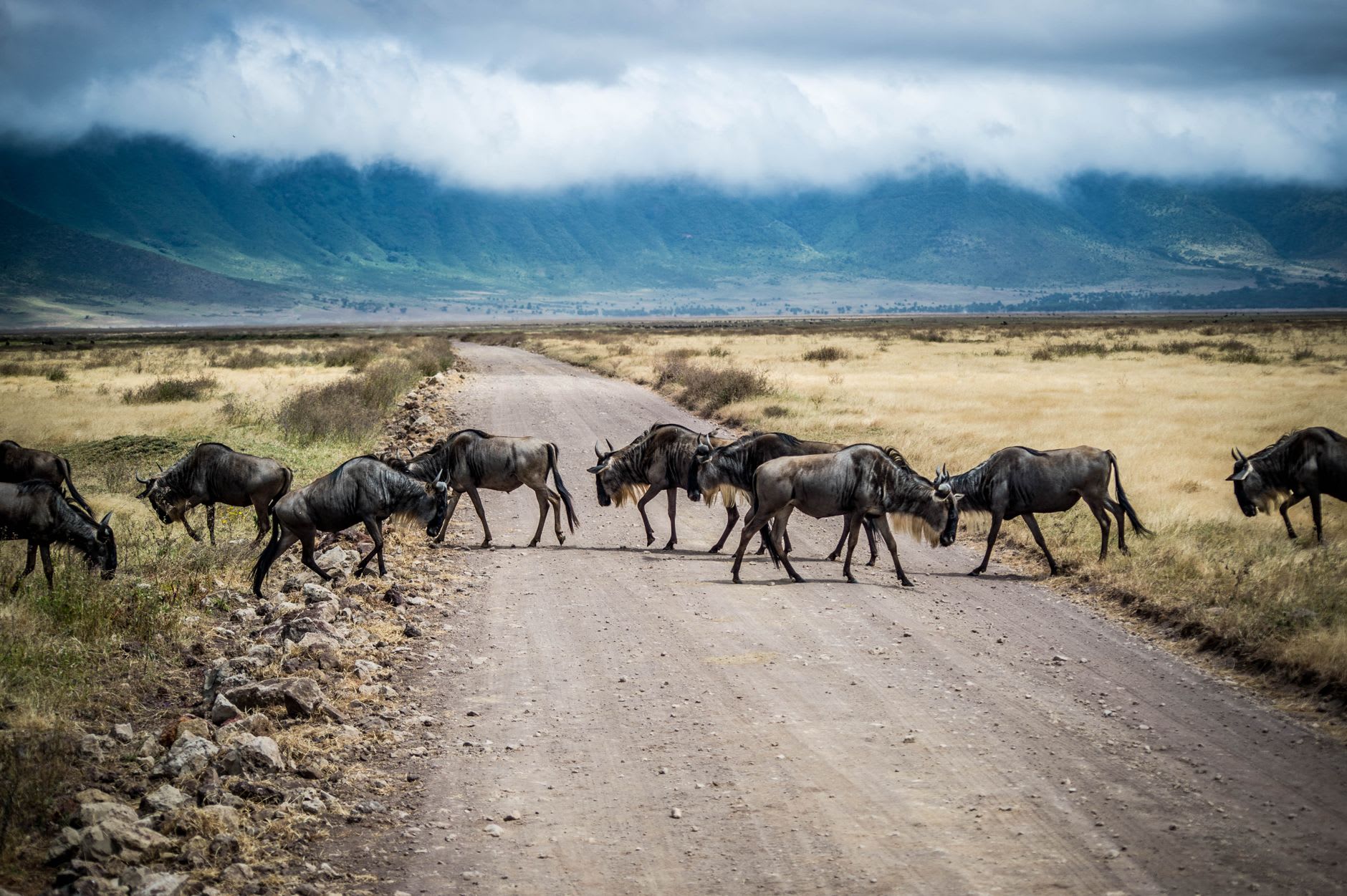
What I wasn’t prepared for was the sound of the calving plain at night. The wildebeest don’t sleep in the way you might imagine — they move and vocalize all night, and several hundred thousand of them produce a sound that permeates the tent like low-frequency music. It’s not unpleasant. It’s vast. You lie awake listening to it and feel, for a moment, entirely peripheral to everything that matters out there on the grass.
When to go: January through March is the calving season and the essential window — this is what makes Ndutu unlike anywhere else in the Serengeti ecosystem. February is typically peak calving, with the highest density of both wildebeest and predators. The area is significantly quieter the rest of the year, though resident lions, cheetah, and birdlife remain accessible year-round. The roads around the lake can be difficult after heavy rain.