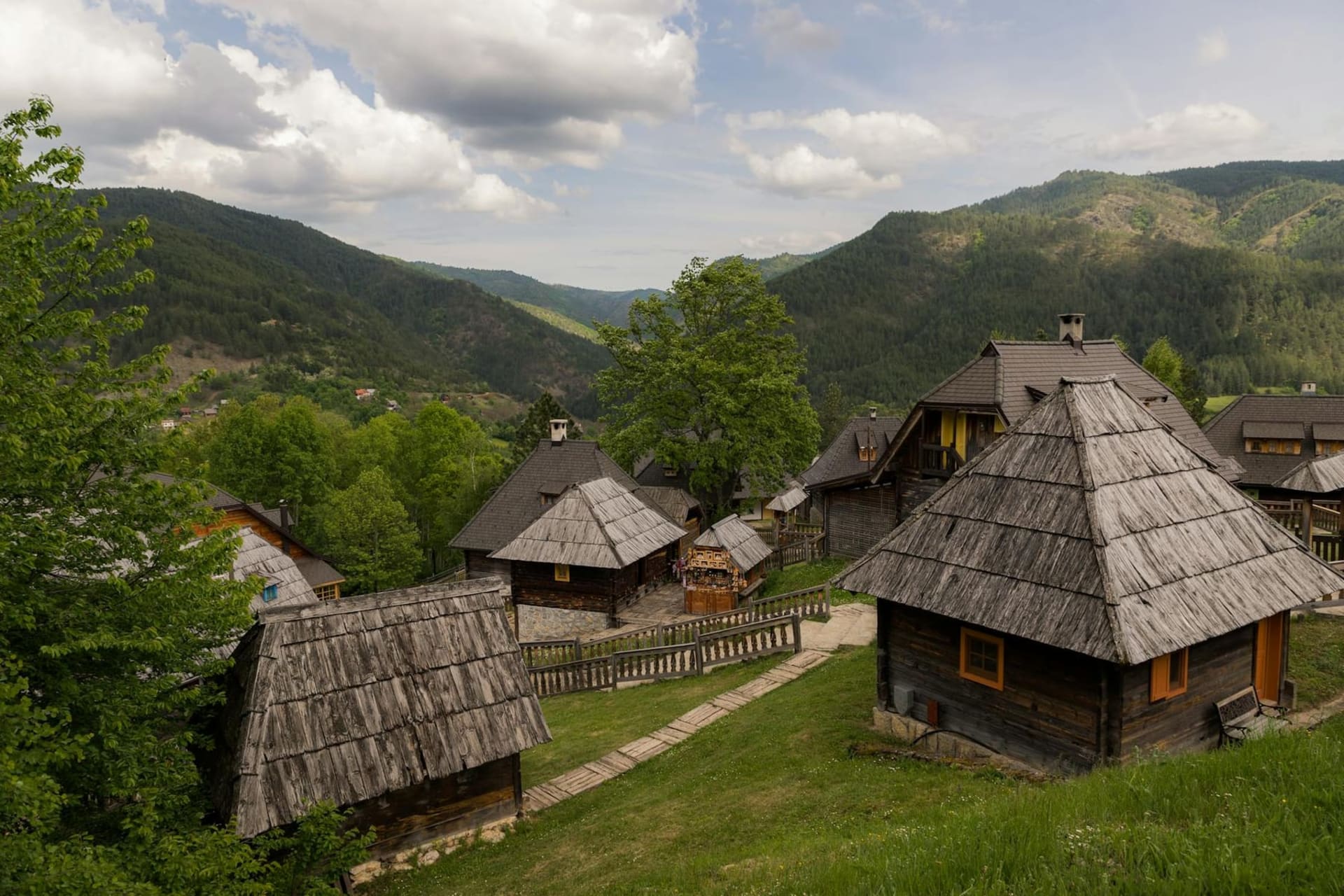
Zlatibor
"Zlatibor is the mountain that Serbia retreats to when it needs to remember what it loves."
A high-plateau paradise of rolling meadows, pine forests, and village ethno-zones where Serbian mountain culture breathes freely.
I arrived at Zlatibor in late September, when the plateau grass had gone from green to the color of old honey. The air at 1,000 meters tasted of pine resin and something harder to name — a mineral coolness that made me want to breathe slower, fill myself with it before it left.
The bus from Belgrade drops you at the central square in Užice, and from there a regional line climbs into the hills. By the time we reached Partizanske Vode, the main resort strip, the light had turned that particular amber that alpine afternoons do right before they quit.
The Ethno Village and the Surprise of Sirogojno
We walked to Staro Selo in Sirogojno on our second morning, a twenty-minute uphill from the Partizanske Vode promenade. I had expected a museum — the kind with rope barriers and laminated signs. What I found instead was a living village of nineteenth-century timber houses transplanted piece by piece from surrounding hamlets, staffed by women in embroidered aprons who spun wool by hand without performing it. One of them gestured me toward a loom and laughed when I made a mess of it. Lia photographed the carved wooden eaves for an hour while I drank a rakija that tasted like fermented plum and wood smoke and some third thing I still can’t identify.
The genuine surprise came at the small museum shop: a shelf of Zlatibor-pattern knitwear with geometric motifs in rust and cream, made by the cooperative that’s run the village since the 1970s. I bought a pair of socks. I wear them unreasonably often.
What to Eat and Where the Village Slows Down
Zlatibor’s food is mountain food — unapologetically heavy and deeply good. Kajmak, the fresh clotted dairy spread, appears on everything: on bread at breakfast, alongside grilled meats at lunch, dolloped onto roasted peppers at dinner. The restaurants along Turistička Street serve lamb slow-roasted under a metal dome called a sač, buried in coals, and the result is meat that falls from the bone with a crust of smoke and fat that takes about two bites to make you forget you’re in a restaurant and not someone’s grandmother’s kitchen.
Mornings belong to the promenade walk along the Zlatibor lake circuit — roughly five kilometers of flat path circling the reservoir, with wooden benches every few hundred meters and a bakery at the southern end that opens at six and sells burek filled with cheese that leaves grease on your fingers in the most satisfying possible way.
Getting the Rhythm Right
The plateau rewards slowness. Rent a bicycle or walk the meadow trails toward Tornik peak. Take the narrow-gauge Šargan Eight railway from nearby Mokra Gora if you have a spare morning — it spirals through the gorge in loops that seem to defy the geometry of railroads.
When to go: July and August bring Serbian families escaping the flatland heat — the plateau is lively but crowded. Late May and September offer the best balance: cool enough for walking, warm enough to sit outside at dusk with a glass of Vranac and watch the light leave the meadows slowly.