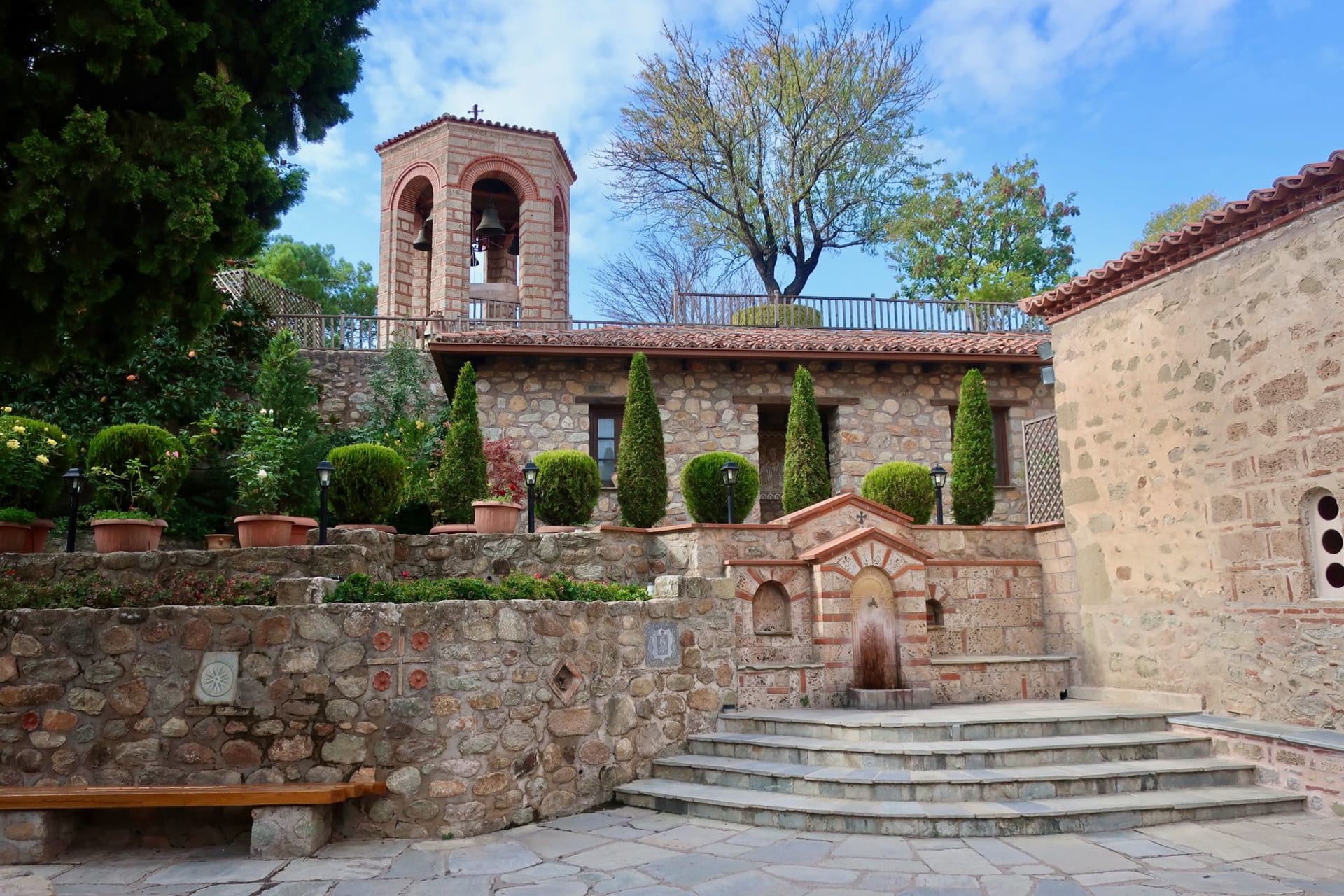
Studenica Monastery
"Studenica is a place where silence has been tended as carefully as the frescoes."
Serbia's most sacred monastery — a UNESCO masterpiece of white marble Byzantine churches hidden in a forested valley since the 12th century.
The road into Studenica follows the river Studenica for several kilometers, narrowing as the valley closes in, pines pressing closer on each side until the monastery appears without warning — white marble walls catching the afternoon light like something the forest has been hiding on purpose. I had read about it for months before Serbia, and still the first glimpse made me reach for Lia’s arm.
White Marble and Worn Stone
The complex sits inside a fortified oval wall, and stepping through the main gate is less like entering a religious site and more like entering a particular quality of air. The stone underfoot is smooth and slightly dipped from eight centuries of pilgrims. The Church of the Virgin — Crkva Bogorodice, built by Stefan Nemanja in 1196 — is the centerpiece, its white limestone facade decorated with carved rosettes and blind arcading in a style that sits precisely between Romanesque and Byzantine, belonging entirely to neither. I spent a long time just standing in front of the south portal, trying to understand how stone could look that deliberate.
Inside, the medieval frescoes survive in fragments — figures in ochre and deep mineral blue, faces flattened in the way that makes Byzantine portraiture feel more honest than naturalistic painting, not less. The light comes through small windows in slanted columns, and the smell is beeswax and old plaster and something faintly resinous, like the forest outside has followed you in.
The King’s Church and an Unexpected Discovery
The smaller King’s Church — Crkva Kralja — stands a few steps away, built a century later by Stefan the First-Crowned. It is easy to walk past it too quickly, which would be a mistake. Inside, Lia noticed what I had somehow missed: the frescoes here are more intact, and among them a scene of the Crucifixion that art historians consider one of the finest surviving examples of 13th-century Serbian painting. We had the room entirely to ourselves for nearly twenty minutes. A monk passed through once, nodded, said nothing, and left. That silence felt earned.
What surprised me most was not the art but the monks still living there, still tending the grounds, still keeping bees behind the south wall. A handwritten sign near the gate offered honey for sale. We bought two jars. It tasted of linden and mountain thyme, and I thought it was one of the best things I had eaten in Serbia, which is saying something given how seriously Serbians cook.
Getting There and Staying
Studenica is about 200 kilometers south of Belgrade, most easily reached by driving through Kraljevo and then following the river road. There is no real town at the monastery, only a handful of small family guesthouses along the approach road where you can stay overnight and have the complex nearly to yourself in the early morning.
When to go: May and June bring mild temperatures and green valley light that makes the white marble luminous. Avoid the height of summer if you want solitude — Orthodox feast days draw significant crowds, which is its own kind of beautiful but a very different experience.