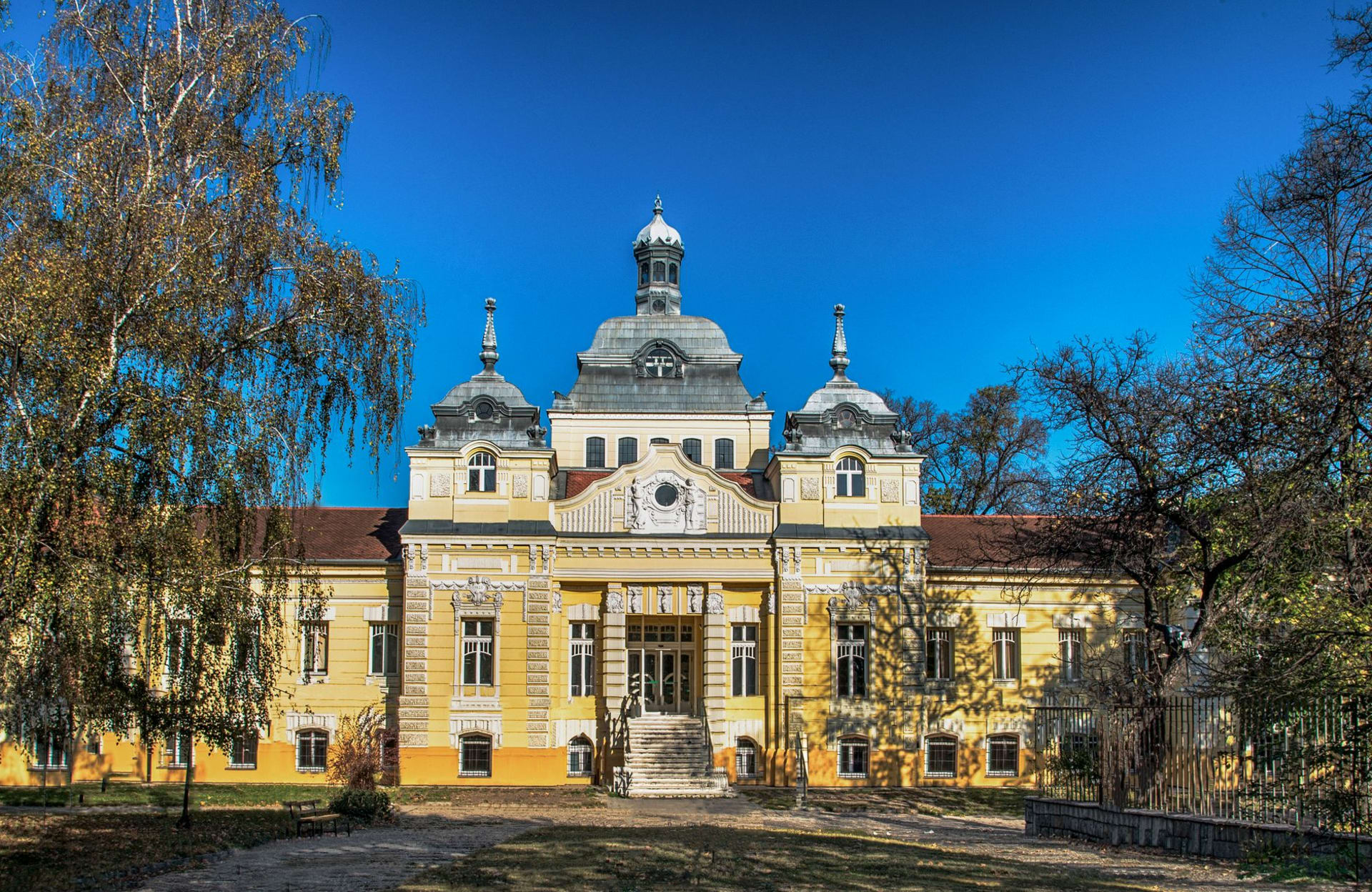
Oplenac
"I spent over an hour inside and didn't feel the time pass, which for a church interior is about the highest compliment I know how to give."
Topola is a small town in the Šumadija hills, 90 kilometers south of Belgrade, and Oplenac is the hilltop above it where the Karađorđević dynasty — the royal family that defined modern Serbia twice over, between assassinations and exile — built their mausoleum. The Church of St. George, completed in 1912 in white Venčac marble, is one of those buildings that takes several minutes to understand. The exterior is composed, almost restrained. The proportions are correct. You register it as beautiful without quite knowing why. Then you go inside.
Inside the Church
Every surface in the interior — the ceiling, the walls, the pillars, the arched vaults — is covered in mosaic. Not Byzantine originals but meticulous reproductions: 725 compositions copied from medieval Serbian frescoes sourced from monasteries across the country, rendered in 40 million small mosaic tiles in over 3,500 colors. The effect is overwhelming in the literal sense. You stop processing individual images and start experiencing the space as a total environment, a compression of eight centuries of Serbian sacred painting into a single room that smells of old stone and candlewax. Gold dominates but not oppressively — the palette ranges across burgundy and ochre and deep green in ways that keep the eye moving.
I spent over an hour inside. I went back out into the Šumadija afternoon light, stood there for a few minutes, and went back in.
The Wine Country
The hills around Topola are wine country. The Karađorđević family planted vines here in the 19th century and the tradition held through everything that followed. The local grape is Oplenac — a red variety specific to this area — and the region also produces Prokupac, Serbia’s signature indigenous red: earthy, tannic, particular, not immediately easy, worth several attempts. A number of small wineries near Topola receive visitors without advance booking during the week.
I stopped at one without a plan and ended up staying two hours, working through a flight with a man who spoke no French or English and communicated primarily by refilling my glass whenever it crossed some personal threshold of emptiness. His Prokupac was the best I’d had in Serbia. I wrote the winery’s name in my notebook and have since lost the notebook, which is either tragic or a reason to go back.
The Grounds and the Museum
The Oplenac complex includes a small museum in the old Karađorđević hunting lodge — personal objects, royal photographs, memorabilia that moves between touching and strange in the way that dynastic artifacts tend to. The ossuary below the church contains the family’s remains. The whole hilltop is carefully maintained and, by European memorial-church standards, refreshingly uncrowded. I visited on a Saturday in May and counted perhaps thirty other visitors across three hours. The grounds are shaded and quiet and the view over the Šumadija hills from the top of the approach is worth the climb even if the church were unremarkable, which it is not.
Getting There
Topola is an easy drive from Belgrade — the road is good and the route passes through pleasant, unspectacular farmland that prepares you for the hills without giving anything away. There’s no rail connection that makes practical sense. A car is the honest way to do it.
When to go: May–June or September–October for the wine harvest and the best hillside light. The church is accessible year-round. Autumn visits combine well with the winery season and the colors on the Šumadija slopes are good in October.