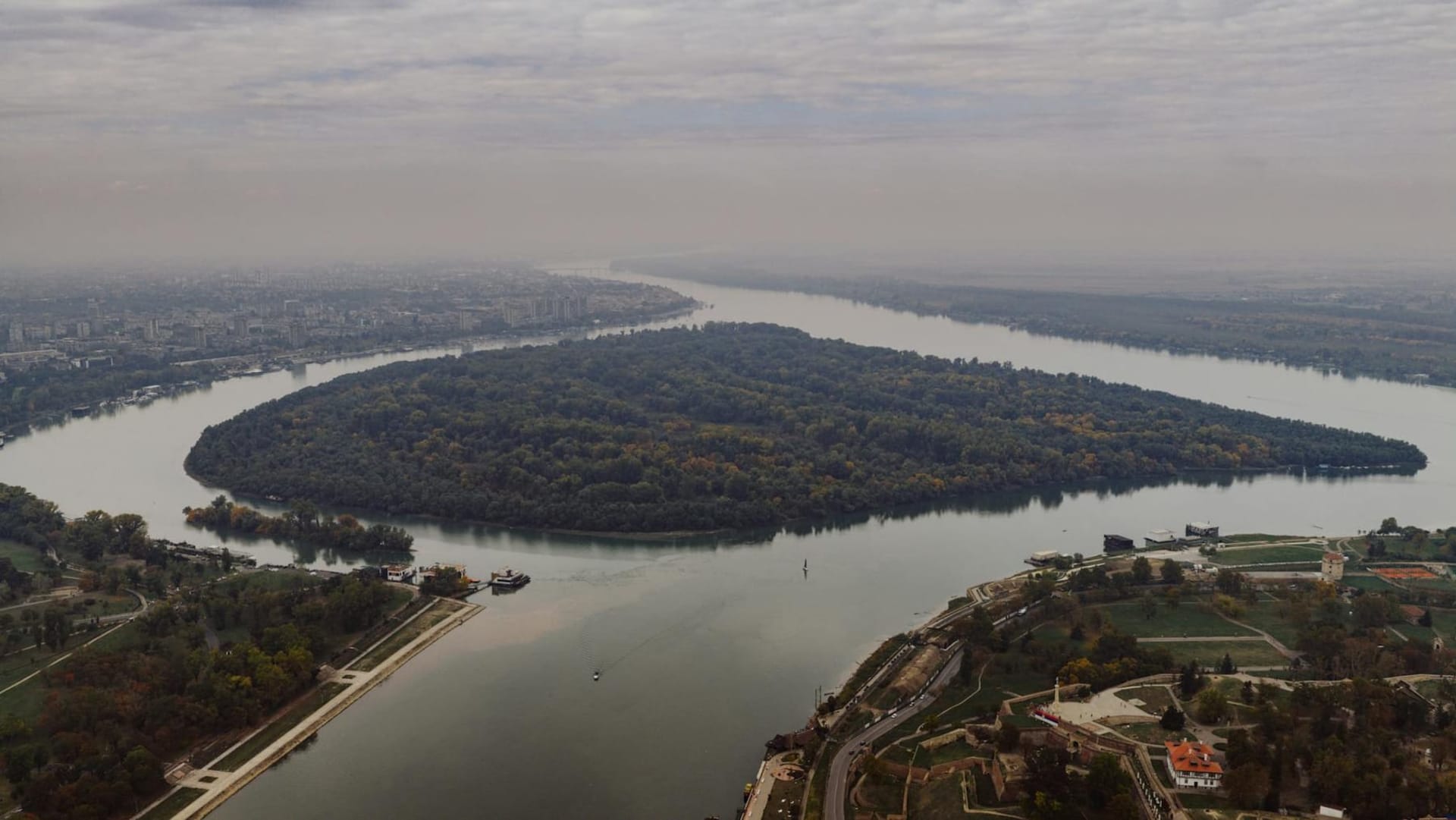
Balkan Europe's most exuberant capital, where an ancient fortress presides over a confluence of two rivers and nights that never quite end.
There is a particular quality to the light above Kalemegdan at dusk — something between amber and rust, the color of old brickwork that has been through fire more than once. I stood on the north rampart of the fortress while the Sava River finished its long journey below me, sliding into the Danube with barely a ripple, the two bodies of water finding each other with the calm certainty of something that has happened ten thousand times before. Behind me, the city was just beginning to wake up for the evening.
The Fortress and the City Below
Kalemegdan is not a ruin in the way European ruins usually present themselves — velvet ropes, audio guides, a gift shop at the exit. People walk their dogs here. Old men play chess on stone tables. Children run between Roman foundations without being told to slow down. The fortress sits on the bluff as though it simply belongs to daily life, which, after forty rebuildings, it does. I spent a whole morning just drifting its paths, passing the Military Museum, the medieval gates, the zoo tucked improbably into one corner, until I ended up at a bench overlooking the confluence, eating a burek from a paper bag I’d bought off Skadarlija street for less than a euro.
Skadarlija itself is the part of Belgrade that wants you to know it has a soul. The cobblestone lane runs downhill from Bulevar Despota Stefana, lined with kafanas — those specific Serbian restaurant-taverns where the chairs are heavy wood, the music is live and weepy, and the lamb is roasted underground. Lia ordered the ajvar and the pljeskavica and looked at me over the candlelight as if to say: we should have come here years ago. She was right.
The Night That Surprised Me
I had expected the nightlife reputation and was prepared to be unmoved by it — every city claims its nights are legendary. But walking the floating river clubs along the Sava embankment after midnight, I felt something I hadn’t anticipated: a complete absence of posturing. The music was loud, yes, but the crowd was mixed in age and mood in a way that felt genuinely unself-conscious. A woman who must have been seventy danced alone near the bar with total authority. Nobody filmed her. I found this unexpectedly moving.
The surprise came earlier, though: discovering that the best coffee in the city is served at a place called Kafeterija on Kralja Petra, in a narrow room with no seating, where regulars drink standing at the counter and discuss things with tremendous urgency in Serbian. I understood nothing and felt entirely welcome.
When to go: Late April through early June offers warm days, green parks, and festival season without the July crush; September is equally fine, with a cooler edge to the evenings and harvest produce flooding the Zeleni Venac market.