I drove onto Skye in October, across the Skye Bridge, and the island announced itself immediately with rain moving in sheets off the Cuillin. The mountains here are not like Highland mountains — they are black gabbro, igneous rock forced up through the earth’s crust, serrated and vertiginous, more like a rumour of the Himalayas than anything that belongs in the North Atlantic. I pulled into a layby and sat watching the clouds break and reform around the peaks for twenty minutes. I had nowhere to be. This is the correct speed at which to encounter Skye.
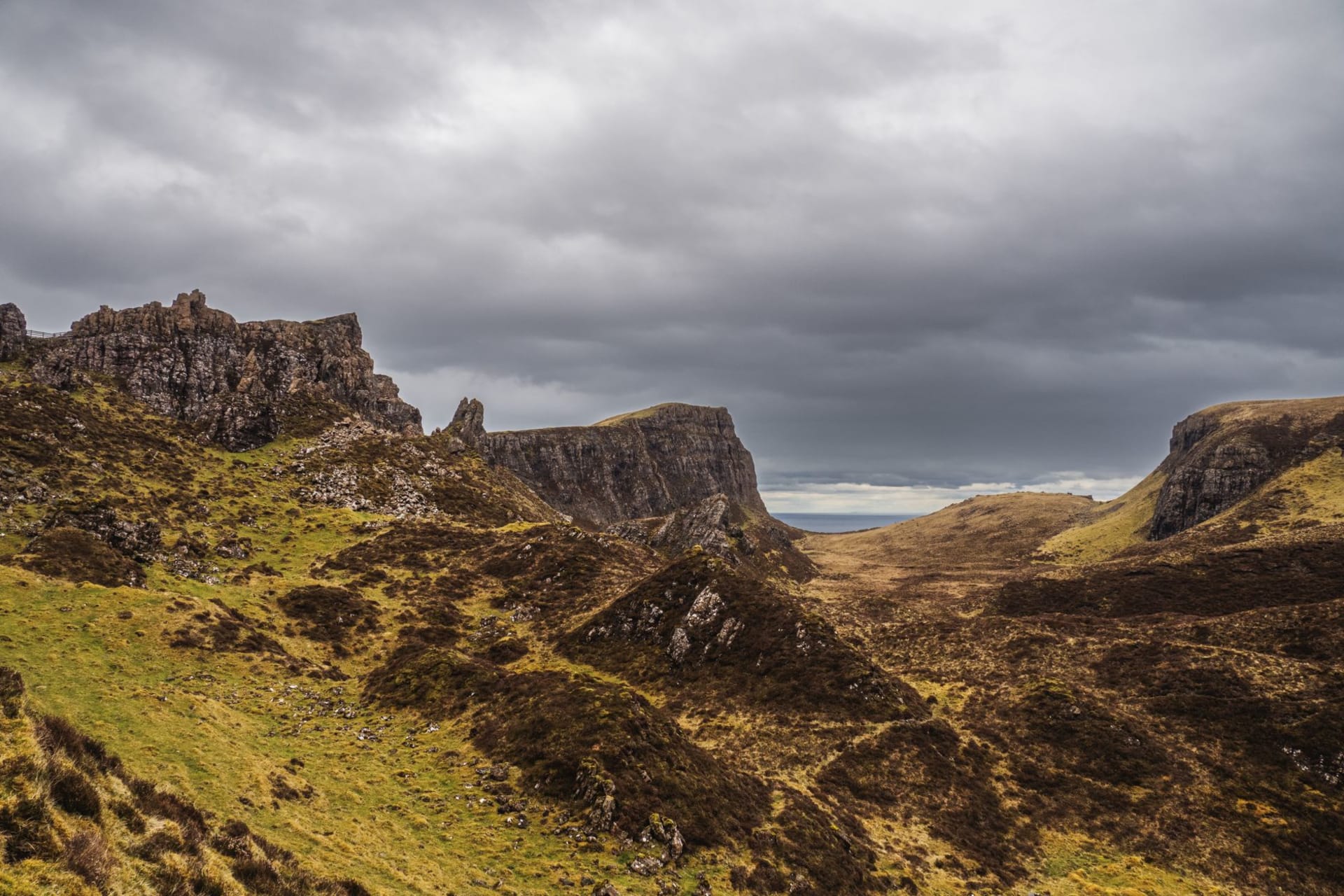
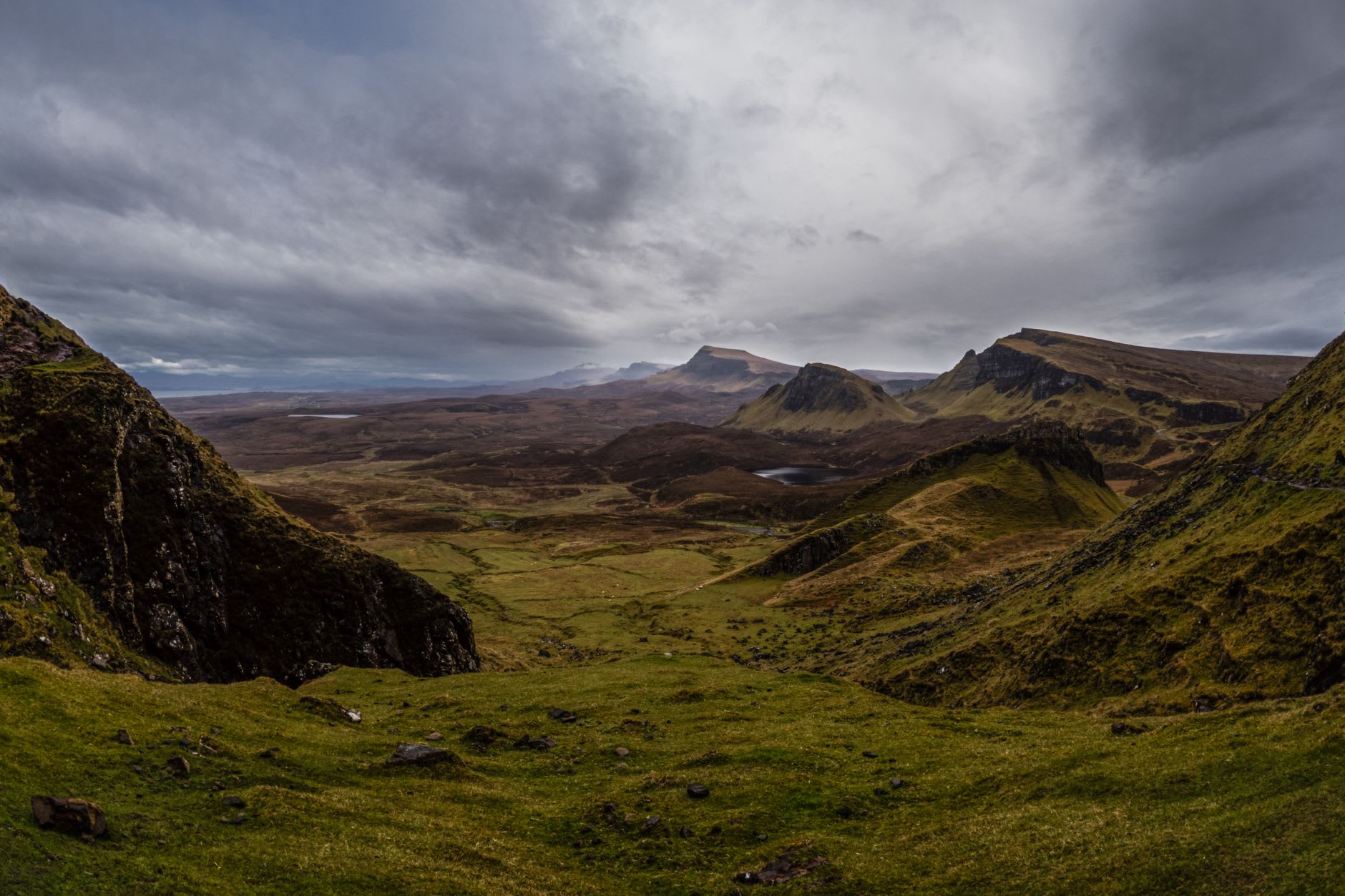
The Trotternish peninsula in the north is where the geology gets genuinely strange. The Quiraing — a landslide of enormous scale, tilted tables of rock and impossible pinnacles — has an atmosphere that sits somewhere between unsettling and profound. I walked up into it on a morning when the mist was doing theatrical things, appearing and disappearing, isolating individual rock formations and then swallowing them. The silence was near-total except for the wind and one raven doing slow circles overhead. I thought about how Gaelic mythology is full of shape-shifting, of places that are not what they appear, and the Quiraing seemed like the landscape that inspired that entire tradition.
In Portree, the island’s small capital, fishing boats bob in a harbour ringed by painted houses — the kind of scene that ends up on shortbread tins but which retains its dignity because it is entirely functional. I ate in a café where the soup was made by someone’s grandmother, tasted like it, and cost almost nothing. Outside, a man was mending a lobster creel on the quay, and the smell of salt and engine oil and wet rope was so specific it stays with me now. Portree is a place you could live in, which is not something you can say about every beautiful place in the world.
I made the pilgrimage to Talisker distillery on the western coast, which sits in a fold of cliffs above a beach of black sand and surf that comes in off three thousand miles of open Atlantic. The tour was irrelevant — I have been on enough distillery tours to know they are mostly corporate theatre. What mattered was standing outside afterward with a glass of the ten-year, tasting something that actually seemed to have been made by this specific weather, this specific coast, these specific mineral-heavy springs. It tasted of smoke and brine and something I don’t have a word for. The wind was making it impossible to keep the glass level.

The fairy pools at the foot of the Cuillin are genuinely beautiful — clear water cascading through a series of pools tinted blue-green by the minerals — but go very early if you go at all. By ten in the morning in summer they look like a music festival without the music. Skye’s real gift is not the famous spots but the in-between: the single-track roads where you reverse into passing places for sheep, the peat smoke from a cottage chimney, the moment when the clouds lift and the Cuillin is suddenly, absurdly clear, and you understand why people have been coming to this island for a very long time.
When to go: May and early June before the tourist buses arrive, or September and October when the light is amber and slanted and the summer crowds have gone. Winter is wild and largely empty — dramatic, isolating, and recommended only if you are emotionally prepared for grey. Avoid August on the main roads if you have any choice in the matter.