Cachi
"The church doors were open and the ceiling was made of cactus wood and I sat in there for half an hour listening to nothing."
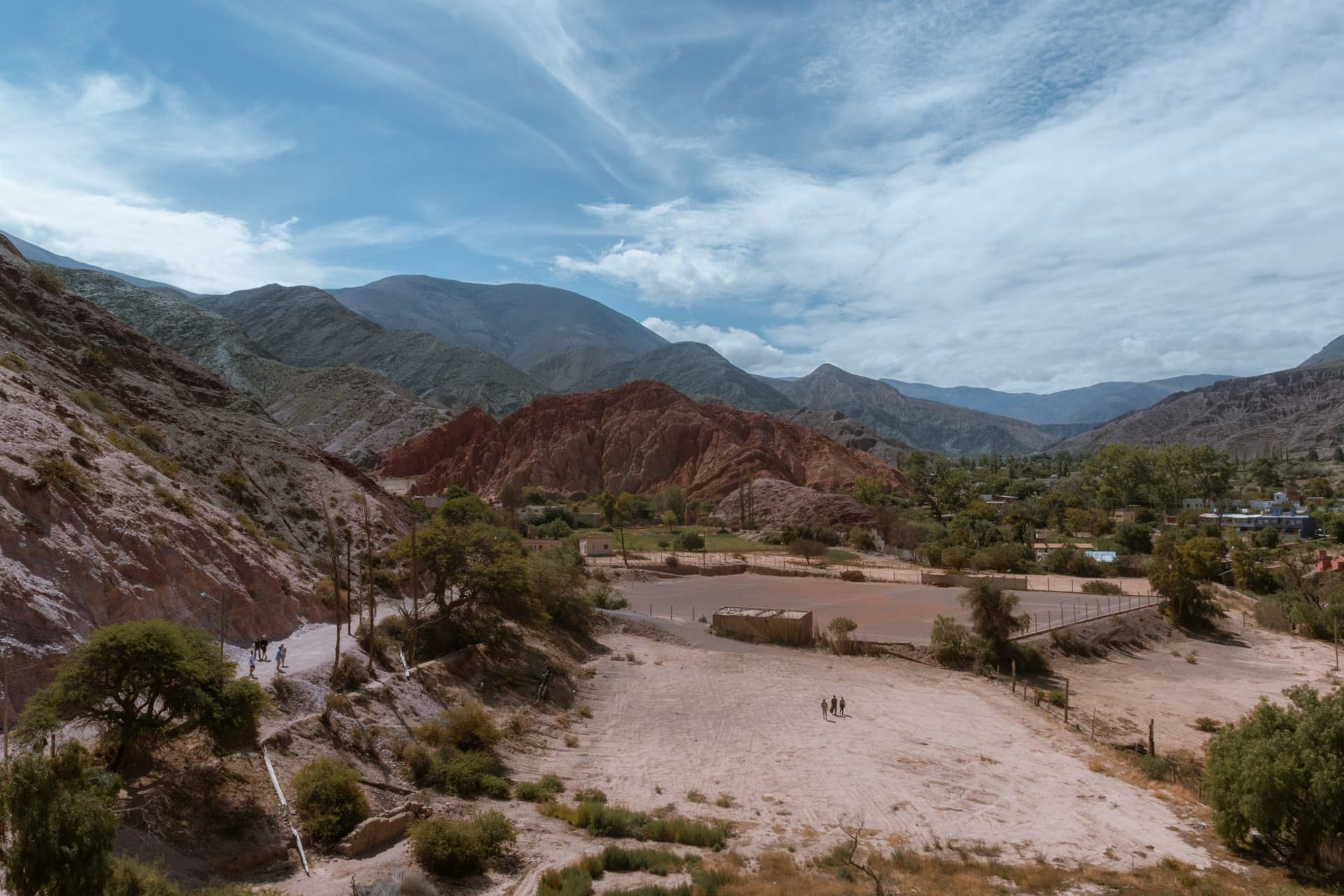
The Cuesta del Obispo is the price of admission, and it is worth it. From Salta you climb from 1,200 metres to the pass at 3,348 metres in a series of switchbacks through subtropical cloud forest — bromeliads and ferns hanging from the trees, mist pooling in the valleys below, the air cooling noticeably with every curve. At the top, the Valle Encantado opens: a plateau of grey-green scrub and cardón cacti and absolute silence, stretching toward the Calchaquí range. The road descends from there into the valley where Cachi sits at 2,280 metres, ringed by mountains, the Nevado de Cachi carrying snow on its summit even in summer.

Cachi is small and genuinely quiet in a way that Cafayate and Tilcara, for all their appeal, are not. The main plaza has the white colonial church of San José with its extraordinary interior — the roof beams, the floors, and the confessionals are all made from the wood of the cardón cactus, dark and dense with the texture of something that grew for a century before it was cut. The church is open most of the day and almost always empty of tourists. I sat in one of the carved wooden pews in the cool half-dark for thirty minutes one afternoon, listening to the town outside — a dog, a cart, silence — and felt genuinely far from anywhere that was in a hurry.
The Museo Arqueológico Pío Pablo Díaz is worth a morning. It holds a collection of pre-Columbian ceramics, tools and textiles from the surrounding valley — the Diaguita and Calchaquí cultures that inhabited these mountains before the Inca arrived — displayed in a colonial building with thoughtful explanations and very few visitors. The weaving tradition continues in the town: a cooperative near the plaza sells textiles in natural wool colours, and the pieces have a weight and density that distinguishes them from the lighter tourist versions you find closer to Jujuy. I bought a throw that has been on every trip with me since.

The surrounding valley deserves at least a half-day. The road south toward Molinos and Angastaco passes through archaeological sites — the ruins of pre-Columbian settlements on the valley walls — and the vineyards of this higher, cooler section of the Calchaquí produce a Malbec that is leaner and more angular than the Mendoza versions, tasting specifically of altitude and volcanic soil. There is a bodega twenty kilometres south of Cachi where a family has been making wine for five generations and the tasting happens in the same room where they eat lunch.
When to go: April through October — the Cuesta del Obispo can become genuinely treacherous in the rainy season (January-March) when the cloud forest gets seriously wet and the road surface deteriorates. The clearest days are May through September, when the sky above the valley is a particular blue that doesn’t occur at lower altitudes. Bring layers: the temperature drops sharply after sunset even in summer.